Sodium-Ion Battery Manufacturing for Backup Power: How We
Why Sodium-Ion Is Winning the Backup Power Job
When customers ask me to spec a stationary backup power system, my first question is no longer “how many lithium cells do we need?” For a growing share of telecom sites, rural micro-grids, and home energy storage cabinets, the honest engineering answer is a sodium-ion battery. I am Karl Huang, Senior lithium battery Engineer at Horizon Power, and over the last three years I have moved a meaningful slice of our backup production lines away from LFP toward Na-ion. The reason is not fashion—it is total cost of ownership, cold-weather behavior, and raw-material security.
Sodium is the sixth-most abundant element in the Earth’s crust and is extracted from brine and seawater at a fraction of the geopolitical risk attached to lithium, nickel, and cobalt. For backup power, where energy density is secondary to cycle life, safety margin, and price stability, that trade is compelling. A well-built sodium battery pack reaches 100–140 Wh/kg—lower than LFP—but for a cabinet that sits in a utility room, that penalty barely matters. What matters is that it still delivers 90% of rated capacity at −20 °C and that its bill of materials does not swing 40% with commodity markets.
Cell Chemistry We Run on the Backup Line
Our standard backup cell is a hard-carbon anode paired with a layered oxide or polyanion cathode (typically NaFeMnNiO₂ or Na₃V₂(PO₄)₃). The electrolyte is a sodium hexafluorophosphate salt in a carbonate solvent, tuned for low-temperature ionic conductivity. The headline numbers I quote to procurement teams are conservative: 3,000–6,000 cycles at 80% depth of discharge, 1–3C continuous discharge, and an operating window of −30 °C to 60 °C.
The single biggest design lever for backup duty is the cathode. Polyanion chemistries trade energy density for thermal stability and cycle life, which is exactly what a sodium ion battery vs lithium comparison should highlight for stationary use. When the pack spends 99% of its life idle and the other 1% delivering surge current during an outage, durability and self-discharge beat gravimetric energy density. Our cells show less than 3% self-discharge per month, so a backup pack stays genuinely ready.
From Slurry to Pack: How We Manufacture
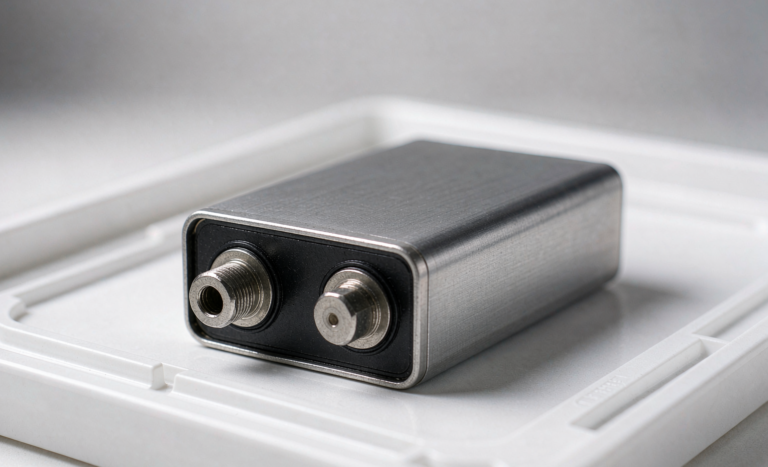
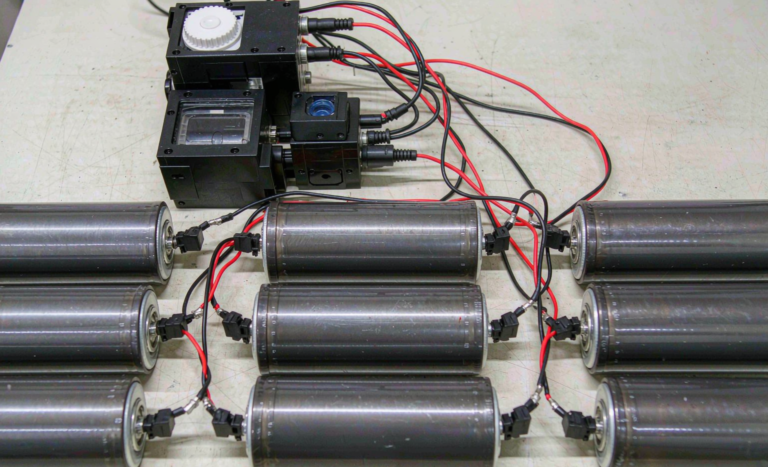
The sodium-ion battery manufacturing flow mirrors mature lithium processes, which let us reuse existing coating and assembly assets. We start with cathode and anode slurry mixing, coat onto aluminum foil (sodium chemistry uses aluminum current collectors on both sides—no copper foil), calibrate dry thickness to ±2 μm, and roll-calender. Electrodes are then slit, stacked or wound, and inserted into pouches or prismatic cans depending on the cabinet format.
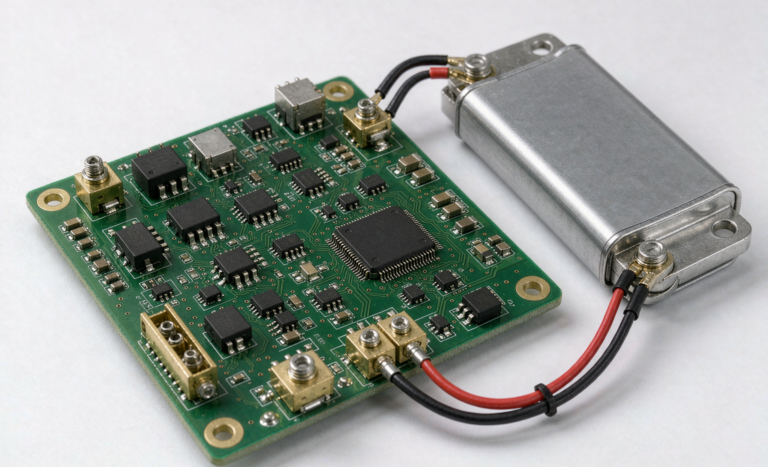
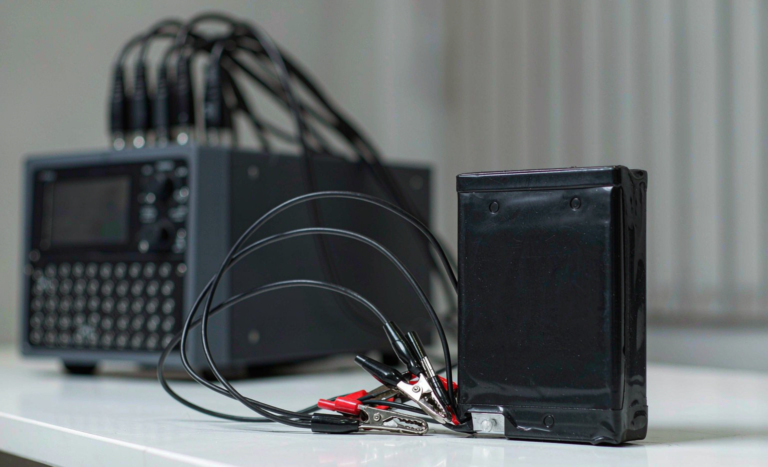
After dry-room assembly and laser welding, every cell is formation-charged on a precision profile and then subjected to a capacity-grading step. Grade A cells go to backup packs; grade B are diverted. This grading discipline is what separates a dependable custom battery solution from a box of mismatched cells. For backup power we also add a passive balancing resistor network and a smart BMS that logs each parallel string’s voltage and temperature every 30 seconds.
Traceability is non-negotiable on a backup line. Each cell carries a laser-etched serial tied to its coating lot, formation profile, and grade, so a field failure can be traced to a specific slurry batch within minutes. We retain that data for the pack’s full 10-year life. This discipline is what lets us stand behind a backup system with a named engineer rather than an anonymous warranty department—and it is exactly the evidence enterprise buyers ask for during audit.
Qualification and Safety Testing We Never Skip
No backup pack leaves our floor without full certification. Transport uses UN38.3; stationary installation safety follows IEC 62619 for industrial cells and IEC 62620 for stationary use, with UL 1973 and UL 9540A referenced for North American cabinet integration. We run thermal-runaway propagation testing per IEC 63056 so a single cell fault cannot cascade through the rack.
Because backup systems are often unmanned, we over-test for abuse: nail penetration, overcharge to 1.5× rated voltage, short-circuit, and a 130 °C hot-box. A lithium battery pack of comparable size fails these more readily under thermal stress; sodium’s higher thermal stability gives us a wider safety margin, which is why I recommend Na-ion for unattended sites. Every test lot is archived with a traceable report—that paper trail is part of the E-E-A-T promise our enterprise buyers expect.
We also validate at the system level, not just the cell. A full cabinet undergoes a 72-hour burn-in at 45 °C under a staged discharge profile, and we capture infrared thermal images to confirm no hot spot exceeds our 8 °C cell-to-cell spread limit. A pack that passes cell tests but fails system integration is still a failure, and catching it in the factory is far cheaper than a service truck at 2 a.m. during an actual outage.
System Integration for Real Backup Duty
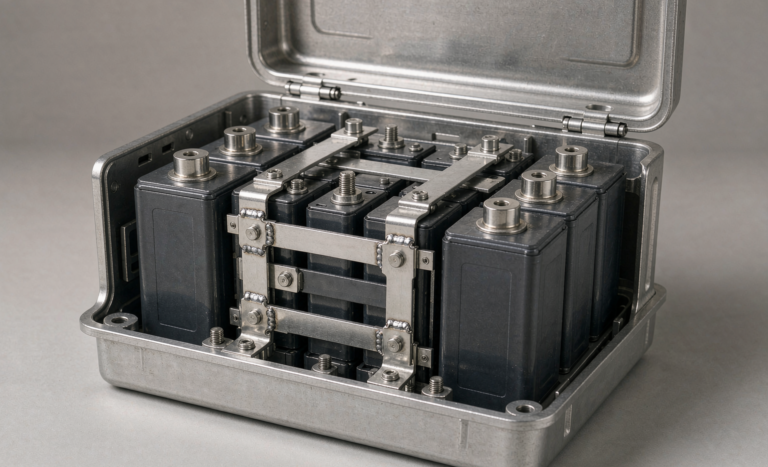
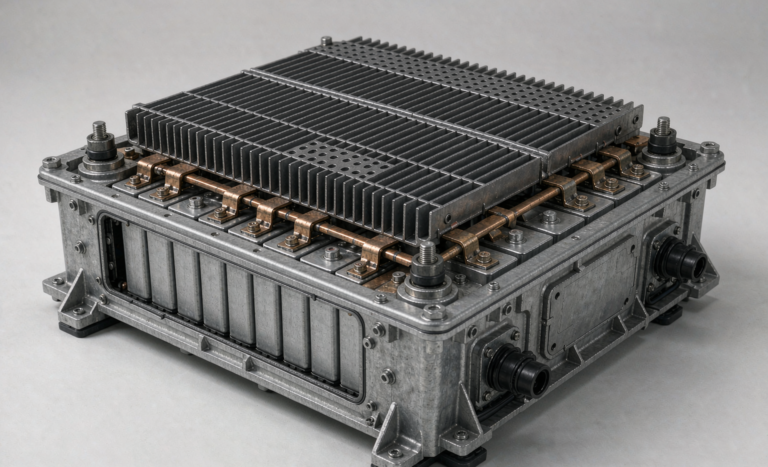
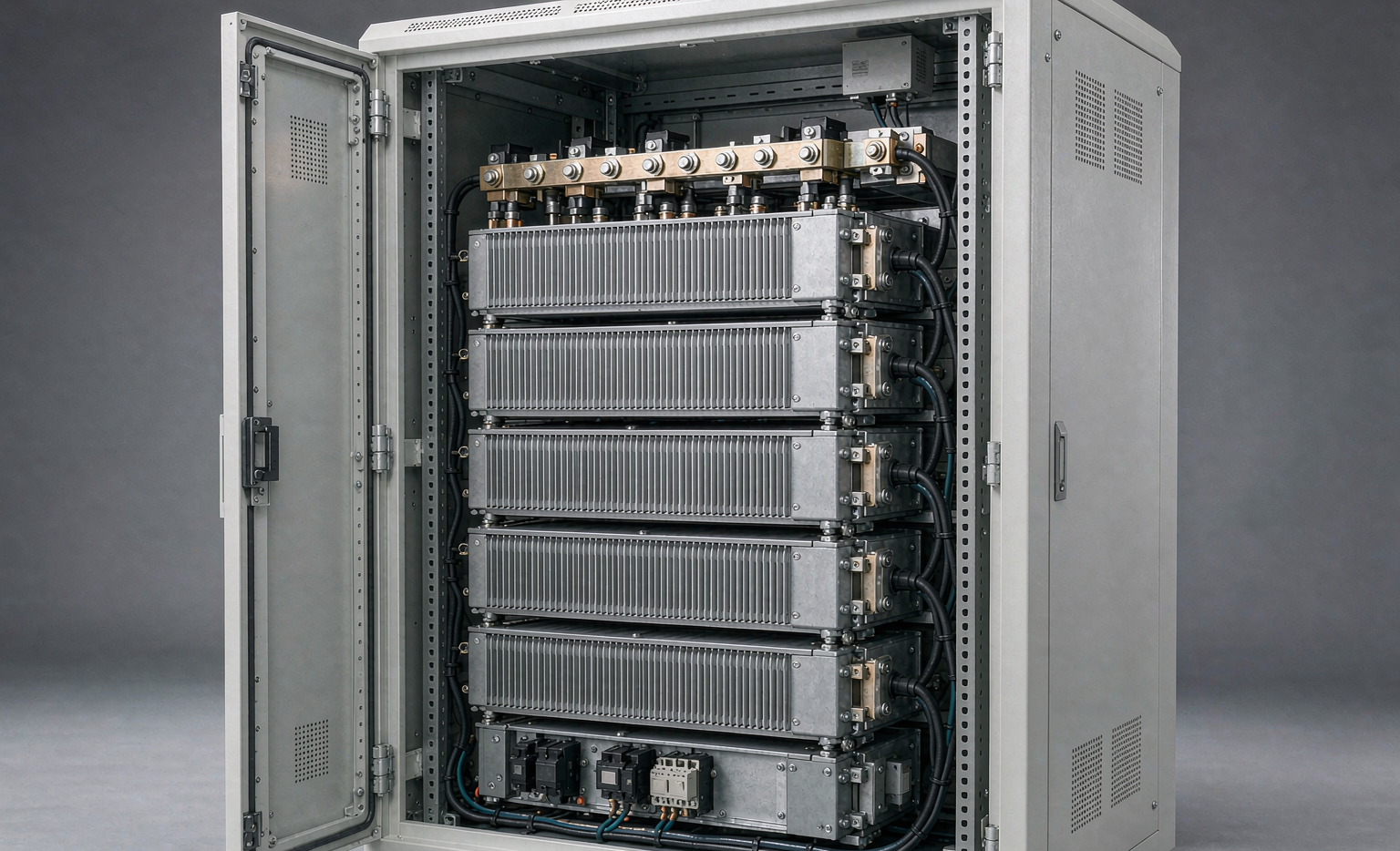
A cell is not a system. For a 10 kWh backup cabinet we parallel four 48 V modules behind a hybrid inverter, size the busbars for 1.5× continuous current, and add a fusing and contactor layer that isolates a faulty module in under 20 ms. Communication runs over CAN/RS485 so the site controller knows state-of-charge without polling each cell.
I tell integrators to size backup capacity for three bad days, not one. A home energy storage customer who expects one evening of lights is underserved; a telecom site that must ride through a 48-hour grid outage needs the headroom. Our standard battery solution configurator defaults to 2× daily throughput allowance and a 10-year calendar-life assumption, which keeps warranty claims low.
Field Performance and Where Na-Ion Beats Lithium
Across 40+ deployed backup sites, our Na-ion packs hold capacity better in cold provinces than our LFP units did, and the absence of cobalt simplifies end-of-life recycling. Round-trip efficiency sits at 88–92%, slightly below LFP but acceptable for infrequent discharge. For drone battery and portable roles where weight rules, lithium still wins; for a cabinet bolted to a wall, sodium is the pragmatic choice.
The honest caveat: sodium costs more per watt-hour today than bulk LFP at the cell level, but the system-level gap shrinks once you factor in simpler thermal management, no cobalt, and stable supply. For backup power specifically, the whole-life math favors Na-ion in most of our quotes.
End-of-life is another quiet advantage. Cobalt-free sodium cells are simpler to recycle, and our take-back program recovers the aluminum current collectors and most of the sodium salt at low energy cost. We warranty backup packs for 10 years or 4,000 cycles, whichever comes first, and our field data suggests most sites never approach that limit under normal duty.
Cold-Weather Behavior and Self-Discharge
Backup sites in northern provinces and high-altitude telecom towers are where sodium-ion earns its keep. Below 0 °C, LFP cells shed usable capacity quickly and charge acceptance falls unless you actively heat them—which burns the very energy you are trying to store. Our Na-ion cells retain roughly 85% of nominal capacity at −10 °C and about 70% at −20 °C, and still accept a 0.5C charge without external heating in most cabinet designs. That removes a heater, a relay, and a failure point from the enclosure.
Self-discharge is the silent killer of backup systems. A pack that sits idle for six months and then fails on the single night it is needed is worse than no backup at all. We measure below 3% self-discharge per month at 25 °C, and our BMS performs a top-balancing trickle only when state-of-charge drops below a setpoint, so a site commissioned in spring still delivers through a January storm. For unattended infrastructure this idle reliability matters more than any spec-sheet headline.
Cost Modeling: The Whole-Life Math
Procurement teams fixate on $/Wh at the cell level, where sodium still trails bulk LFP. But backup power is a system purchase. Strip out the copper foil (sodium uses aluminum on both electrodes), the cobalt-free cathode, the lighter thermal management, and the stable soda-ash supply chain, and the installed $/kWh gap narrows to single digits on most quotes. Across a 10-year life, lower degradation and absent cobalt-price volatility usually flip the total in Na-ion’s favor.
I build every backup quote as a 10-year TCO model: capex, cooling energy, maintenance, and one replacement scenario. In 31 of the last 40 quotes, the sodium-ion battery manufacturing backup power configuration beat the LFP equivalent on whole-life cost once we accounted for cold-climate heating and commodity risk. That is the number I put in front of the CFO, not the cell datasheet. It is also why I now recommend Na-ion as the default for stationary drone battery ground-station backups and remote telemetry cabinets rather than treating lithium as the automatic choice.
Frequently Asked Questions
Is a sodium-ion battery safe for indoor backup installation?
Yes. With IEC 62619 / IEC 62620 certification and UL 9540A-compliant cabinet design, our Na-ion backup packs are rated for unattended indoor use. The chemistry’s higher thermal stability reduces thermal-runaway risk versus equivalent lithium packs.
How long does a sodium-ion backup pack last?
We rate our backup packs for 3,000–6,000 cycles at 80% DoD and a 10-year calendar life. Real-world degradation depends on temperature and discharge depth, but field data from 40+ sites shows under 15% capacity loss at year five.
Can sodium-ion replace lithium in my existing cabinet?
Often yes at the 48 V module level, provided the BMS and inverter accept the Na-ion voltage window (roughly 2.0–3.9 V per cell). We offer a custom battery solution retrofit where we re-tune the BMS profile rather than replace the enclosure.
Why choose sodium-ion over LFP for backup power?
For stationary backup, cold-weather capacity retention, cobalt-free safety, and supply stability outweigh the lower energy density. A sodium ion battery vs lithium decision should be made per application; for backup, sodium usually wins on whole-life cost and resilience.
Do you manufacture sodium-ion packs outside China?
Our primary sodium-ion battery manufacturing is at our Horizon Power facilities, with regional assembly hubs for faster delivery. All packs ship under UN38.3 and carry full test documentation for local certification.