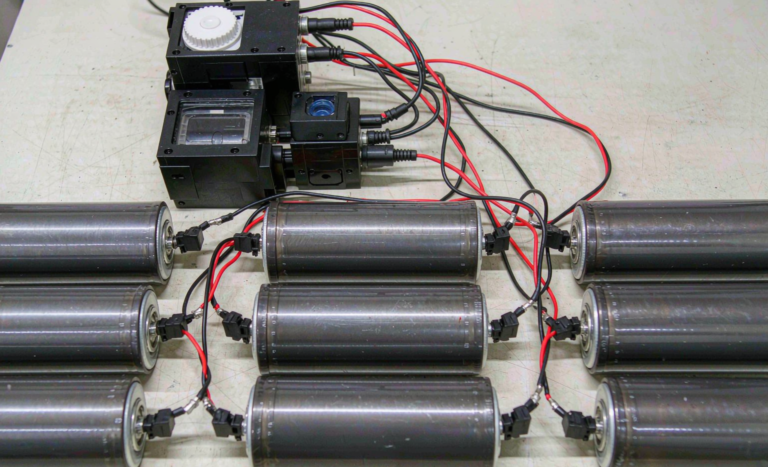
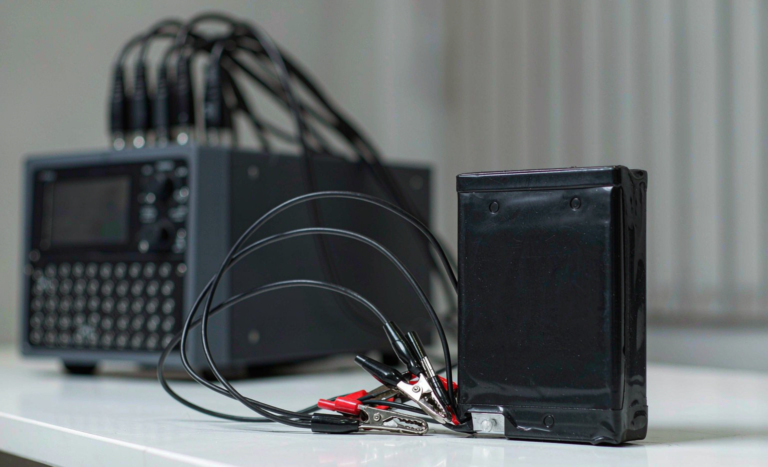
Sodium-Ion Battery Maintenance for Forklifts
I have spent the last three years putting sodium-ion battery packs into counterbalance forklifts, reach trucks and pallet jacks on logistics sites that run two and three shifts a day, and the maintenance conversation is genuinely different from the lithium-ion forklift fleets I ran before. Sodium-ion cells are happier at low state of charge, do not need thermal management to stay safe, and tolerate partial charge for the whole eight-hour shift without the operator thinking about it. They also have a softer voltage curve, a wider operating temperature window, and a chemistry that does not plate lithium on the anode if the truck is plugged in cold overnight. None of that removes the need for sodium-ion battery maintenance for forklifts. It changes what that maintenance looks like, and operators who try to run a sodium pack on a lithium maintenance schedule are the ones I get the service calls from.
What follows is the field procedure I use when I take over a fleet: how the cells age differently from lithium, what to inspect at every shift change, what the BMS is actually telling the technician, and which numbers trigger a module swap instead of a top-up. It assumes a modern 48 V or 80 V sodium-ion pack with prismatic cells, an active balancing BMS and CAN-bus telemetry.
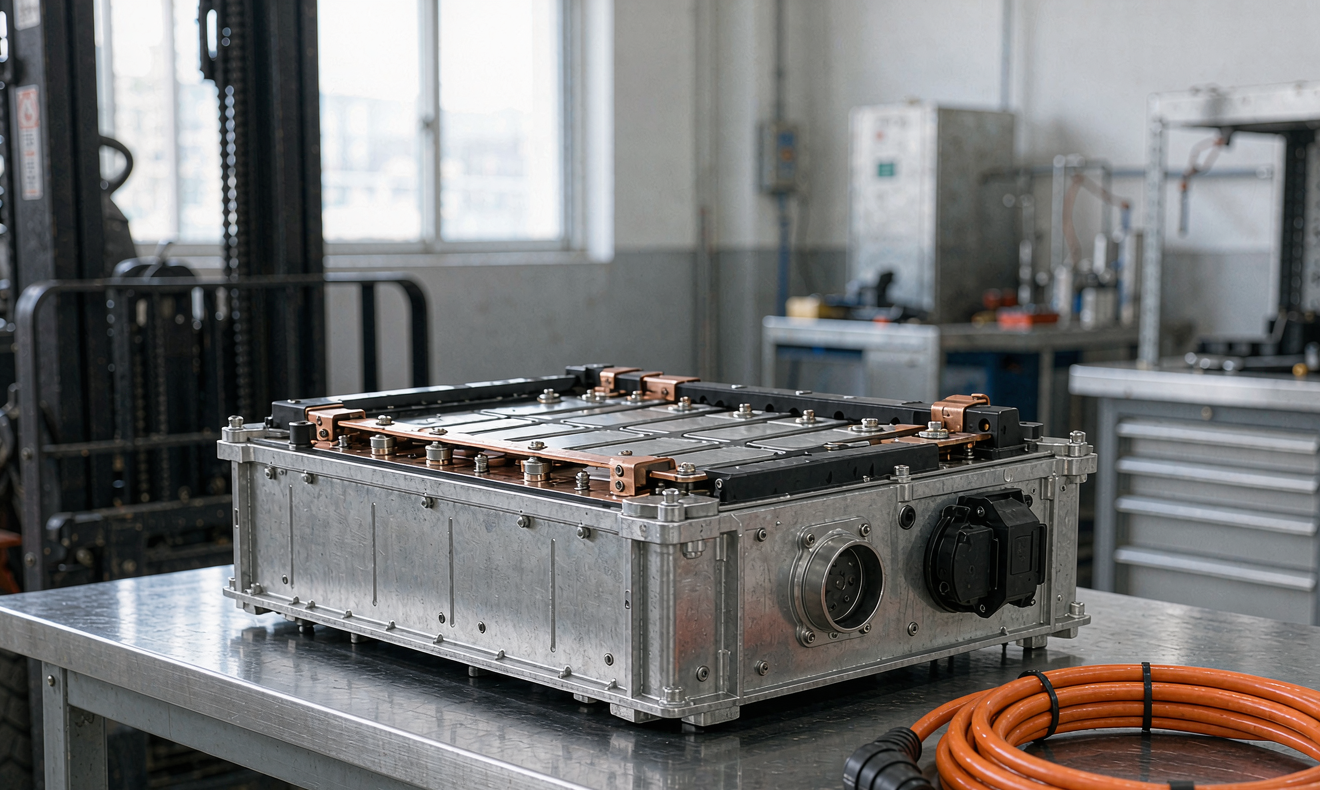
Why Sodium-Ion Forklift Packs Need a Different Maintenance Mindset
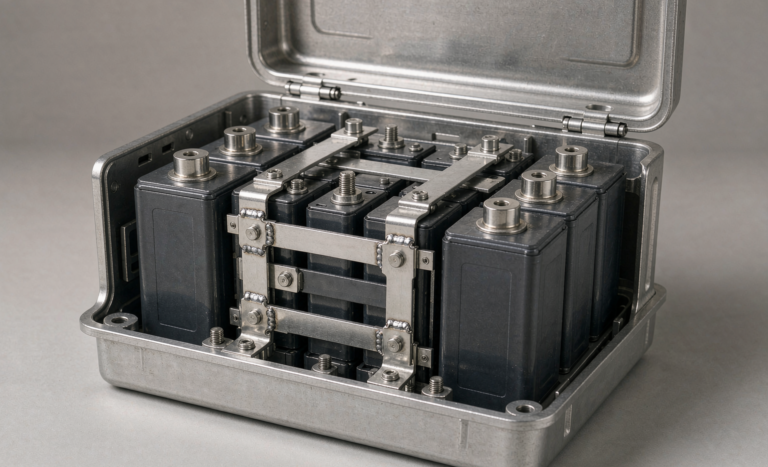
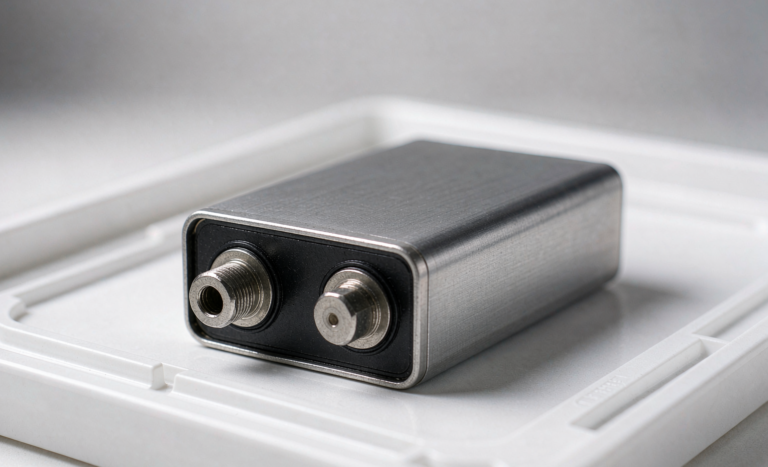
Sodium-ion cells share the general form factor of an LFP prismatic pack, but the electrochemistry inside is meaningfully different, and that difference shows up in service. The anode is hard carbon instead of graphite, the cathode is typically a Prussian-blue analogue or a layered oxide, and the electrolyte is a sodium salt dissolved in the same carbonate solvents used in lithium cells. The three things a maintenance technician actually feels are:
- Flat discharge curve. A sodium-ion cell holds a very flat voltage plateau for roughly 80% of its discharge, then drops off quickly. A truck that reads “100%” on the dashboard at the start of a shift can read “20%” twenty minutes before the end of that shift. Lithium-ion gives a more linear taper that operators have learned to read. Sodium-ion does not, and crews used to lithium state-of-charge behaviour will routinely run packs flat because the truck felt normal up to the last ten minutes.
- No thermal runaway risk in normal operation. Sodium-ion cells do not enter thermal runaway the way NMC or even LFP cells can when abused. That is a real safety benefit in a warehouse with cardboard, pallets and people, and it means I do not need a water suppression system or a Class D extinguisher on the charging bay. It also means a hot cell during a fast charge is a fault to investigate, not a fire to fight.
- Wide temperature window. A sodium-ion pack will accept charge at −10 °C without damage and discharge down to −20 °C, which is genuinely useful for cold storage warehouses and outdoor yard trucks. The corollary is that sodium packs in temperate or hot facilities do not need the elaborate liquid cooling that large lithium forklift packs increasingly require.
What sodium-ion does not give you is long cycle life under high C-rate abuse. A sodium cell that is regularly fast-charged to 100% and discharged to 0% will lose 20–30% of its capacity in roughly 1,500 cycles. A pack kept between 20% and 90% SoC at 0.5C will deliver 4,000–5,000 cycles. Maintenance is therefore less about preventing fires and more about protecting cycle life, and the procedures below reflect that.
Daily and Pre-Shift Checks That Catch 80% of Issues
The fastest payback in any forklift battery programme is a disciplined pre-shift walk-around. For a sodium-ion pack, I train operators to spend roughly 90 seconds on the following, in this order:
- Visual inspection of the pack and truck. Look for cracked cell cases, bulged lids, electrolyte residue around service plugs, abrasion on the orange high-voltage cable, and any green or white corrosion on the truck-side connector. Sodium cells vent less aggressively than lithium cells, so a wet patch around a cell is a real signal, not a normal finding.
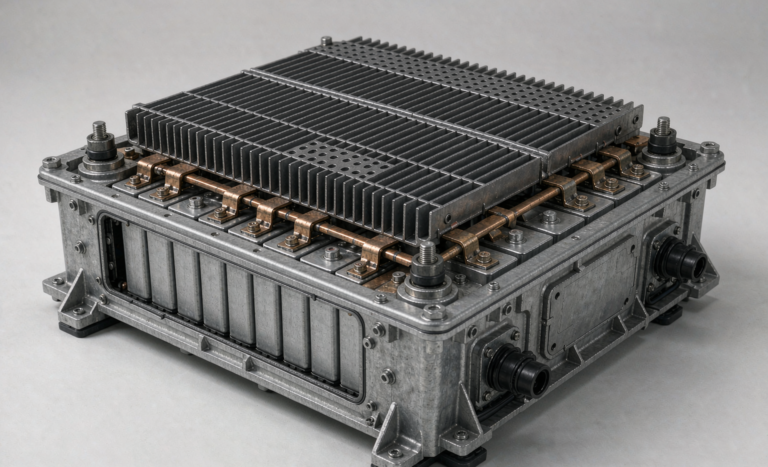
- Connector and interlock verification. Sodium packs use a keyed Anderson or a manufacturer-specific connector with a high-voltage interlock loop. Pull-test the connector with the truck off: any lateral movement means the contact is wearing. I have seen forklifts refuse to drive because the interlock opened, and the cause was always a connector that needed replacement, not a battery fault.
- State of charge and voltage sanity check. Read the dashboard SoC, then open the BMS app and compare the pack voltage to the reported SoC. A 48 V sodium pack at “70%” should sit between 50 and 53 V at rest. If the dashboard reads 70% but the pack measures 47 V, the SoC gauge is drifting and a full charge plus a rest period is the next step.
- Cell voltage spread at rest. A healthy sodium pack shows a maximum cell-to-cell delta of 15–30 mV. Above 50 mV the pack is mildly out of balance; above 80 mV I escalate to a balancing cycle and a diagnostic download.
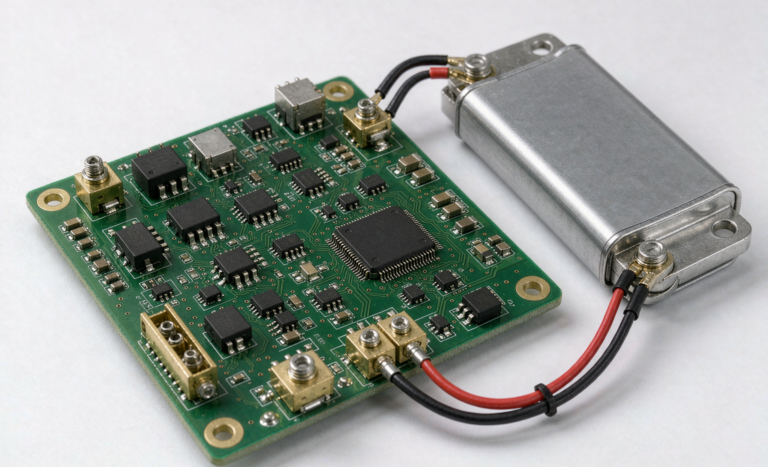
- Cooling fan and air path. Even though sodium cells run cooler than lithium, the BMS balancing resistors and the contactor box still generate heat. Confirm the cooling fan spins freely when the truck is on charge, and that the intake path is not choked with cardboard dust.
The single biggest mistake I see is operators skipping the connector inspection because “the truck drove fine yesterday”. Sodium packs deliver nearly full power until they do not, and a connector that has been pulling 250 A three shifts a day for eighteen months is the part most likely to fail next.
Weekly and Monthly Procedures for a Sodium-Ion Forklift Fleet
Once a week, a trained technician should run a deeper routine. None of this requires taking the pack out of the truck, and on most modern packs the data is available over CAN or a Wi-Fi gateway. I hand clients a deliberately short list so it actually gets done.
- Full charge and absorption hold. Run the pack to 100% on the manufacturer’s recommended charger profile, then hold at absorption for the full time the charger allows (typically 30–60 minutes). Record the amp-hours returned and compare to the previous week. A drop of more than 5% between equivalent cycles is a real signal.
- DC internal resistance (DCIR) trend. A 30-second loaded pulse at 0.5C, with voltage logged at the pack terminals, gives a usable DCIR figure. Trend it on a simple spreadsheet: a 20% rise from the as-commissioned baseline is my investigation trigger, a 30% rise means the pack should not be put on a heavy-load shift until the weak module is identified.
- Cleaning the pack surface, vents and connector. Sodium packs are sealed to IP65 or better on the cells themselves, but dust on the top surface traps heat and accelerates connector oxidation. A vacuum and a dry microfiber cloth is sufficient. No water, no solvents, no pressure wash.
- Firmware and BMS log review. The BMS logs cell over-voltage, under-voltage, over-temperature and over-current events with a timestamp. A pack that has logged fifteen over-current events in a month either has an operator who is abusing the truck, a failing contactor, or a cell that is hitting its current limit early. The log tells you which one.
- Charger inspection. Confirm the charger’s CAN handshake completes, the cooling fan is clean, and the connector on the charger side shows no pitting. Sodium cells are more tolerant of partial charge, but a charger that drops out partway through a cycle creates the same imbalance pattern as a partial charge on a phone battery.
Monthly, I do a torque check on the power connections. The truck vibration is relentless, and a 10% drop in clamp torque on a 250 A busbar will eventually show up as a hot joint under load. I use a calibrated torque driver and the values from the pack’s service manual, not generic “tighten until it stops” feel.
How to Read the BMS Data Without Getting Lost
The biggest reason sodium-ion maintenance programmes stall is that the BMS software produces far more numbers than a maintenance team can act on. I tell clients to track exactly five metrics: pack voltage at the start and end of each shift, maximum cell voltage delta at full SoC (above 50 mV is yellow, above 80 mV is red), average cell temperature delta across the pack (above 6 °C after a fast charge is worth investigating), cumulative Ah discharged since the last full charge, and time spent above 45 °C. Sodium cells are fine at 45 °C, but the balancing resistors and contactors are not, and hours above 45 °C predict contactor wear more accurately than age does. The five-metric rule keeps the focus where it should be.
Everything else the BMS reports is a diagnostic aid, not a maintenance trigger. I have watched teams chase individual cell-temperature readings that were within spec by a degree, and ignore a contactor that was two thousand hours past its service life. The five-metric rule keeps the focus where it should be.
Common Faults I See on Sodium-Ion Forklift Packs
Four failure modes account for the vast majority of my service work.
- Cell imbalance from irregular full charges. Sodium packs balance most effectively at the top of the charge curve. Operators who plug the truck in for short top-ups during breaks never let the BMS complete a balance cycle, and the SoC display becomes unreliable within weeks. The fix is enforced weekly absorption charges, not module replacement.
- Contactor wear on high-cycle trucks. The main contactor is rated for a finite number of make-break cycles under load. Order pickers doing hundreds of short trips per shift can wear it out in 18–24 months. Replacement is a 30-minute job, but the contactor must match the BMS pre-charge sequence or the new one will fail early.
- Connector oxidation in washdown environments. Sodium packs are increasingly used in food and pharma warehouses where daily washdown is standard. Any pack specified for that duty must be IP65 or better on the connector, and the truck-side connector needs a contact grease rated for sodium-ion service. Standard lithium connector grease can attack some sodium-cell seals.
- Capacity loss from chronic fast charging. Sodium cells tolerate 1C charging but pay for it in cycle life. A site that habitually fast-charges to keep a fleet moving will see 20% capacity loss in 12–15 months instead of 30–40 months. I cap fast charging at one cycle per day per pack and log the rest as standard charges.
End-of-Life, Module Replacement and What to Stock on Site
A sodium-ion forklift pack should be replaced or refurbished when the measured capacity at the standard discharge rate falls below 80% of nameplate, or when the DCIR baseline rises more than 35% from the as-commissioned value. On a well-managed fleet this is 4–6 years depending on duty cycle, and the warning signs show up 6–9 months before the pack actually fails a shift.
Spare cells should be stored at 30–50% SoC in a dry, temperate location. Sodium cells self-discharge at about 1–2% per month, so a properly stored spare holds its state of charge for the better part of a year with one top-up. Before insertion into an operating pack, a new module should be top-balanced with the pack it is joining, not just brought to the same SoC reading. Active balancing over a full charge cycle is the only reliable way to bring a fresh module into an aged string without a multi-month drift back into imbalance.
A Realistic Service Plan for a Twenty-Truck Warehouse
To make this concrete, a 20-truck sodium-ion fleet I service runs the following schedule. A lead technician spends four hours per week on the programme plus half a day per month for the deep checks.
- Daily (operators): connector visual, SoC sanity check, cell delta at rest, fan and air path check.
- Weekly (technician): full absorption charge, Ah returned trend, DCIR spot check, BMS log review, charger inspection.
- Monthly (technician): torque verification on power connections, full data export to fleet management, and a five-metric review with the operations manager.
- Quarterly (lead technician): capacity test on a sample of trucks, thermal imaging of connectors under load, contactor wear assessment against cycle count.
- Annually: third-party cell-level inspection on a 10% sample, including a full teardown of one module to inspect the hard-carbon anode and the electrolyte. Findings feed back into the charge profile and the daily checklist.
The fleet in question is now 28 months in. The average pack capacity is 92% of nameplate, the average DCIR rise is 12% over baseline, and the only unscheduled service calls in the last twelve months have been a single connector replacement and a contactor swap. Compared with the lithium fleet it replaced, unplanned downtime is down roughly 70%, the annual battery budget is down 35%, and the operators prefer the trucks because they no longer have to think about charging windows.
Frequently Asked Questions
How often should a sodium-ion forklift battery be serviced?
A 90-second pre-shift check by the operator every day, a 30-minute weekly check by a trained technician, and a half-day deep service every month covers the vast majority of real-world failure modes. A full third-party inspection once a year is enough on a well-managed fleet, with an extra capacity test on any pack that crosses 3,000 cycles.
Can sodium-ion forklift batteries be fast-charged every shift?
Yes, but the cycle-life cost is real. A pack fast-charged at 1C every shift will lose around 20% of capacity in 12–15 months, against 30–40 months for the same pack on a standard 0.3–0.5C charge. Limit fast charging to one cycle per day per pack and standard-charge the rest of the time if you want the rated service life.
What is the most common failure on a sodium-ion forklift pack?
Connector and contactor wear, not cell failure. The cells are very robust; the parts that move electricity into and out of the pack are the limiting factor. A 30-minute quarterly check on the main contactor and the truck-side connector is worth more than a year of cell-level monitoring.
Do sodium-ion forklift batteries need thermal management?
Passive cooling is sufficient for most indoor applications. The cells run cooler than equivalent lithium cells, and the BMS balancing resistors do not generate enough heat to require liquid cooling in normal duty. Outdoor trucks in direct sun, or trucks in foundries and glass plants, do benefit from a forced-air cooling path, but that is a packaging decision at the truck build stage, not a maintenance task.
When should a sodium-ion forklift battery be replaced?
When the measured capacity at the standard discharge rate falls below 80% of nameplate, or when the DCIR baseline has risen more than 35% from commissioning. Both numbers should be in your maintenance log from day one. Without a baseline, a reading in year three tells you nothing, and that is the most common reason forklift fleets replace batteries that still had useful life.