Sodium-Ion Battery Deployment for Microgrids (Guide)
I have spent the better part of a decade specifying lithium and sodium battery systems for off-grid and weak-grid sites, and microgrids remain the application where I see the most preventable mistakes. A microgrid is not a backup cabinet that sits idle for 362 days a year; it is a battery that cycles every single day, often on a solar profile that swings hard between summer abundance and winter scarcity. When a client asks me about sodium-ion battery deployment for microgrids projects, my answer is always the same: sodium-ion chemistry is genuinely well matched to this duty cycle, but the deployment outcome is decided far less by the cells and far more by the sizing math, the state-of-charge window you program into the inverter, and how disciplined your commissioning process is. This article walks through how I approach those three areas in practice, with the numbers I actually use on project sites.
Why Sodium-Ion Chemistry Fits the Microgrid Duty Cycle
Microgrid storage has a distinctive load profile. The battery charges through the middle of the day from PV, discharges through the evening peak, and then trickles through the night to carry base loads until sunrise. That is one deep cycle per day, 365 cycles per year, with frequent partial cycles layered on top. Over a ten-year design life, you are asking for something in the range of 3,000 to 4,000 full equivalent cycles, and you want the bank to still deliver meaningful capacity in year ten.
Sodium-ion cells fit this profile for four reasons I keep returning to:
- Cycle life. Current-generation sodium-ion cells from reputable manufacturers are rated for 3,000 to 6,000 cycles at 80% depth of discharge, and in my own cycling data on hard-carbon anode cells, calendar fade is gentle as long as the cells are not held at full charge in high temperatures.
- Cold-weather charge acceptance. This is the big one. Lithium-ion cells cannot be charged below 0 °C without risking lithium plating, which means LFP banks in cold climates need heated enclosures and restrictive charge windows. Sodium-ion cells charge down to -20 °C and discharge to -30 °C or lower, retaining 85–90% of room-temperature capacity at -20 °C. For alpine, northern, and high-altitude microgrids, that single characteristic can remove an entire heating subsystem from the bill of materials.
- Safety and abuse tolerance. Sodium-ion cells can typically be transported and stored at 0 V, and their thermal runaway behavior is milder than NMC and broadly comparable to or gentler than LFP. For remote sites where the fire brigade is hours away, that matters.
- Supply chain and cost trajectory. Sodium-ion cathodes use layered oxides or polyanionic compounds instead of lithium, cobalt, or nickel, and hard carbon replaces graphite. Raw material exposure is different and, at scale, cheaper. In 2026 pricing, sodium-ion packs land between LFP and lead-acid on a per-kWh basis, and the gap to LFP narrows every quarter.
None of this means sodium-ion is automatically the right answer. Its energy density — roughly 140 to 160 Wh/kg at cell level today — trails LFP, so if your site is severely weight- or volume-constrained, lithium still wins. But microgrids are usually floor-space constrained, not weight constrained, and a 20% larger container is a cheap price for removing heater loads, avoiding plating risk, and simplifying cold logistics.
Sizing the Bank: Load Profiles, Autonomy Windows, and Depth of Discharge
Sizing is where most deployments go wrong, and they go wrong in both directions. Undersized banks get cycled so deep that cycle life collapses; oversized banks never leave the shallow-cycle zone and the client pays for capacity they never touch. My process looks like this.
Step 1: Build a real 8,760-hour load model
Never size from an average daily kWh figure. Averages hide the evening peak that actually defines your power rating and the overnight base load that defines your usable energy. I request metered data where it exists, or I model load by appliance class with realistic diversity factors. For a 12-village electrification project I worked on, the metered evening peak was 2.6× the daily average power — sizing to the average would have left the inverter clipping and the diesel generator running every night.
Step 2: Fix the autonomy target by season, not by year
A common error is specifying “two days of autonomy” as a flat number. Solar resource in winter can be 30–40% of the summer figure at high latitudes, so the bank that glides through June will lean on the generator every January. I size the sodium-ion bank for the winter design month with a realistic loss-of-load expectation — typically 1–3% annual LoLE — and let the genset cover the tail rather than buying 30% more battery to chase the last percent.
Step 3: Respect the usable SoC band
Manufacturers rate cycle life at a stated depth of discharge, and the fine print matters. A cell rated 4,000 cycles at 80% DOD will deliver well over 8,000 cycles at 50% DOD. For microgrid banks I typically program a 10–90% state-of-charge window for daily cycling, with the full 5–95% band reserved for storm-ride-through events. That preserves cycle life and, as the next section explains, keeps the cell chemistry in its happy voltage region. Practically, that means if the model says you need 200 kWh of usable energy, the nameplate capacity should be around 250 kWh.
Step 4: Check the power-to-energy ratio
Sodium-ion cells have good pulse capability, but the BMS current limits and the DC bus architecture set the real ceiling. Verify that your C-rate at peak — nameplate kWh divided into peak kW — stays at or below roughly 0.5C continuous for the pack design, and confirm the BMS continuous current rating with the vendor in writing. I have seen deployments where the inverter could pull 1C for motor starting and the BMS silently limited at 0.6C, dropping the bus voltage and tripping the loads it was supposed to protect.
The Operating Window: State of Charge, Temperature, and Charge Acceptance
The single highest-leverage parameter in a sodium-ion microgrid deployment is the state-of-charge window programmed into the energy management system. Sodium-ion cathodes — both layered oxides and Prussian-blue analogues — have voltage plateaus and phase-transition regions that behave differently from LFP’s flat plateau. Holding a sodium-ion bank at 100% SoC around the clock, the way some backup systems do, accelerates cathode degradation and costs you years of life for zero benefit, because a microgrid rarely needs the top 5% of the bank.
My standard operating recipe for daily-cycled microgrid banks:
- Daily cycling band: 15–90% SoC. This keeps every cycle inside the chemistry’s stable region and typically doubles real-world cycle life versus 0–100% operation.
- Weekly balancing event: one controlled full charge to 100% with a 1–2 hour absorption hold so the BMS can top-balance the series string. Skip this and cell-to-cell divergence grows until the weakest cell caps the whole bank.
- Floating band: if the microgrid has long sunny stretches where the bank sits full, program the EMS to park the bank at 55–65% SoC once the daily cycle is complete, and only return to charge when PV surplus or an evening peak approaches. Calendar fade at mid-SoC is dramatically lower than at full charge.
- Temperature derating: even though sodium-ion charges at -20 °C, charge current should be derated below 0 °C — I use roughly 0.2C below -10 °C unless the cell datasheet explicitly permits more. Discharge at low temperature is more forgiving than charge.
One more practical note: sodium-ion cell voltage curves differ from LFP, so anything that assumes 3.2 V nominal per cell — some BMS firmware presets, some inverter voltage windows, some DC-DC converter ranges — needs to be reconfigured. A 3.1 V nominal sodium-ion cell gives a different string voltage at the same cell count. Confirm the inverter’s DC window matches your string configuration before you order hardware, not during commissioning.
Islanded Control: Inverters, Black Start, and Communications
A microgrid battery is only as useful as the control system around it. In grid-connected mode, the inverter follows the grid; the interesting engineering is all in islanded mode, where the battery inverter becomes the voltage and frequency reference for the entire island.
Inverter selection and grid-forming capability
Specify a grid-forming (not merely grid-following) inverter or ESS with proven microgrid performance. In islanded operation the inverter must establish 50/60 Hz voltage and frequency, ride through motor inrush — water pumps and refrigeration compressors can draw 5–8× rated current at start — and coordinate with any spinning generator. Vendors’ marketing sheets all say “microgrid-ready”; I ask for three references at similar peak-load ratios and I call the operators.
Black start sequencing
After a full shutdown — and in remote microgrids, full shutdowns happen — the system must restart without the grid. Document and test a black start sequence: battery BMS wakes from the DC auxiliary supply, inverter self-starts and energizes the house bus, PV inverters detect a live AC reference and resynchronize, and non-essential loads are reconnected in staged blocks by the microgrid controller. If your PV inverters cannot restart into a battery-formed grid, you will be running the diesel generator every morning just to reboot the solar array, which erodes the entire fuel-savings case. Test this scenario on-site during commissioning, with the generator deliberately locked out, before the system goes into service.
Communication architecture
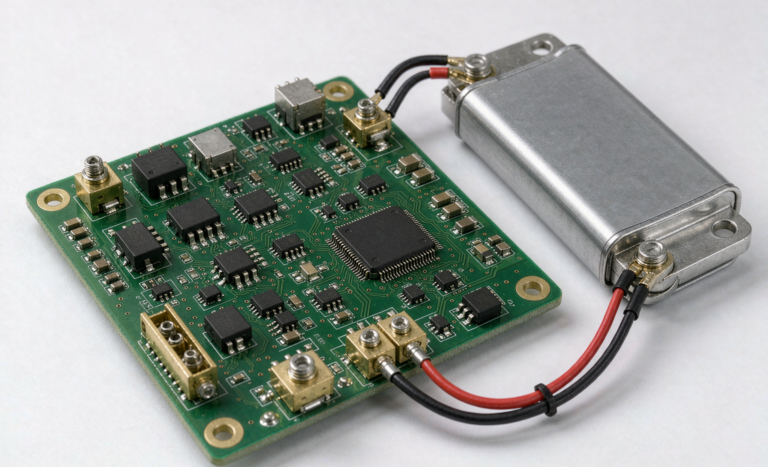
Use Modbus TCP or CAN between BMS, inverter, and controller, and insist on documented register maps for all three. Closed-protocol integrations are the number-one source of commissioning delays I see. The BMS must be able to command charge-current limits and discharge-current limits dynamically so the inverter always respects cell-level constraints, including the cold-temperature derating discussed above. And design for the reality of remote sites: a cellular or satellite link with local autonomy, so a communications outage degrades to autonomous EMS operation rather than a shutdown.
Cold-Climate Commissioning: My Field Checklist
Because cold performance is sodium-ion’s headline advantage, clients expect it to work on day one — and commissioning in January is exactly when shortcuts bite. This is the checklist I run on every cold-climate deployment:
- Verify the low-temperature charge curve on-site. Commission the BMS with the pack cold-soaked overnight, not fresh from a heated office. Confirm the actual charge-current derating curve matches the datasheet at -10 °C and -20 °C.
- Log a full daily cycle at low temperature. Capture capacity delivered, round-trip efficiency, and voltage sag at peak. Expect 85–92% of rated capacity at -20 °C with modern cells; if you see materially less, escalate before acceptance.
- Check enclosure thermal design anyway. Even with plating-tolerant chemistry, BMS electronics, contactors, and electrolyte viscosity all have limits. A passive, insulated enclosure that keeps overnight lows above -25 °C is usually enough; below that, a small resistive heater on a thermostat is cheap insurance.
- Confirm the SoC estimator at temperature extremes. Coulomb-counting drifts when efficiency changes with temperature. Make sure the BMS fuses voltage-based correction into the estimate, and validate displayed SoC against a controlled charge.
- Exercise the black start sequence cold. Contactors and auxiliary supplies behave differently at -20 °C. Test the restart sequence with the enclosure at ambient temperature, not after the sun has warmed it.
- Document baseline data. Capacity test, impedance or DCIR snapshot, and thermal imagery of the busbars at rated current. Without a year-zero baseline you cannot prove warranty claims in year five.
Safety, Certification, and Transport Compliance
Certification for sodium-ion is maturing fast, but it is still your job as the deployer to verify coverage. My minimum package for a microgrid ESS:
- UN 38.3 transport testing for the cells and packs — mandatory for any freight movement, and particularly relevant for remote sites reached by air.
- IEC 62619 (safety requirements for industrial lithium/sodium cells and batteries) as the core product safety standard for the pack.
- UL 1973 / UL 9540 where the project is in North America or the financier requires UL-listed stationary storage; UL 9540A test data for thermal-runaway propagation characterization is increasingly demanded by insurers and AHJs.
- IEC 62133-2 certification on the cells, which many jurisdictions reference for portable and small stationary batteries and which I treat as a baseline cell-quality signal even for stationary systems.
- Local grid codes for the inverter — IEEE 1547 in North America, IEC 62116 / relevant national codes elsewhere.
One procurement note: because sodium-ion is newer, some certification bodies test it under the same schemes as lithium-ion with chemistry-specific deviations. Ask vendors for the actual test reports, not just the certificate cover page, and check that the certified configuration — cell, module, pack, with the vendor’s BMS — matches what you are buying. A certificate for the bare cell does not certify your pack integration.
Lifetime Economics: TCO Against LFP and Lead-Acid
Purchasing managers usually anchor on $/kWh nameplate, which is the wrong number. The number that decides the project is delivered cost per kWh cycled over the life of the asset. Run the math with these inputs:
- Nameplate price: sodium-ion packs currently price around or slightly above comparable LFP, with the gap closing annually; both sit far below lead-acid on a per-cycle basis.
- Usable capacity: divide nameplate by the SoC window. A sodium-ion bank cycled 15–90% delivers 75% of nameplate daily — comparable to LFP, and multiples of the 30–50% you can responsibly pull from lead-acid.
- Cycle life at your actual window: multiply the warranted cycle count at your programmed DOD by usable kWh to get lifetime energy throughput. This is where sodium-ion’s 4,000–6,000-cycle ratings translate directly into a low $/kWh-throughput.
- BOS you avoid: in cold climates, subtract heating systems, heated enclosures, and the auxiliary energy they consume. In my project models, avoided heating loads alone have covered a 5–10% sodium-ion price premium at high-latitude sites.
- End of life: sodium-ion chemistry avoids lithium, cobalt, and nickel, and disposal pathways are simpler; several recyclers already process sodium cells in standard hydro routes. I model a modest residual credit, not a windfall.
On a recent alpine telecom-hybrid microgrid, the sodium-ion option came in 6% above LFP on capex and beat it by roughly 14% on ten-year TCO once heater loads, generator run-hours, and cycle-life differences were included. In temperate climates the two are closer to a wash, and the decision usually comes down to supply-chain preferences and vendor support quality.
Lessons from Early Deployments
Finally, a few lessons from the field that no datasheet will tell you. First, cell-to-cell divergence shows up sooner in sodium-ion strings if you skip the weekly top-balance; make balancing events non-negotiable in the EMS configuration. Second, some early-generation BMS firmware was written for lithium voltage windows — verify the SoC calibration table actually matches the sodium-ion OCV curve, or your displayed SoC will lie to you at the bottom of the range, which is precisely where it matters most. Third, cold-climate advantage is real but not a free pass: electrolyte viscosity still rises, so expect a few percent more voltage sag under peak load at -20 °C and check that your inverter’s low-voltage ride-through tolerates it. Fourth, involve the installer in the SoC-window design from the start; the most common field failure I see is a well-designed bank whose window was later “simplified” by a technician resetting the EMS to defaults, silently converting a 15-year bank into a 7-year bank.
Deployed with that discipline, sodium-ion gives microgrid operators what they actually need: a bank that cycles daily for a decade, charges through winters without drama, and does not need a heating plant to survive its own climate. That combination is why sodium-ion has earned a permanent place in my microgrid design toolkit.
Frequently Asked Questions
Can sodium-ion batteries be charged below freezing?
Yes. Unlike lithium-ion, most sodium-ion cells accept charge down to -20 °C without lithium-plating risk, though you should derate charge current below 0 °C — typically to around 0.2C at -10 °C unless the datasheet permits more. Discharge works down to -30 °C or lower with 80–90% capacity retention at -20 °C.
How long does a sodium-ion battery last in a daily-cycled microgrid?
Current-generation cells are rated 3,000–6,000 cycles at 80% DOD. With a moderate daily window such as 15–90% SoC and a weekly balancing charge, a well-maintained bank should deliver 10–15 years of daily cycling service before capacity falls to 70–80% of rated.
Is sodium-ion safer than lithium-ion for remote microgrids?
Broadly, yes. Sodium-ion cells have milder thermal runaway behavior, can be stored and shipped at 0 V, and contain no lithium, cobalt, or nickel. They still require proper BMS protection, fuse coordination, and adherence to IEC 62619 and UN 38.3 — chemistry is not a substitute for engineering.
What size inverter do I need for a sodium-ion microgrid bank?
Size the inverter to the islanded peak load including motor-start inrush, not to the battery. Verify the BMS continuous and peak discharge current limits support the inverter’s maximum draw, and keep continuous pack current at or below roughly 0.5C unless the vendor certifies higher.
Do sodium-ion batteries work with standard solar hybrid inverters?
Usually, yes — but confirm three things: the inverter’s DC voltage window matches the sodium-ion string voltage (sodium cells are ~3.1 V nominal, not 3.2 V like LFP), the firmware supports the sodium-ion charge profile and temperature derating, and the BMS-to-inverter protocol (CAN or Modbus) is documented and tested by the vendor.
How does sodium-ion compare with LFP on cost for microgrids?
On nameplate $/kWh, sodium-ion currently prices at or slightly above LFP. On ten-year total cost of ownership in cold climates, sodium-ion often wins because it eliminates heating systems and their energy consumption, delivers more usable cycles at the same DOD, and reduces generator run-hours. In temperate climates the two are close to cost-parity, and vendor support becomes the deciding factor.