Battery Solution for Mine Ventilation and Refuge Chambers
When a ventilation fan stalls underground, the clock starts. A single loss of primary power in a metalliferous or coal mine can let methane, diesel particulate and heat build toward dangerous thresholds within minutes, and the refuge chamber is only as safe as the battery that keeps its scrubbers, cooling and comms alive. Over the last twelve years I have specified and commissioned stationary battery systems for exactly this duty, and the lessons are consistent: a mine site is not a data center, and a generic battery solution will not survive the dust, moisture, shock and gas profile of an underground working face.
Why Mine Ventilation and Refuge Chambers Need a Dedicated Battery Solution
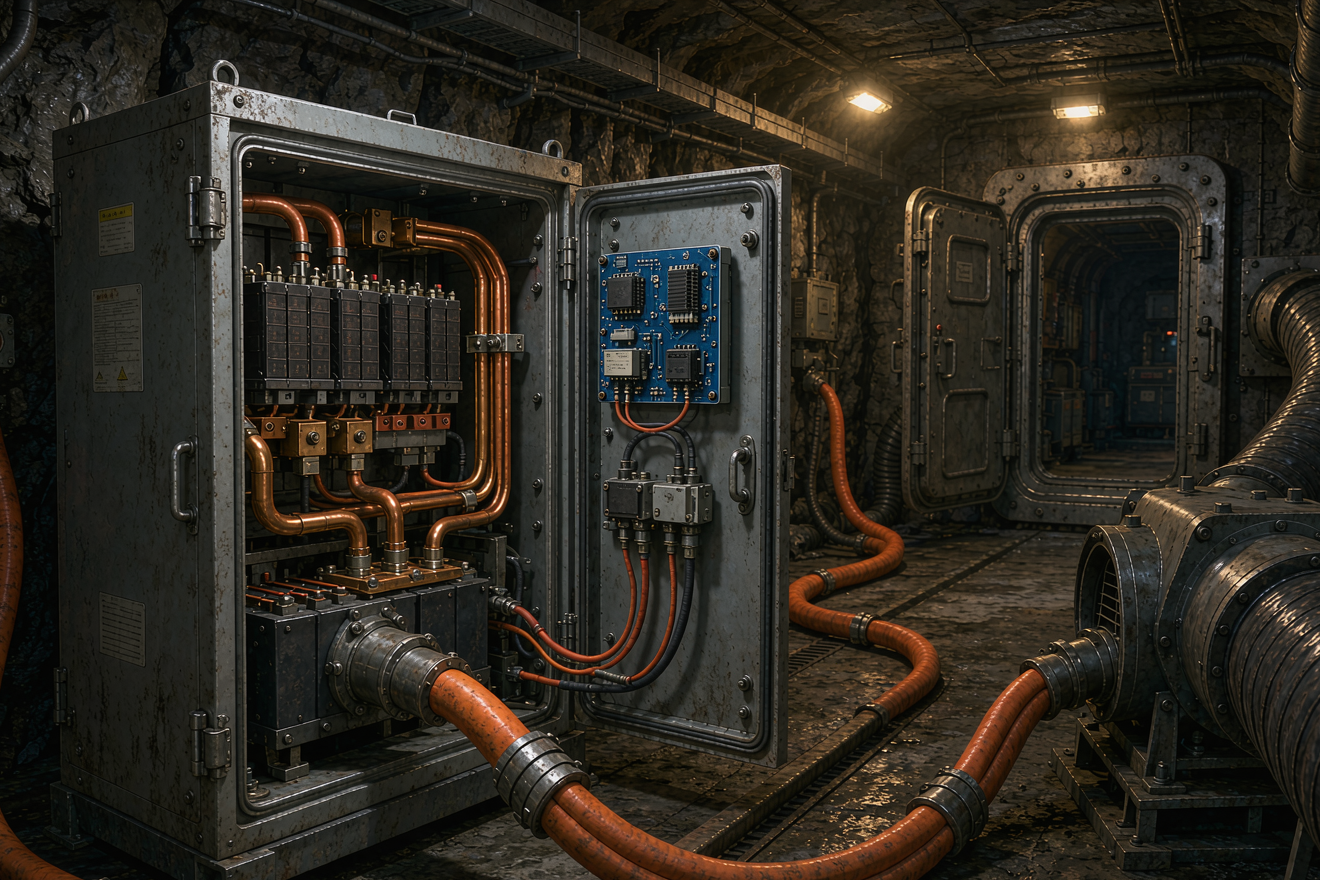
Primary mine ventilation is usually driven by surface fans and booster fans on the grid, but the auxiliary ventilation that actually moves air to the face, plus the refuge chamber life-support, must keep running when the grid does not. That is where a properly engineered lithium battery backup earns its place. I treat the ventilation duty and the refuge chamber duty as two separate loads with two separate risk profiles, even when they share one enclosure.
The ventilation load is intermittent and pulse-heavy: a 30 kW booster fan drawing from a 400 V bus can demand 80 A on start-up, and a soft-start or VFD is non-negotiable if you want the battery solution to last. The refuge chamber load is smaller but absolutely continuous: scrubbers, CO and CO2 sensors, a small air conditioner and lighting can total 600 W to 1.5 kW for the mandated 96-hour occupancy, and it cannot dip for a second.
Treating these as one undifferentiated load is the most common design error I am asked to correct. The chamber circuit is life-safety and must be physically prioritized; the fan circuit is operational and can ride through transients the chamber circuit never should.
Sizing the Backup Capacity: Duty Cycles and Runtime Math
For the refuge chamber I size to the worst-case 96-hour window required by most modern standards, then add margin. At 1.2 kW average load that is roughly 115 kWh of usable energy, and because lithium cells should not be cycled to empty, I design to 80 percent depth of discharge, which pushes the nameplate to about 144 kWh. I always confirm the figure against the actual chamber bill of materials rather than a catalogue number, because scrubber and chiller draws vary widely between manufacturers.
For auxiliary ventilation I size to the longest credible blackout plus the time for a diesel genset to reach the site, typically two to four hours of full fan duty. A 30 kW fan at 90 percent inverter efficiency needs about 33 kW input, so four hours is 132 kWh. In practice I combine both loads behind one lithium battery rack with split busbars so the life-critical chamber circuit is electrically isolated from the fan circuit.
The C-rate matters as much as the energy. A fan that pulls 80 A on start-up from a 144 kWh pack is asking for well under 1C, which is comfortable for LFP. If you try to back a much larger main fan from the same pack, the instantaneous C-rate climbs and cell voltage sag can trip the inverter, which is exactly the failure mode I have been called in to fix on a cold commissioning morning.
Temperature derating is the part newcomers miss. A battery housed in a cold intake can lose twenty percent of usable capacity at zero degrees Celsius, so I either specify a heated cabinet or move to sodium-ion for that specific location. I never publish a nameplate without stating the temperature at which it was measured.
Chemistry Choice: LFP vs NMC vs Sodium-Ion for Underground Use
For underground mining I default to lithium iron phosphate, or LFP. Its thermal runaway onset sits around 270 degrees Celsius versus roughly 150 for nickel manganese cobalt, and it releases far less oxygen when it does fail, which is the single most important property in a confined, gas-prone space. A lithium battery built on LFP also tolerates the partial-state-of-charge cycling that backup duty imposes without the calendar fade you see in NMC.
Sodium-ion is gaining interest for cold mine intakes because it keeps usable capacity below zero degrees Celsius far better than LFP, and it removes the cobalt supply concern entirely. I have run pilot sodium-ion modules for surface refuge chamber pre-heat where the ambient dips to minus 25 degrees Celsius, but for the primary chamber pack I still trust LFP until the cycle cost closes.
NMC stays in the conversation only for weight-limited mobile equipment, not for a stationary chamber battery solution, because its safety margin underground is simply narrower. Every pack I ship is validated to UN38.3 for transport and built to the cell-level expectations of IEC 62133 and the stationary expectations of IEC 62619.
Safety Architecture: Isolation, Ventilation and Thermal Runaway Containment
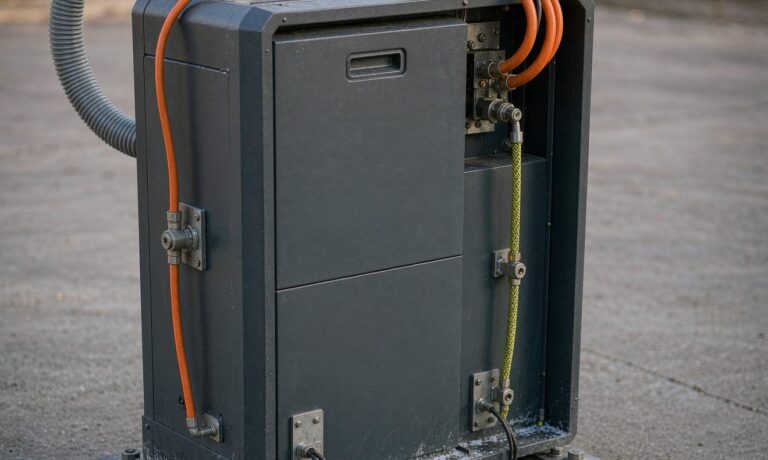
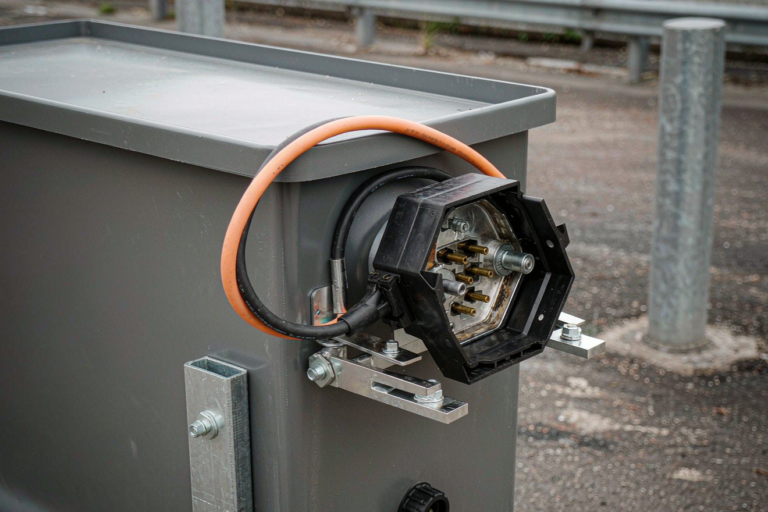
A chamber battery must fail safe, not fail quiet. I specify IP65 enclosures as a floor for the intake side and IP66 where water ingress from rock dust suppression is likely, with all terminations in sealed glands. The rack sits outside the breathing zone of the chamber occupants, vented to a non-confined space, because even LFP off-gassing during an abuse event is not something you want inside a sealed refuge.
Thermal runaway containment is layered. Each module carries its own fuse and a pyro-fuse on the bus, the battery management system watches cell voltage and temperature at every series group, and the enclosure includes a thermal barrier so a single cell fault cannot cascade through the pack. I have watched a competitor’s cabinet where one vented cell took out nine neighbors because they skipped the barrier; we do not repeat that.
Because mines are hazardous locations, the cabinet and its controls are selected to suit the gas group, with ATEX or IECEx rated components where the site risk assessment demands them. That is a custom battery solution decision made per mine, not a catalogue default. I also lay out modules with the spacing and clearances called for by NFPA 855 so a service tech is never working shoulder-to-shoulder with a live high-voltage wall.
Charging, Maintenance and State-of-Health Monitoring
Charging is simple in theory and easy to get wrong in practice. I set the float and absorption windows to the cell datasheet, cap charge current at 0.5C for longevity, and require a galvanic isolator between the grid charger and the pack so a ground fault upstream cannot energize the chamber frame. A battery solution that quietly floats at the wrong voltage will lose twenty percent of its life in a season.
State-of-health monitoring is where most sites under-invest. I insist on a BMS that reports per-module resistance trend and capacity trend to the surface, because a refuge chamber battery that is never exercised will still sulfate and drift. We schedule a full discharge verification every six months against the 96-hour target and log it; the Mine Safety and Health Administration and most provincial regulators expect that record.
The drift I watch most closely is internal resistance. When a module climbs fifteen percent above its commissioning baseline I rotate it out, even if capacity still reads acceptable, because resistance is the early warning for the thermal events you do not want underground.
Deployment Lessons From Real Sites
The first lesson is mechanical, not electrical. A battery cabinet that cannot survive being dragged around a curve on a mine locomotive will fail before its cells do, so I specify the frame to the same shock and vibration spec as the equipment it rides with, and I have learned to over-build the skid. A cracked enclosure that lets rock dust into a BMS bay is a failure no amount of cell quality recovers.
The second lesson is commissioning discipline. I have seen a perfectly good lithium battery solution fail acceptance because the installer landed the chamber circuit and the fan circuit on the same busbar, defeating the isolation. We now witness-test the split-bus wiring on every deployment and tag it before the chamber is sealed.
The third lesson is training. The chamber battery is a life-safety asset, and the crew needs to know it is there, know it is charged and know not to borrow it for a convenience load. I include a one-page operator card with every system and a six-month refresher in the service contract, because an unexercised battery is an unknown battery.
Frequently Asked Questions
How long must a refuge chamber battery last during a power outage?
Most modern mining regulations require a refuge chamber to sustain occupants for at least 96 hours on its own life-support, so I size the chamber battery solution to that window plus margin, typically designing to 80 percent depth of discharge and verifying the full runtime on a six-month cycle rather than trusting the nameplate.
Which battery chemistry is safest for underground mining use?
For a stationary chamber or ventilation backup I recommend lithium iron phosphate because its thermal runaway threshold is far higher than NMC and it off-gases far less, which matters in a confined, gas-prone space. Sodium-ion is a strong candidate for very cold intakes but is not yet my primary choice for the life-critical chamber pack.
Can one battery system power both the ventilation fan and the refuge chamber?
Yes, but only with a split-bus design where the life-critical chamber circuit is electrically and physically isolated from the fan circuit. I combine both loads behind one lithium battery rack yet keep separate protection so a fan start-up surge or fault cannot compromise the chamber life-support.
What standards apply to mine backup battery systems?
The packs I build are validated to UN38.3 for transport and referenced to IEC 62133 for cells and IEC 62619 for stationary use, with enclosures rated to IP65 or IP66 and hazardous-location components selected to ATEX or IECEx where the site risk assessment requires them.
How is the state of health of a mine battery monitored?
The battery management system reports per-module voltage, temperature, resistance trend and capacity trend to the surface, and we run a full discharge verification against the 96-hour target every six months. I rotate any module whose internal resistance climbs fifteen percent above its commissioning baseline, even if its capacity still reads acceptable.
Why not use a diesel generator instead of a battery solution?
A generator still needs a battery to start and to bridge the minutes before it reaches the site, and it adds fuel, fumes and a moving part into a confined space you are trying to keep safe. A lithium battery solution provides instant, silent, fume-free backup for the life-critical chamber load and pairs cleanly with a genset for the longer ventilation duty.
Further Reading
References