Home Energy Storage Flood Recovery: A Practical Guide
When the Water Recedes, the Real Risk Begins
I am Karl Huang, a senior lithium battery engineer at Horizon Power. Over the last decade I have stood in more than a few basements and garage corners where a home energy storage cabinet sat half-submerged after a storm surge or a burst pipe. The instinct of most homeowners is to mop up, plug the system back in, and hope. That instinct is exactly what turns a recoverable unit into a fire report. This guide walks through the field protocol my team uses to decide whether a flooded battery can return to service, and how to bring it back without creating a silent short that fails a month later.
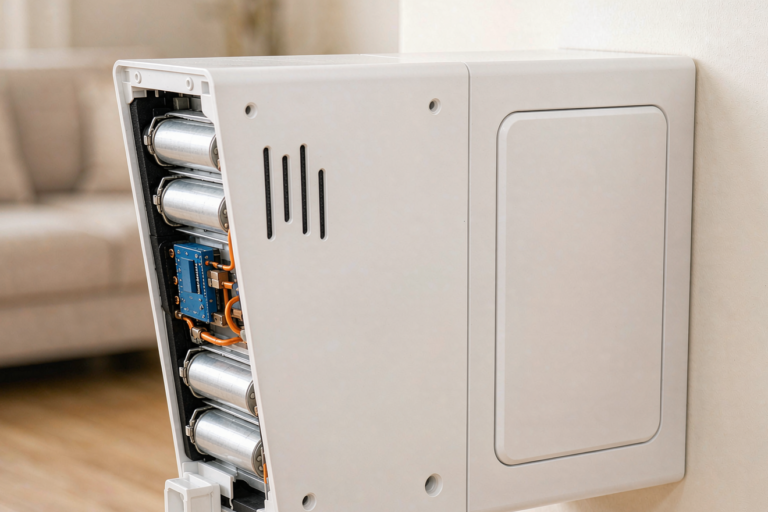
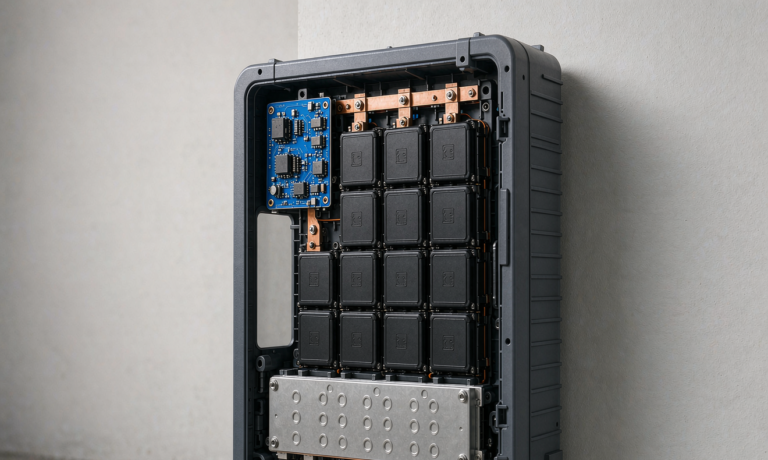
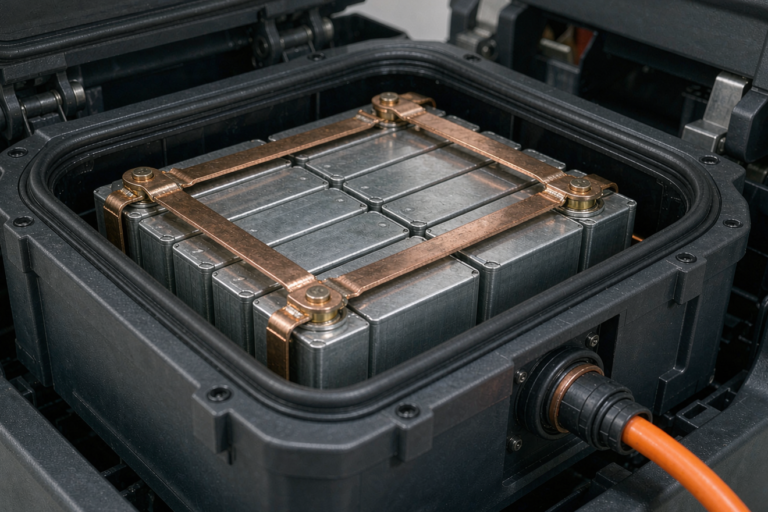
A modern home energy storage system is not a single brick. It is a prismatic or pouch lithium battery pack, a battery management system board, contactors, a high-voltage busbar, and an enclosure rated to a specific ingress protection level. Water attacks each of those layers differently, and the failure modes are not obvious until you measure them. What follows is the same step-by-step sequence we apply on site, written so a competent installer can follow it and a homeowner can understand the limits of do-it-yourself recovery.
Step 1: Make the System Safe Before You Touch Anything
Do not step into standing water with the system energized. A 48 V or 51.2 V lithium battery pack still holds dangerous energy even when the inverter shows zero output, because the battery disconnect may not have opened. In the United States, Article 706 of the National Electrical Code requires a readily accessible disconnect for energy storage systems, but after a flood that disconnect is often under water or corroded shut.
- Kill the utility main first, then the battery disconnect, then the inverter AC and DC breakers. Verify with a CAT III rated meter at the battery terminals, not just at the display.
- Call your utility if water reached the meter base or the service panel. Saltwater intrusion into a panel is a utility-level hazard, not a homeowner task.
- Treat every terminal as live until proven at 0 V. A welded contactor can back-feed the busbar even with the breaker off.
- Wear insulated gloves rated above the system voltage and rubber boots. Electrolyte from a lithium iron phosphate cell is not acidic like lead-acid, but a flooded pack can still arc and the corrosion products are caustic.
In a 2022 response to a 300 mm basement flood, the first unit we inspected had a contactor that read open on the front panel yet measured 51.2 V at the pack busbar. The homeowner had already tried to “reset” it. Only the main disconnect saved the situation from a worse outcome.
Step 2: Understand What Water Actually Does to the Battery
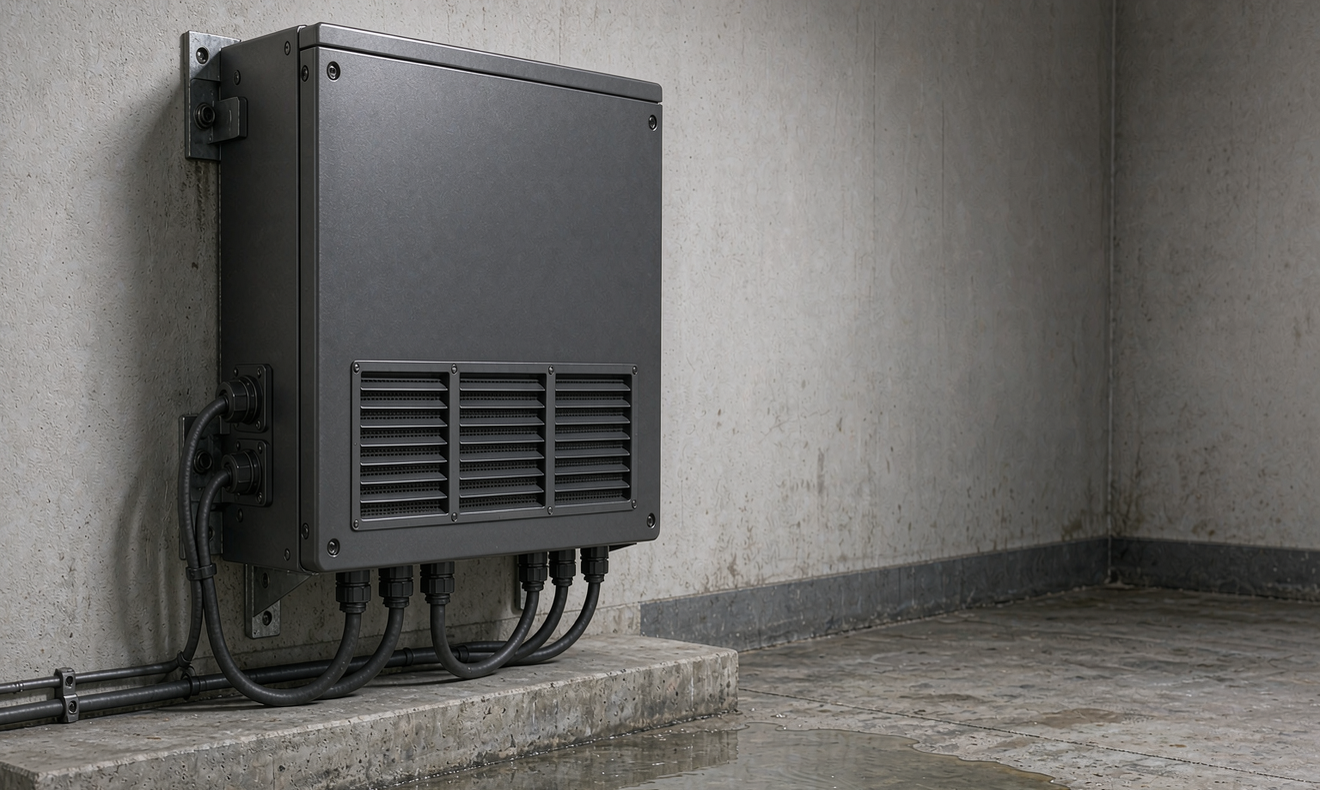
The enclosure rating matters more than most buyers realize. The majority of home energy storage cabinets Horizon Power ships are built to IP65 under IEC 60529: dust-tight and protected against low-pressure water jets from any direction. IP65 does not mean submersible. Immersion for more than a few minutes defeats the gasket at conduit entries, fan grilles, and the ventilation louvers. IP67 would survive 1 m for 30 minutes, and IP66 resists heavy seas, but few residential cabinets carry those ratings because they trade cooling airflow for sealing.
Once water is inside, four things happen. First, creep corrosion starts on the tinned or copper busbars and on terminal plating; seawater accelerates this by ten to one hundred times compared with fresh water because of chloride ion migration. Second, the battery management system board floods, and conductive paths form between sense lines, producing false cell-voltage readings and sometimes welding the DC contactor closed. Third, moisture wicks through the cell vent membrane on prismatic cells and along pouch-foil edges, where microscopic dendrite growth can begin once the pack is “dried” but salt residues remain. Fourth, those salt bridges can create a low-resistance cell-to-cell path that, under charge, triggers the exact thermal event that UL 9540A and UN38.3 testing exist to prevent.
This is why a pack that “looks dry” is the most dangerous pack. The water left behind the chemistry problem.
Step 3: The Drying and Inspection Protocol
Never put a flooded battery pack in an oven, under a heat lamp, or in direct tropical sun above 40 C. Heat softens cell seals, bakes corrosive salts deeper into the board, and accelerates parasitic side reactions inside the lithium cells. We dry at ambient airflow below 35 C for 24 to 48 hours.
- Confirm 0 V at the pack terminals with a meter before opening the enclosure. If you cannot confirm 0 V, stop and call a qualified technician.
- If the floodwater was saltwater, rinse the exposed metal and board with de-ionized water to remove chlorides, then blot and air-dry. Tap water leaves its own minerals behind.
- Measure enclosure relative humidity below 20 percent before you consider closing it up. A cheap electronic moisture meter is enough to catch a damp corner.
- Run an insulation resistance, or dielectric, test from pack busbar to chassis. A safe threshold is above 1 M ohm; anything below points to residual conduction paths.
- Look for the tells: a swollen cell, white powdery bloom on lithium iron phosphate terminals exposed to humidity, green or blue corrosion on the control board, and stained or brittle wiring harnesses.
Step 4: Repair or Replace, Decided by Measurement
Home energy storage owners often ask whether a flooded unit is worth saving. The honest answer is that most are not, and the decision should come from data, not optimism. Replace the system if any cell is swollen, if terminal corrosion is severe, if the BMS board was submerged, if measured internal resistance rose more than 30 percent from nameplate, or if usable capacity falls below 80 percent of rating.
Capacity is the cleanest single test. Discharge the pack at 0.2 C to the cutoff voltage and compare delivered ampere-hours to the label. The 80 percent line is the end-of-life threshold used in IEC 62619 for stationary batteries, and it is the line we hold to. A module that lost its UL 9540A and UL 9540 listing integrity because of water intrusion should not be quietly recommissioned; the listing assumes the enclosure and isolation the flood destroyed.
If only the BMS board and wiring are affected and the cells pass capacity and insulation tests, Horizon Power recommends a module or control-board swap performed by trained staff rather than field re-cell work. Opening a prismatic cell to swap internal layers in a garage is how good batteries become unsafe batteries.
Step 5: Recommissioning, Grounding and Bonding
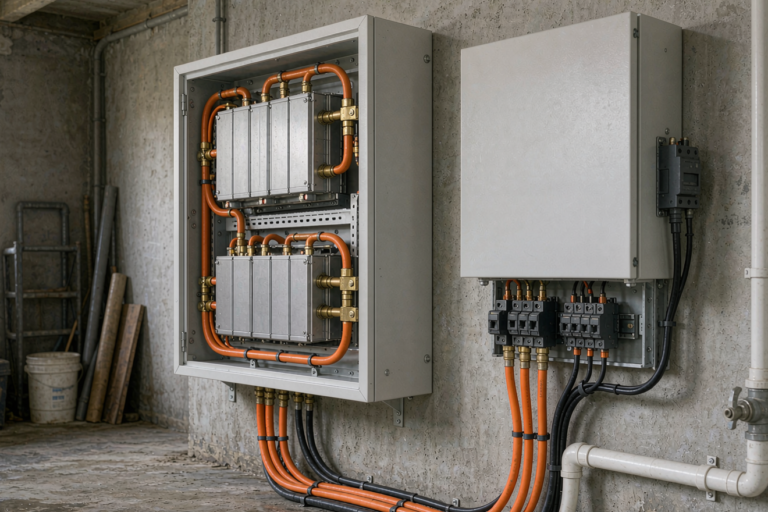
Coming back online is where code compliance protects you. Under Article 706, the storage system must be grounded and bonded to the premises grounding electrode system. The common mistake is bonding the neutral at the battery when the inverter already isolates it; many grid-tied inverters use a transformer-isolated topology, and a second neutral bond creates a parallel path that trips ground-fault protection or, worse, energizes the wrong conductor. Bond only where the inverter manual calls for it.
- Confirm insulation resistance above 1 M ohm from every conductor to chassis before closing the enclosure.
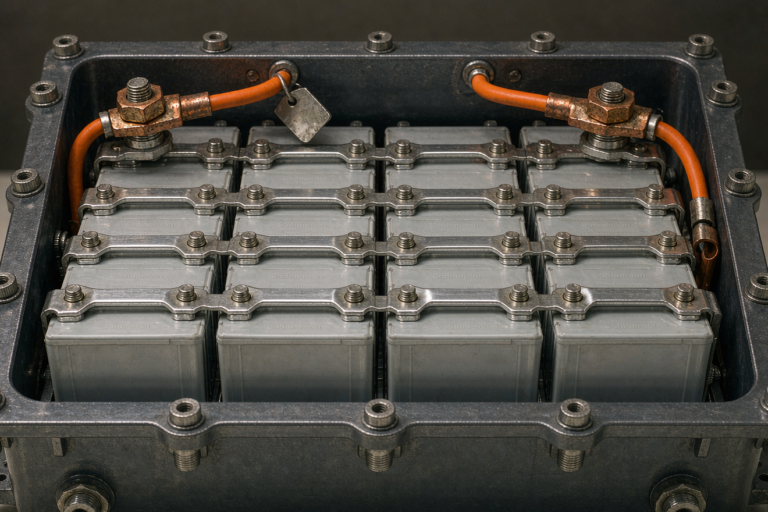
- Torque the busbar and terminal hardware to specification, for example M8 studs at 12 to 15 Nm, and mark them so a future inspector sees they were set.
- Verify the AC branch carries ground-fault protection, and confirm interconnection behavior against IEEE 1547-2018 if the system exports to the grid.
- Run a functional check at 0.2 C discharge and watch the resting cell-to-cell voltage spread; a healthy lithium battery pack stays within about 30 mV at rest. Larger spreads mean a weak or damaged cell group.
Step 6: Design So the Next Flood Loses
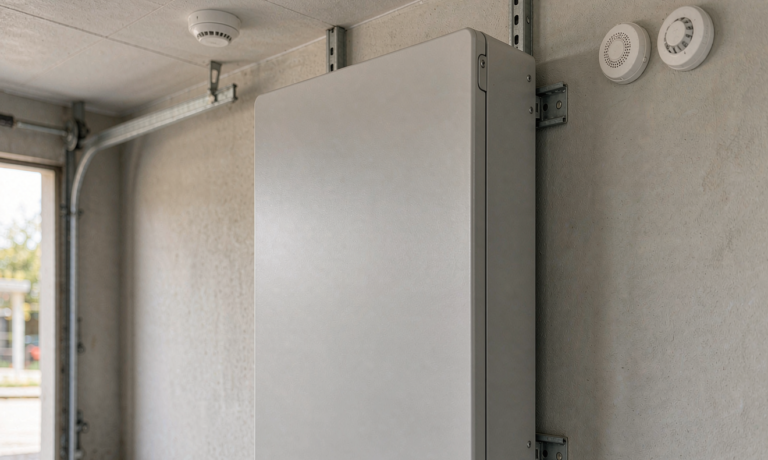
The cheapest recovery is the one you never need. Mount the cabinet at least 450 mm, about 18 inches, above the anticipated flood level or the finished floor, whichever is higher; this also satisfies the service-spacing intent of NFPA 855 and most local flood amendments. Add a flood curb or barrier, drill weep holes and a drain at the enclosure base, and seal every conduit entry with compression glands so water cannot track along the cable.
For homes in high-risk zones, specify an IP66 enclosure and keep all ventilation louvers above the flood line. A sump pump plus a leak sensor that opens the DC contactor on first water contact turns a total loss into a damp afternoon. Keep the elevation certificate with the install paperwork; insurers and inspectors will ask for it after the next event.
A lithium battery pack is forgiving of heat and hungry for respect around water. Treat a flooded home energy storage unit as a measured, code-bound recovery rather than a quick dry-out, and the system that comes back online will be the one that stays online.
Frequently Asked Questions
Can a flooded home energy storage battery be saved?
Sometimes, but only when the cells pass an insulation resistance test above 1 M ohm, a capacity test at or above 80 percent of nameplate, and a visual check with no swelling or board corrosion. If the BMS board was submerged or any cell is swollen, replace the unit rather than risk a latent short.
Is it safe to dry a lithium battery pack in the sun?
No. Direct sun or any heat source above 40 C softens cell seals, drives corrosive salts into the board, and can trigger internal side reactions. Dry the enclosure at ambient airflow below 35 C for one to two days after confirming the pack is at 0 V.
How do I know if my battery suffered permanent damage?
Measure, do not guess. A capacity test at 0.2 C below 80 percent of rating, internal resistance more than 30 percent above nameplate, resting cell spread beyond about 30 mV, or any sign of swelling or white terminal bloom all indicate permanent damage that warrants replacement.
Does homeowner insurance cover flood-damaged batteries?
Standard policies usually exclude flood; coverage requires a separate flood endorsement, and payout depends on the elevation certificate and proof the system was installed to code. Document the install height and keep the interconnection paperwork before an event, not after.
Should I bond the neutral when reconnecting my storage system?
Only if the inverter manual requires it. Many grid-tied inverters isolate the neutral, and adding a second bond creates a parallel path that trips ground-fault protection. Follow Article 706 and the inverter instructions, and have a licensed electrician verify the bond.
How high should I mount my home battery above the floor?
At least 450 mm, roughly 18 inches, above the expected flood level or the finished floor, whichever is higher. In coastal or storm-surge zones, mount higher and pair the cabinet with a leak sensor that opens the DC contactor on first contact with water.
Further Reading
References