Lithium Battery for Electric Winches: Sizing and Duty Cycles
I am Karl Huang, Senior lithium battery Engineer at Horizon Power. For ten years I have specified lithium battery packs for recovery, marine, and industrial winch platforms, and the same mistake repeats: buyers size by amp hours and ignore the surge current and duty cycle that decide whether the winch finishes the pull. A lithium battery for electric winches is not a generic deep-cycle block. It must survive motor stall, repeated high-current draws, vibration, and temperature swings that wreck a standard pack in a season. This guide covers how to size capacity, pick voltage, and choose chemistry so the battery outlasts the winch.
Why Winch Loads Break Ordinary Battery Packs
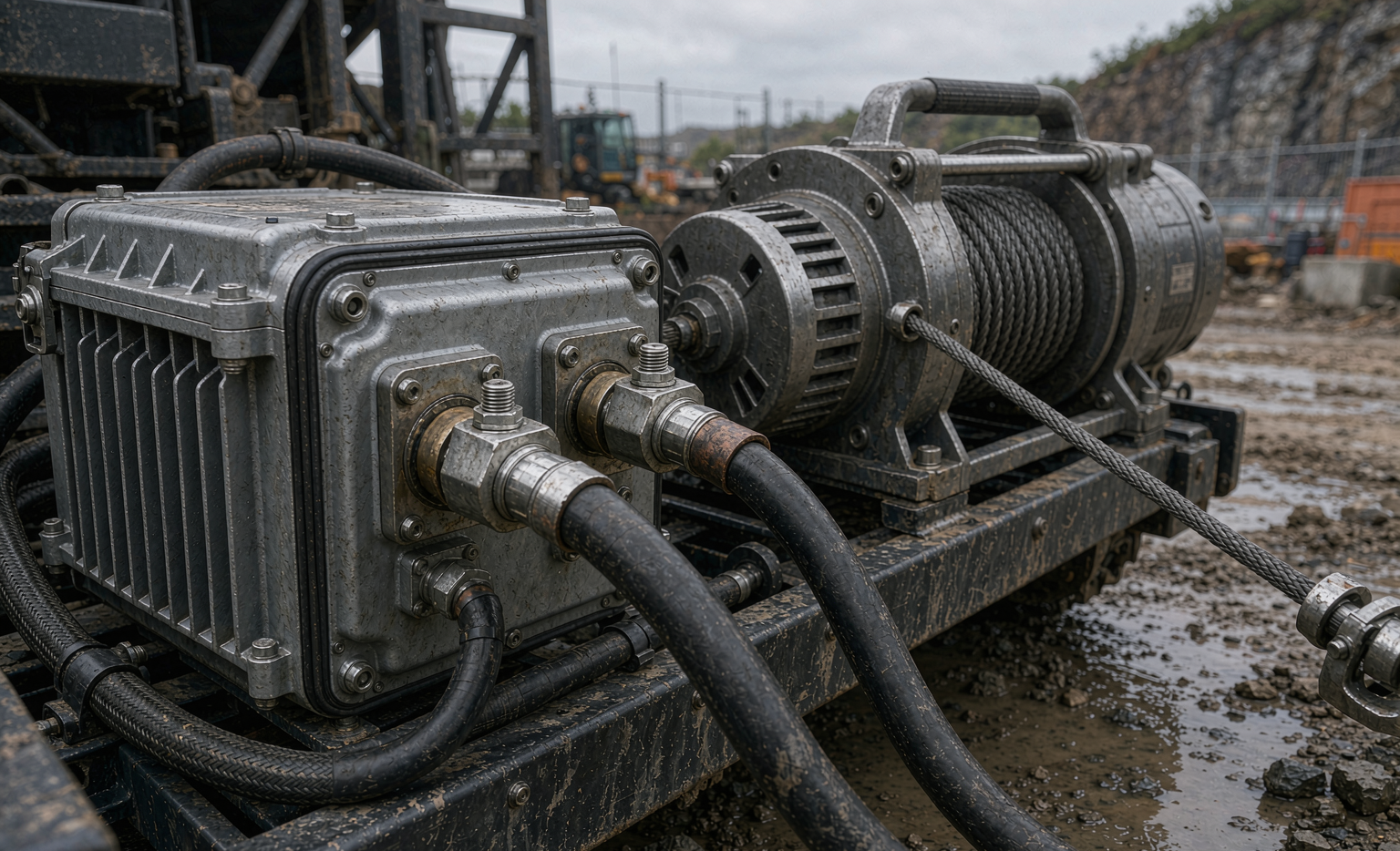
A winch motor is among the most abusive loads you can put on a battery. It draws heavy current the instant the drum turns, and that current climbs as the load resists. When a vehicle is stuck and the cable goes taut, the motor nears stall, where current peaks several times the running value. A lead-acid battery sags and recovers slowly; a weak lithium pack trips its protector or overheats the busbars.
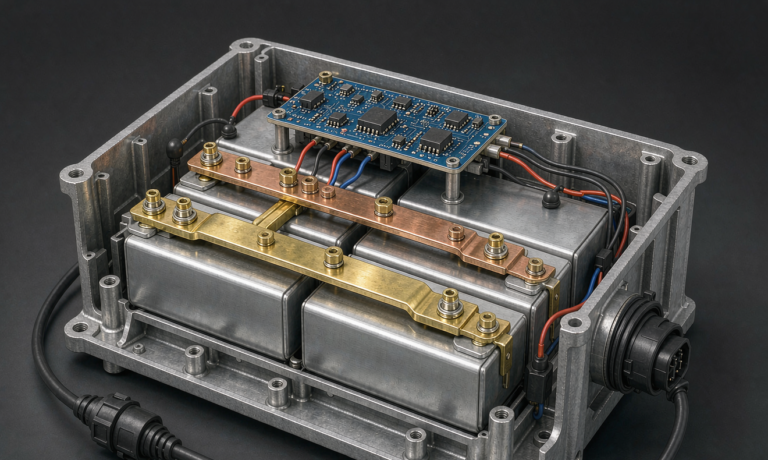
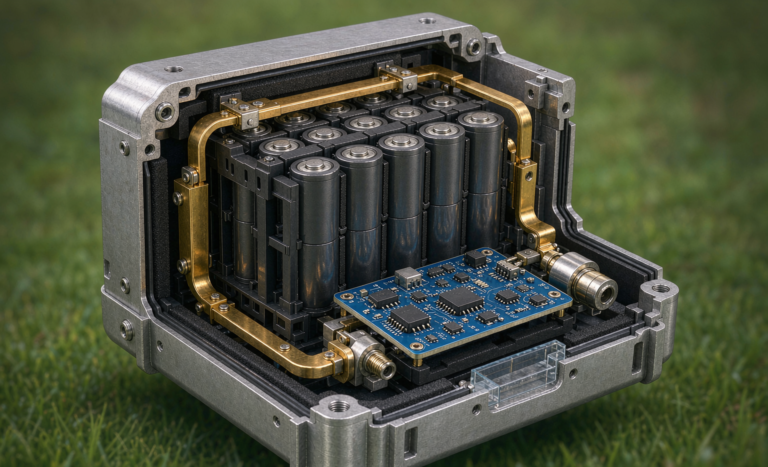
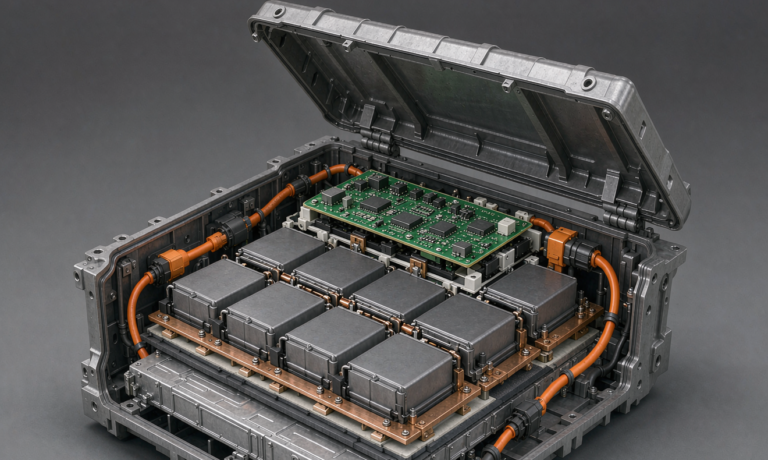
From my bench data the three killers are surge current, heat from repeated pulls, and vibration. Surge demands cells and a BMS rated for pulses above the continuous number. Heat demands a chemistry and enclosure that shed energy safely. Vibration demands welded busbars and potted modules, not crimped tabs. Ignore any one and pack life drops from years to weeks.
Sizing From the Nameplate and Duty Cycle
Read the winch nameplate first. A 12V 9000 lb winch draws about 400 A at full load and 60 to 80 A at no load. The dangerous figure is stall current, which can spike to 600 to 800 A for one to two seconds. A lithium battery for electric winches must source that spike without the BMS opening.
Map the nameplate to the pack: take full-load current, add margin for inrush. At 400 A load, design for at least 500 A continuous and a 700 to 800 A pulse of 3 to 5 seconds. The cell datasheet lists maximum continuous and pulse discharge; both must clear your winch numbers with headroom, not at the limit.
Capacity decides pull count, C-rate decides whether the pack can deliver the current. A 100 Ah pack at 1C gives 100 A continuous; a 400 A winch needs 4C or a larger pack. A 45 second pull at 400 A uses about 5 Ah. A 100 Ah pack at 80 percent depth gives roughly 16 pulls on paper, but I plan for 10 to 12 because sag and heat cut usable capacity. Always derate the brochure figure.
Choosing the Voltage Platform
Winches run on 12V, 24V, 36V, and 48V, and the choice reshapes the battery. A 12V winch is common on ATVs and trailers because it shares the vehicle system, but at 400 A it moves 4.8 kW and needs thick cable. A 24V or 48V winch cuts current in half or quarter for the same power, simplifying wiring and lowering heat.
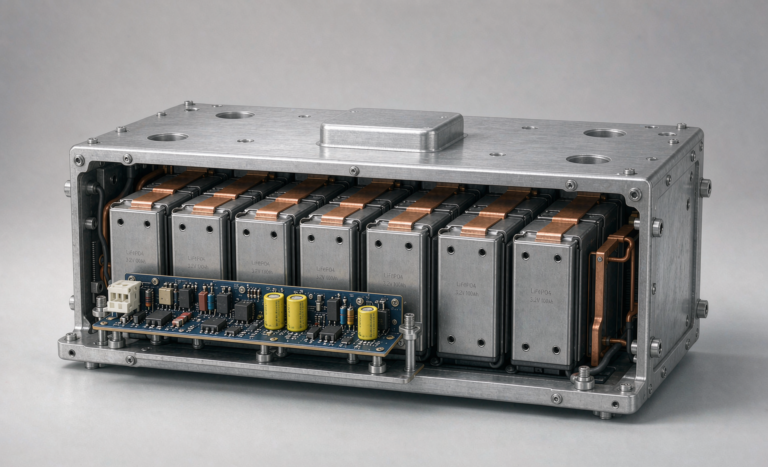
For heavy recovery, tow trucks, and industrial hoists I default to 24V or 48V. Higher voltage lets a lithium battery for electric winches do the same work with thinner, cooler cable. Cells sit in series to reach bus voltage; parallel groups add capacity. A 48V pack of 16 cells in series with two parallel groups is a robust, balanced design a good BMS manages cell by cell.
Match pack to motor. Do not run a 12V winch on 24V. When the buyer controls the whole system, specify 24V or 48V up front for the efficiency gain alone.
LFP vs NCM for Winch Service
Chemistry is where the safety margin lives. Lithium iron phosphate, LFP, is my default for winches. It handles high pulse discharge cleanly, stays stable under abuse, and delivers 2000 to 4000 cycles at 80 percent depth. Its flat voltage curve keeps the winch pulling strongly until the pack is nearly empty. Under stall it stays far from thermal runaway, which I value when the pack sits near fuel or hydraulics.
Nickel manganese cobalt, NCM, offers higher energy density, so it wins when weight or space is the hard limit, such as aircraft or light portable units. The cost is thermal sensitivity. Under repeated stall an NCM pack runs hotter and needs more conservative BMS limits and heavier cooling. For most B2B buyers the cycle-life and safety edge of LFP beats the weight saving of NCM.
Whichever you choose, the cell must list a pulse rating that clears stall current. I have rejected fine NCM cells whose 10-second pulse fell below the winch stall. A custom battery solution should be built around the cell’s real pulse limit, not the marketing continuous number.
BMS Protection and Enclosure Rating
The BMS separates a pack that protects itself from one that fails quietly. For winches it must trip fast on a short yet tolerate a 3-second stall pulse, cut charging below freezing, balance cells, and report state of charge to the vehicle.
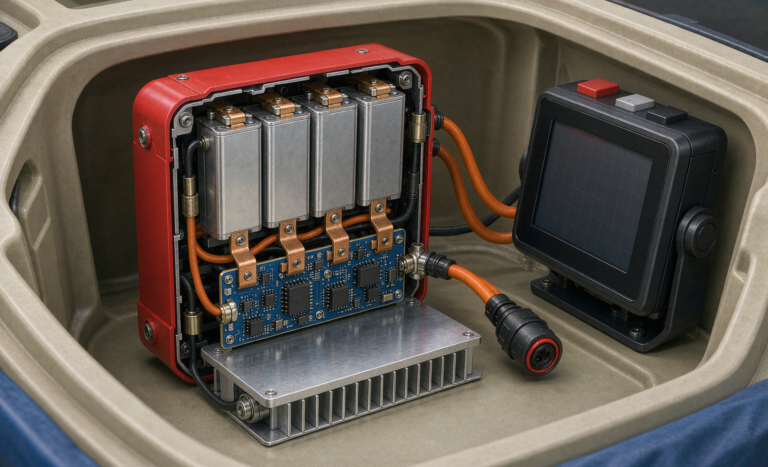
Enclosure matters as much as electronics. Off-road and marine winches live in mud, spray, and dust, so I specify IP65 for splash and IP67 where submersion is possible. Terminals must be torque-checked and sealed, busbars welded not crimped, and the module braced against vibration. A lithium battery for electric winches in a gasketed metal case has outlasted plastic cases in every trial I have run.
Key specs: overcurrent trip set above running current but below cable melt; low-temperature charge cutoff at 0 degrees Celsius; IP65 minimum, IP67 for marine, with sealed torqued terminals.
Compliance, Installation, and End of Life
If you resell or export a lithium battery for electric winches, paperwork is not optional. Every pack must pass UN38.3 transport testing for altitude, thermal, vibration, shock, short, impact, and overcharge. For cell safety look for IEC 62133; for industrial motive packs IEC 62619 applies. Ask for the test reports, not a certificate image.
Verify three things before signing: pulse rating clears stall current with margin; IP rating is tested not claimed; factory shows cell traceability and formation records. At Horizon Power we keep cell-level batch records so a buyer can trace a pack to its cells. That separates a real custom battery solution from a repackaged block.
Install close to the winch with sized lugs, fused run, and away from exhaust heat. Check state of charge monthly. At end of life, plan second-life or recycling at purchase, since LFP cells retain recoverable material and many regions require take-back. A responsible custom battery solution includes that path.
What size lithium battery do I need for a 12V winch?
Start from the winch full-load current on the nameplate, then add margin for inrush. A 12V 9000 lb winch drawing about 400 A at load needs a pack rated for at least 500 A continuous and a 700 to 800 A short pulse. For capacity, estimate the longest pull in amp hours and size usable capacity for 10 to 12 hard pulls plus 20 percent headroom. A 100 to 150 Ah LFP pack is a common starting point for trail recovery.
Can a lithium battery handle the stall current of a winch?
Yes, if it is specified for it. Stall or locked-rotor current can reach four to six times running current for a few seconds. Choose cells and a BMS whose pulse discharge rating clears the stall figure with margin, and set the BMS overcurrent trip above the running current so it rides through the pulse instead of nuisance-tripping. LFP is preferred here because it stays stable under that abuse.
Is LFP or NCM better for electric winches?
For most winch service LFP is better. It delivers high pulse current, runs cooler under stall, and lasts 2000 to 4000 cycles. NCM wins only when weight or volume is the hard limit, such as aircraft or ultra-light portable units, and it needs more conservative thermal management. If safety and life matter more than grams, choose LFP.
How many winch pulls can a lithium battery deliver?
It depends on pull length, current, and cooling. A 45 second pull at 400 A uses about 5 Ah, so a 100 Ah pack at 80 percent usable depth gives roughly 16 pulls on paper. In the field I plan for 10 to 12 because voltage sag and heat cut usable capacity. Continuous duty with no cooldown needs an actively cooled enclosure and a larger pack.
Do I need a special charger for a winch lithium battery?
You need a charger matched to the chemistry and voltage, with a low-temperature charge cutoff. A lead-acid charger will overcharge and damage lithium cells. For LFP use a 14.6 V absorption stage on a 12V pack or the correct constant-voltage stage on 24V or 48V, and confirm the charger talks to the BMS if your pack supports communication.
What IP rating should a winch battery enclosure have?
Use at least IP65 for off-road trail and agricultural winches, and IP67 where the pack may be submerged or hit by wave spray, such as marine or fording use. The rating should come from a tested report, not a label claim, and the terminals must be sealed and torque-checked so water cannot reach the busbars.
Further Reading
References