Semi-Solid State Battery Enclosure Laser Welding and Seal Integrity
As a senior lithium battery engineer at Horizon Power, I have watched the humble cell can go from an afterthought to a first-class safety component. In a semi-solid state battery the enclosure does far more than hold the stack together. It shields a moisture-sensitive composite electrolyte, contains the internal pressure built during formation, and keeps corrosive gases away from the busbars. A weak weld is not a cosmetic defect. It is the line between a cell that passes UN38.3 and one that vents at altitude. This article walks through how we laser weld semi-solid state battery enclosures, why the process window is narrow, and how we prove the seal actually holds.
Why Enclosure Sealing Decides Cell Fate
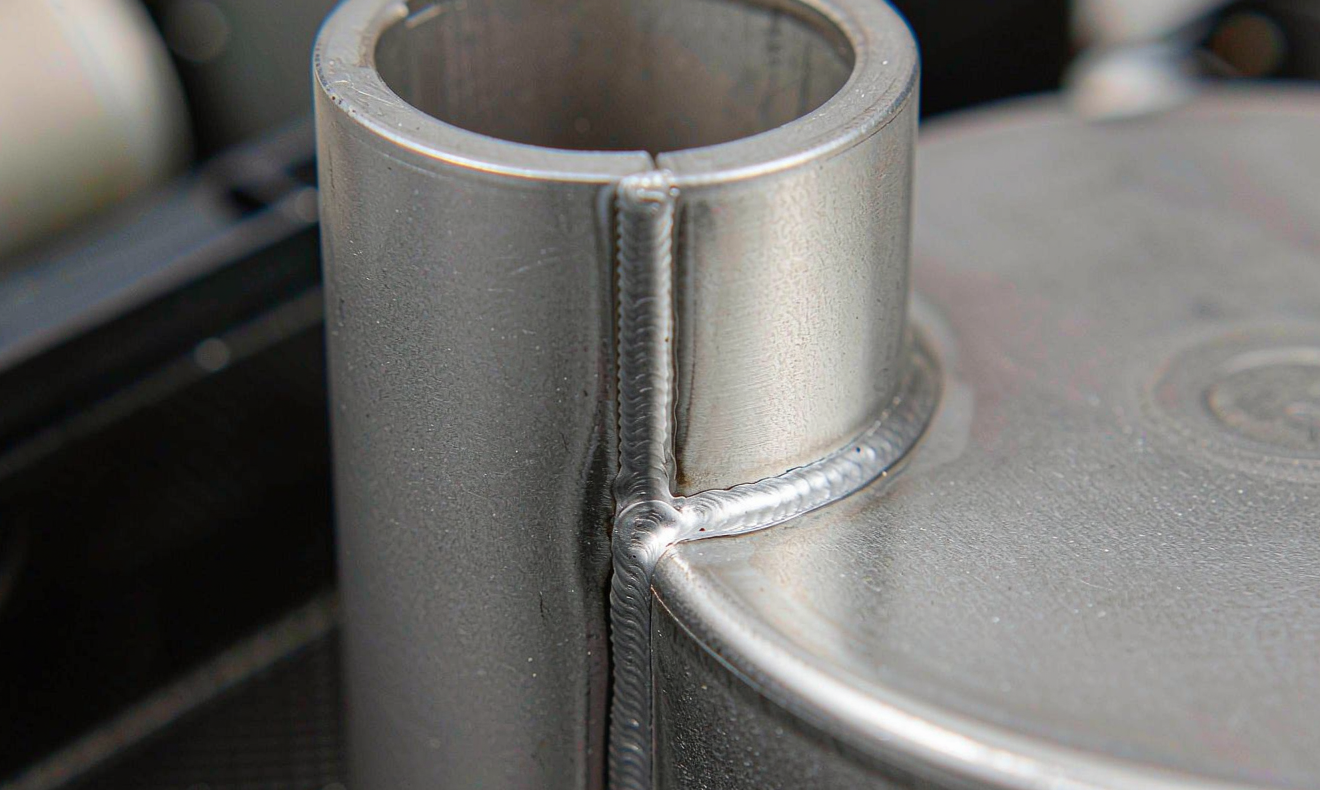
The semi-solid electrolyte sits between a liquid and a solid, which makes it sensitive to two enemies: water and oxygen ingress, and electrolyte leakage outward. A prismatic aluminum case closed with a continuous laser seam gives us a hermetic boundary with a typical helium leak rate below 1e-8 Pa m3/s. Compare that with adhesive-only closures, which can creep and form channels after temperature cycling. In my bench tests a poorly sealed sample lost 3 percent capacity in eight weeks at 45 degrees Celsius because humid air reached the cathode interface. Laser welding removes the adhesive variable and delivers a metallurgical bond that ages with the cell instead of against it.
Laser Welding Versus Alternative Joining
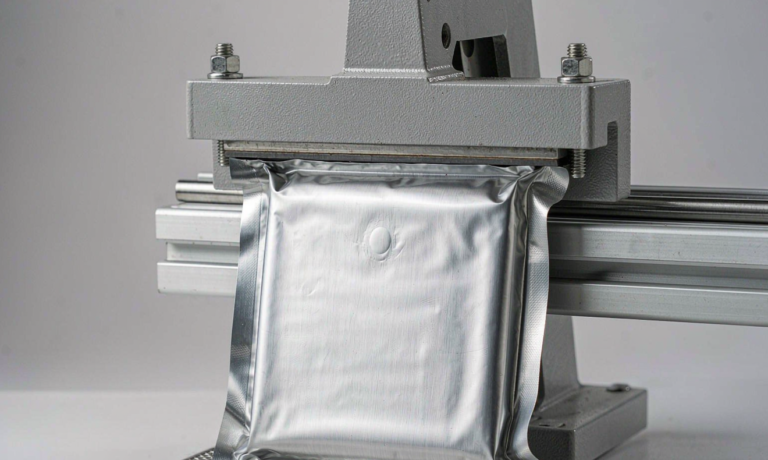
Before standardizing on fiber laser welding we evaluated resistance seam welding, ultrasonic welding, and adhesive bonding for our enclosures. Resistance welding works on thick tabs but pits thin 0.6 millimeter case walls and leaves a heat-affected zone wide enough to soften the nearby gasket. Ultrasonics shake the cell and can delaminate the electrode coating. Adhesive bonding is cheap but fails the long-term seal integrity we require for IEC 60529 IP67 ratings. A 1 to 3 kilowatt continuous-wave fiber laser with a 0.2 to 0.6 millimeter focused spot gives a narrow, repeatable seam at 30 to 80 millimeters per second. That is the sweet spot for a clean, spatter-free closure on any custom battery solution.
Process Parameters That Control Penetration
Penetration is everything. Too shallow and the seam leaks; too deep and you burn through into the cell. For our 0.8 to 1.2 millimeter 3003 aluminum cases we run 1.5 to 2.2 kilowatts with a 60 to 120 millimeter per second travel speed and a 0.3 millimeter spot. We use a slightly defocused beam plus a small wobble pattern to widen the fusion zone without adding heat. The key metric is penetration depth equal to 60 to 80 percent of wall thickness. I log every weld with a vision system that measures seam width within plus or minus 0.05 millimeter. When a parameter drifts, the SPC chart flags it before a single bad cell ships, which is how we keep a lithium battery line stable across shifts.
Managing Heat Input Near the Semi-Solid Electrolyte
Heat is the silent killer. The semi-solid composite electrolyte tolerates less thermal abuse than a conventional lithium battery electrolyte because the polymer fraction can cross-link or stiffen past about 80 degrees Celsius. We keep the heat-affected zone under 0.4 millimeter and use staged clamping with a copper heat sink directly behind the weld line. A 2 to 3 bar argon backing gas prevents oxidation on the root side. Where the design allows we weld before filling, then close the fill port with a final laser tack. That sequence cut our internal short risk by roughly half on the pilot line, and it is one reason a drone battery pack from our line survives vibration testing without seal fatigue.
Leak Rate, Helium Tracing and IP Rating
Seal integrity is proven, not assumed. After welding we pressurize the cell with helium to 0.5 bar and sniff the seam with a mass spectrometer, rejecting anything above 5e-9 Pa m3/s. On production lines we add statistical sampling plus a 100 percent argon spray test on safety-critical runs. The enclosure then targets IP67 for immersion and IP6K9K for high-pressure washdown in industrial packs. We cross-check against IEC 60529 and ASTM B117 salt-spray exposure to confirm the weld and the adjacent coating survive 500 hours without creep corrosion. These numbers feed directly into our UN38.3 and IEC 62133 compliance file.
In-Line Monitoring and Weld Quality Control
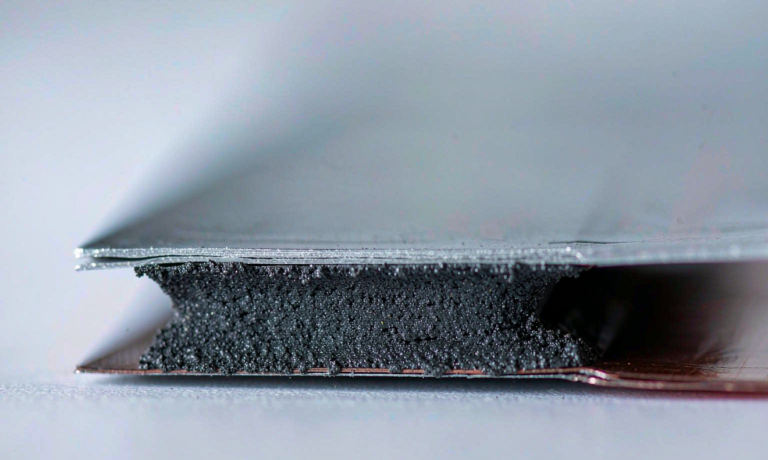
You cannot inspect quality into a weld after the fact, so we monitor in real time. A coaxial plasma sensor watches the weld plume and stops the line if intensity drops, which predicts incomplete penetration. We pull one cell per lot for a destructive cross-section and measure penetration, lack of fusion, and porosity under a microscope. For custom battery solution programs with automotive customers we add X-ray of the seam at startup and after any fixture change. The data set per weld includes peak power, speed, plume signal, and leak result, giving full traceability back to the cell serial number.
Field Failure Modes and How We Design Them Out
Most warranty returns we studied were not weld strength but stress concentration at the corner radii. A sharp inside corner concentrates strain and cracks after thousands of thermal cycles. We now specify a minimum 2 millimeter corner radius and a 0.5 millimeter chamfer on the lid. Creep corrosion at the weld-to-coating boundary is managed with a 3 millimeter clear-coat keep-out and a nickel-free transition. For drone battery packs that see vibration we isolate the enclosure from the frame with damped mounts so the seam never carries structural load. Good sealing is designed, not hoped for.
Frequently Asked Questions
What laser power is typical for semi-solid state battery enclosures?
We run 1.5 to 2.2 kilowatts on 0.8 to 1.2 millimeter aluminum cases. Higher power risks burn-through and lower power leaves the seam shallow and leaky. The exact value is tuned per case geometry with a weld penetration target of 60 to 80 percent of wall thickness.
Can laser welding damage the semi-solid electrolyte?
Only if heat input is uncontrolled. We keep the heat-affected zone under 0.4 millimeter and weld before electrolyte filling where the design allows, then close the fill port with a final tack. Backing argon and copper heat sinks protect the adjacent material from the beam.
How do you prove the enclosure seal is leak tight?
We pressurize the cell with helium and sniff the seam with a mass spectrometer, rejecting leaks above 5e-9 Pa m3/s. Production lines add argon spray checks and IP67 or IP6K9K verification against IEC 60529 for the target application.
Is laser welding better than adhesive bonding for these cells?
For long-term seal integrity, yes. Adhesives creep and channel over temperature cycles, while a laser weld is a metallurgical bond that ages with the cell. Adhesive alone rarely meets the IP67 plus salt-spray expectations of industrial packs.
Which standards apply to welded semi-solid state battery enclosures?
UN38.3 and IEC 62133 cover transport and cell safety, IEC 62619 covers industrial batteries, IEC 60529 defines IP ratings, and ISO 3834 governs welding quality. Our leak and corrosion data are bundled into the compliance file.
Why does corner radius matter in enclosure welding?
Sharp inside corners concentrate strain and crack after thermal cycling. We specify a 2 millimeter minimum corner radius and a chamfered lid so the seam sees even stress, which is why our field failure rate from cracking stays low.
Further Reading
References