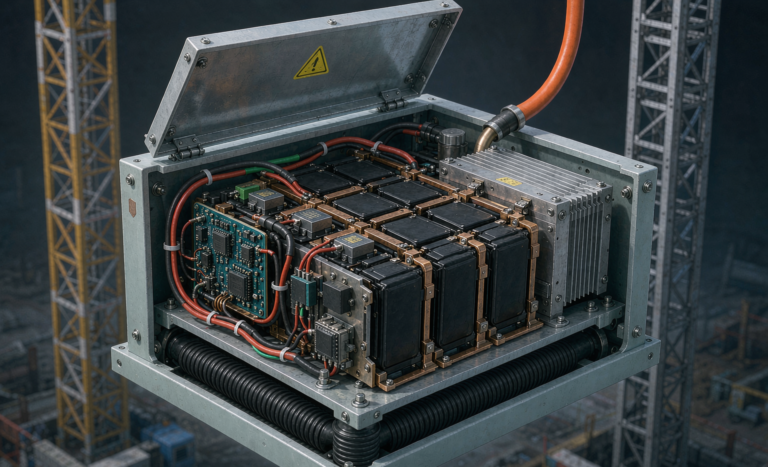
Battery Solution for Terminal Tractors and Yard Trucks
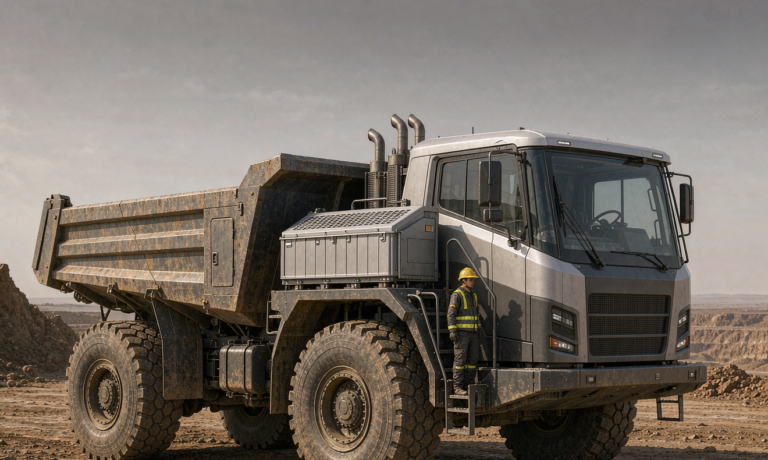
Terminal tractors and yard trucks, often called hostlers or spotter trucks, are the workhorses of ports, intermodal rail yards, and large distribution centers. They spend whole shifts creeping through traffic at walking speed, raising and dropping heavily loaded trailers, and starting and stopping hundreds of times a day. That duty cycle is brutal on a battery, and it looks nothing like what a highway electric truck experiences. As a lithium battery engineer who has sized packs for yard equipment, I want to walk through how a battery solution for terminal tractors is actually specified: how energy is sized, how chemistry is chosen, how heat is managed, and how a fleet stays running around the clock.
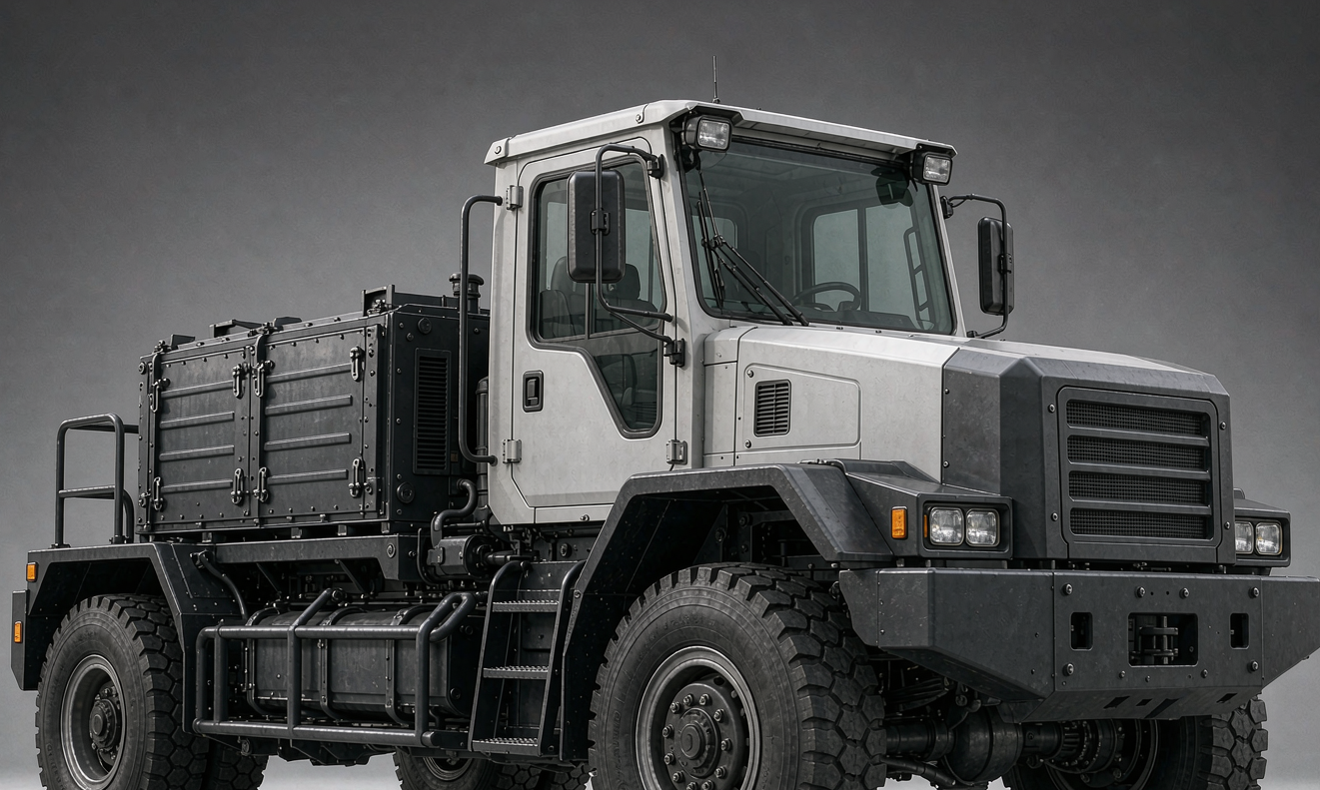
The Duty Cycle That Defines Yard Truck Battery Design
A port hostler does not cover long distances. It covers short distances, thousands of times. A typical yard tractor runs at 5 to 25 km/h, logs 40 to 120 km of cumulative travel per shift, and performs 150 to 400 trailer moves. Every move is a torque event: pulling a 30 to 45 tonne loaded trailer from rest, then braking back to zero a few hundred meters later.
Low average speed limits regenerative recovery, because the energy available in a 10 km/h stop is small. At the same time, the electric power take-off that drives the hydraulic fifth-wheel lift and the trailer air supply draws sharp peaks that a diesel engine hides behind idle. The net effect is a duty cycle dominated by acceleration pulses, coulombic throughput, and hydraulic load spikes rather than by steady cruising. A pack designed for a delivery van will be under-sized and over-stressed here.
Sizing Energy and Power for a Full Shift
Start with power, not energy. A yard tractor needs roughly 30 to 60 kW of continuous traction power at the wheels, with 90 to 150 kW available for the initial pull and for the hydraulic lift. Those peaks last only a few seconds, so the pack must deliver high current without sagging, which means paying attention to the cell C-rate and to the internal resistance of the module interconnects, not just the nameplate kWh.
Energy then follows from shift length. A single-shift hostler that can return to a depot charger needs around 60 to 100 kWh usable. A port operating 20 to 22 hours per day with two or three driver shifts needs 160 to 250 kWh per vehicle, or a smaller pack paired with opportunity charging or battery swapping. I usually size to a 20 to 80 percent state-of-charge window so the cells never sit at the extremes, then confirm the vehicle can complete the longest realistic shift on a single charge with a 15 percent reserve.
LFP Versus NMC: Choosing the Right Chemistry
For yard trucks I lean strongly toward lithium iron phosphate (LFP). These vehicles cycle hard every day, and LFP routinely delivers 4,000 to 6,000 cycles at 80 percent depth of discharge. That is three to five times the calendar life a nickel-manganese-cobalt (NMC) pack would give under the same throughput, and it directly lowers cost per operating hour. LFP is also more tolerant of abuse and holds voltage flat through the middle of its range, which keeps torque delivery consistent as the pack drains.
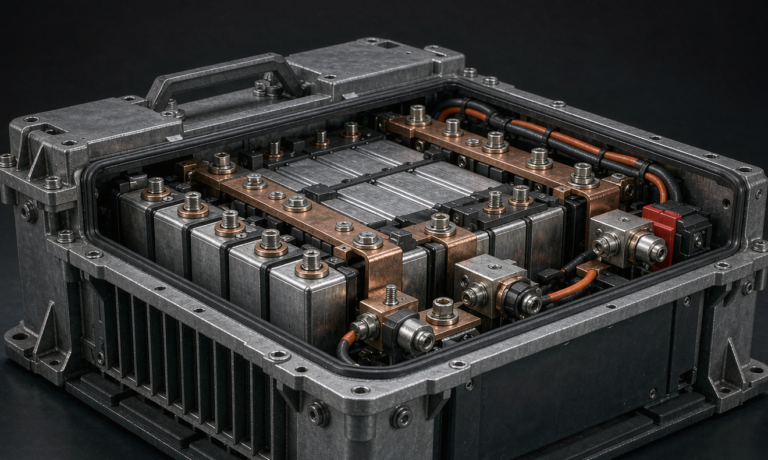
NMC still earns its place where every kilogram matters or where the yard sits in deep cold. NMC packs are lighter for the same energy and retain more capacity below minus 20 degrees Celsius. In practice, many cold-climate or payload-sensitive operations choose NMC and accept shorter cycle life, while hot, high-utilization ports choose LFP. Either way the pack is a custom battery solution: the enclosure, busbars, and cooling plate are built around the specific chassis and shift profile.
Pack Architecture, Voltage, and Thermal Management
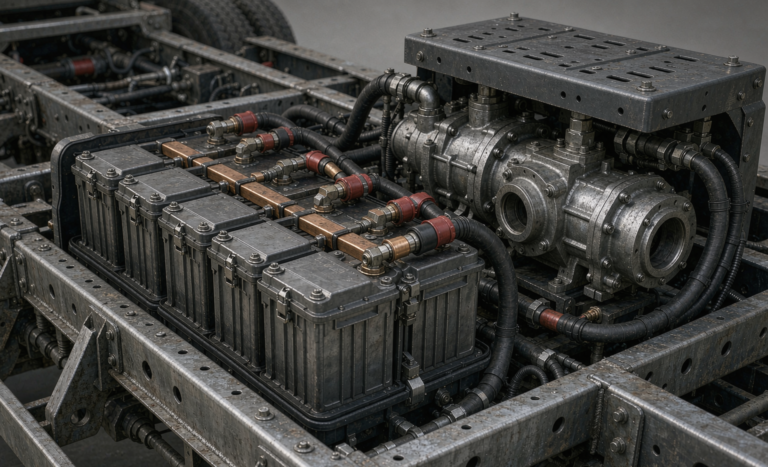
Most electric terminal tractors run a 350 to 450 V DC traction platform, with 600 to 800 V appearing on newer fast-charge designs. Higher voltage reduces current for the same power, which trims cable mass and heat. Cells are grouped into modules with welded or bolted interconnects, then constrained so vibration from rough concrete aprons does not fatigue the joints.
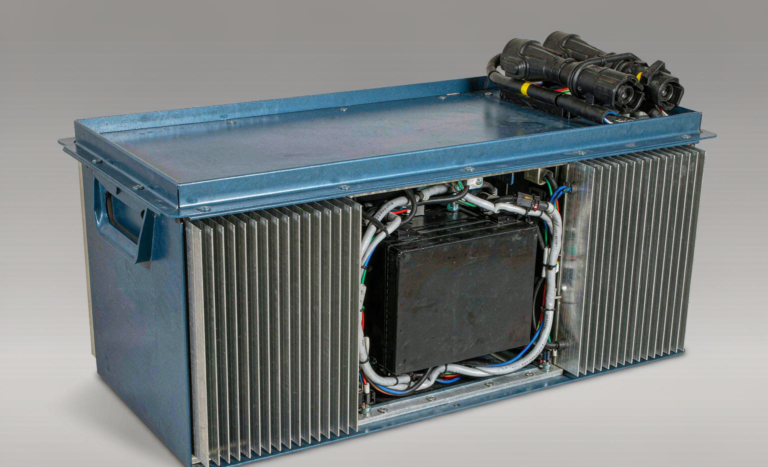
Thermal design matters more than people expect. A hostler park can swing from minus 30 to plus 50 degrees Celsius, and repeated high-current pulses build heat unevenly. Liquid cooling with a target module-to-module delta under 5 degrees Celsius keeps the weakest cells from ageing ahead of the rest. The enclosure should carry at least IP67, and for wash-down and coastal sites IP6K9K, with salt-fog-rated hardware and conformal-coated circuit boards. A battery management system reporting over CAN or J1939 keeps the vehicle controller informed of state of charge, state of health, and the power limits the pack can safely deliver.
Charging Strategy: Opportunity, Depot, and Swap
A yard truck rarely needs a full charge in one sitting; it needs to never run out. Three approaches dominate. Depot charging tops up a 100 kWh pack overnight at low cost and suits single-shift fleets. Opportunity charging adds a 20 to 40 kW top-up during driver breaks and lunch, which can extend a vehicle into a second shift with a smaller pack. Battery swapping, at three to five minutes per exchange, is the standard answer for true 24/7 ports where downtime is expensive.
Charge rate should be matched to the pack, not to the charger’s maximum. Pushing a 1C to 2C charge during breaks is fine for LFP, but repeatedly charging above that accelerates lithium plating and shortens life. Designing the pack to accept a fast opportunistic charge while staying inside its thermal window is where a custom battery solution earns its keep.
Safety, Compliance, and Total Cost of Ownership
Every pack shipped internationally must pass UN38.3 for transport. Beyond that, industrial and traction applications are typically qualified to IEC 62619, and road-registered yard trucks to UL 2580 and ECE R100.2. Enclosures are tested to IEC 60529 for ingress and to ASTM B117 for salt fog, which matters at coastal ports where airborne chloride attacks steel. Cell-level and pack-level crush, overcharge, and thermal-propagation tests round out the file.
The financial case is straightforward. Diesel yard trucks idle constantly, burning fuel while stationary; electrifying removes that idle entirely and replaces it with cheaper off-peak electricity. Fewer moving parts means less scheduled maintenance, and no exhaust means yard equipment can work indoors and in cold stores without ventilation. Over a five-year horizon the fuel and maintenance savings usually repay the battery premium well before the pack reaches its cycle limit.
Serviceability, Diagnostics, and Fleet Uptime
A yard battery is only as good as the uptime it delivers, and ports measure uptime in minutes. Designing for service means the pack can be diagnosed and partly repaired without pulling the whole vehicle offline for days. A battery management system that logs cell voltages, temperatures, and insulation resistance lets a technician spot a drifting module before it turns into a roadside failure.
Modular architecture helps. When cells are grouped into field-replaceable modules, a single weak module can be exchanged in a couple of hours instead of scrapping an entire pack. Standardized connectors, a clearly labeled high-voltage service disconnect, and accessible isolation points also cut the labour time and the safety risk of every intervention. State-of-health reporting over CAN lets fleet managers plan replacement on their own terms rather than reacting to an unexpected drop in range. When I specify a custom battery solution for a yard fleet, this serviceability layer matters as much as the energy capacity itself.
Frequently Asked Questions
What size battery does an electric terminal tractor need?
Most single-shift yard tractors use 60 to 100 kWh of usable capacity, while 24/7 port hostlers need 160 to 250 kWh or a smaller pack with opportunity charging or swapping. Size from the longest shift plus a 15 percent reserve, and keep the usable range within a 20 to 80 percent state-of-charge window to protect cycle life.
Is LFP or NMC better for yard trucks?
LFP is usually the better fit because its 4,000 to 6,000 cycle life matches the high daily throughput, and it is safer and cheaper per cycle. NMC wins only where payload weight is critical or where the yard operates in extreme cold and needs more usable capacity below minus 20 degrees Celsius.
How long does a terminal tractor battery last?
With LFP chemistry and moderate charging, expect 4,000 to 6,000 full cycles, which for a two-shift operation often means six to ten years of service before capacity falls to 80 percent of original. Fast charging beyond 2C, deep discharges, and hot ambient conditions are the main factors that shorten that life.
Can a terminal tractor battery be swapped?
Yes. Battery swapping is common at high-utilization ports because an exchange takes only three to five minutes, letting one vehicle run continuously across multiple shifts. Swap-ready packs need standardized mounts, blind-mate high-voltage connectors, and a coolant quick-disconnect that seals without spillage.
What IP rating should a port yard truck battery have?
Aim for at least IP67 for dust and temporary immersion protection, and IP6K9K where the vehicle is pressure-washed. Coastal ports should also specify salt-fog-rated hardware and conformal-coated electronics, since airborne chloride corrodes unprotected steel and connectors quickly.
Do yard truck batteries need liquid cooling?
For high-utilization hostlers, yes. Repeated high-current pulses and fast opportunistic charging generate uneven heat, and liquid cooling holds the module-to-module temperature difference under about 5 degrees Celsius, preventing the hottest cells from ageing faster than the rest and extending overall pack life.
Further Reading
References