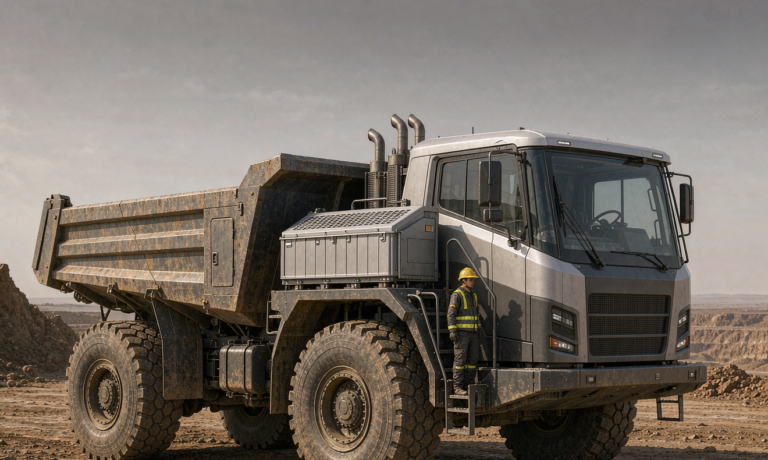
Battery Solution for Mobile Crushing and Screening Plants
Mobile crushers and screening plants have spent decades chained to diesel. As quarry operators, demolition contractors, and aggregates producers chase lower emissions, quieter sites, and cheaper fuel, a battery solution for mobile crushing plants is moving from pilot to production. I have spent the last decade specifying lithium packs for off-highway machinery, and crushing equipment is one of the most demanding duty cycles I have worked on. The load is not steady. A jaw crusher bites into hard granite one second and idles the next. Conveyors run continuously while screens shake at high frequency. Dust, vibration, and summer heat punish every component. This article explains how we size, build, and protect a battery pack that survives that environment and pays back.
Why Crushing Plants Are a Tough Battery Application
The first mistake engineers make is treating a crusher like a truck. A haul truck draws a fairly predictable profile. A crushing train does not. A mobile jaw crusher motor alone runs 75 to 250 kW depending on the inlet size and rock hardness. Cone and impact crushers sit in the same band. Vibrating screens add 5 to 15 kW each, and a typical plant carries three to six conveyors at 2 to 10 kW apiece. Peak plant demand lands between 200 and 600 kW, but the load factor rarely exceeds 0.3 to 0.6 because the crusher only draws hard when it is actually breaking stone.
That variability is the core problem. When the jaw closes on a tough boulder, current spikes in milliseconds as torque demand jumps. Between bites the motor coasts. A battery and its busbars must absorb those pulses without voltage sag that would trip the drive. On top of the electrical stress you have mechanical vibration from the crusher flywheel, tracked undercarriage movement, and screen imbalance. Fine particulate dust behaves like cement and will infiltrate any weak seal. In a summer quarry the enclosure can sit at 45 to 50 degrees Celsius for hours. None of this is forgiving.
Sizing Capacity and Power for a Crushing Train
You need two numbers before you specify a pack: peak power in kilowatts and shift energy in kilowatt hours. Peak power sets the DC bus voltage and the inverter rating. Energy sets the pack size. As a worked example, take a mobile jaw at 200 kW peak with screens and conveyors adding 60 kW, for roughly 260 kW peak. At a 0.4 load factor across a 10 hour shift that is about 1040 kWh; we round up to a 1.2 to 1.5 MWh pack to keep 20 percent reserve and avoid leaning on a genset.
Energy per ton is a useful cross check. Crushing costs about 0.5 to 2 kWh per tonne. A plant rated at 300 tonnes per hour therefore burns roughly 600 kWh every hour. We almost always recommend a high voltage DC bus of 600 to 800 volts for plants above 200 kW. At 260 kW an 800 V bus draws about 325 amps, whereas a 350 V bus draws over 740 amps. The higher bus means thinner cables, less copper, and far less heat to manage. This is the same logic we use on electric mining haul trucks, scaled to a stationary-but-mobile chassis.
LFP Versus NMC for Quarry and Recycling Duty
Chemistry choice drives the whole design. Lithium iron phosphate, LFP, gives 4000 to 6000 cycles, excellent thermal stability, and strong tolerance to abuse, which matters in a dusty hot site. Nickel manganese cobalt, NMC, offers higher energy density at 180 to 250 Wh per kg versus 120 to 160 for LFP, so the pack is lighter, but it is less forgiving thermally and more expensive per cycle. For a primary crusher the pack weight matters far less than it does on a drone. Runtime and cycle life dominate the business case, so we almost always recommend LFP for the main crushing pack.
NMC still earns a place in smaller screen-only units or urban demolition machines where footprint and weight are tight. Either chemistry must meet IEC 62619 for industrial cells and UN38.3 for transport, and we verify IEC 62133 safety behavior before any pack ships. In recycling duty where metal contamination and shock loads are worse, LFP’s abuse tolerance is the deciding factor.
High Voltage Bus and Thermal Management in Dust
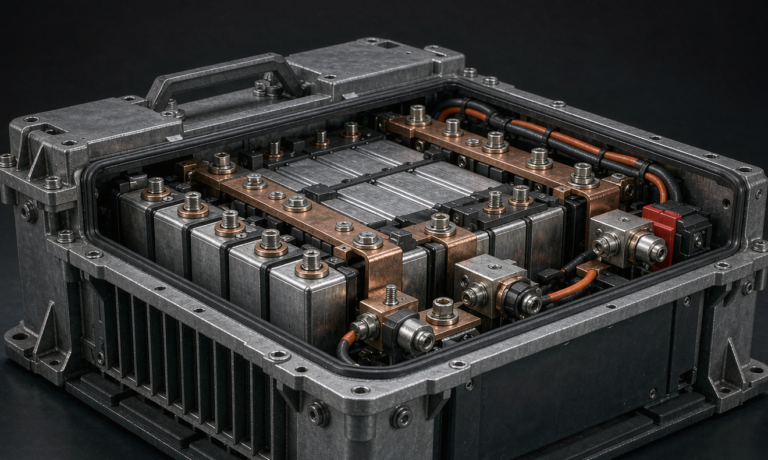
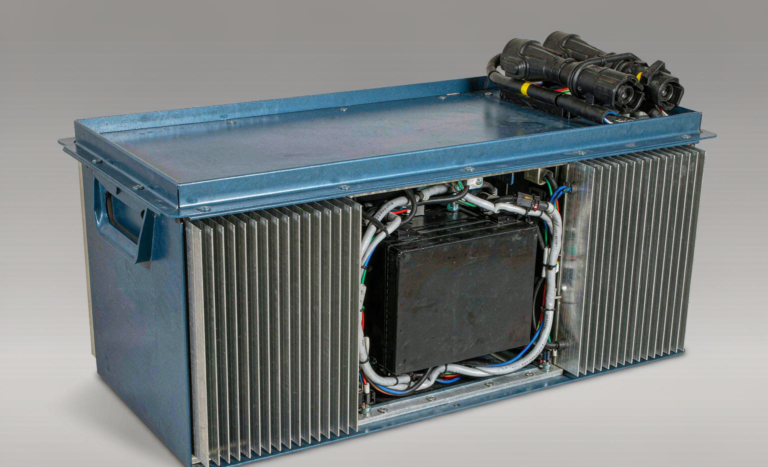
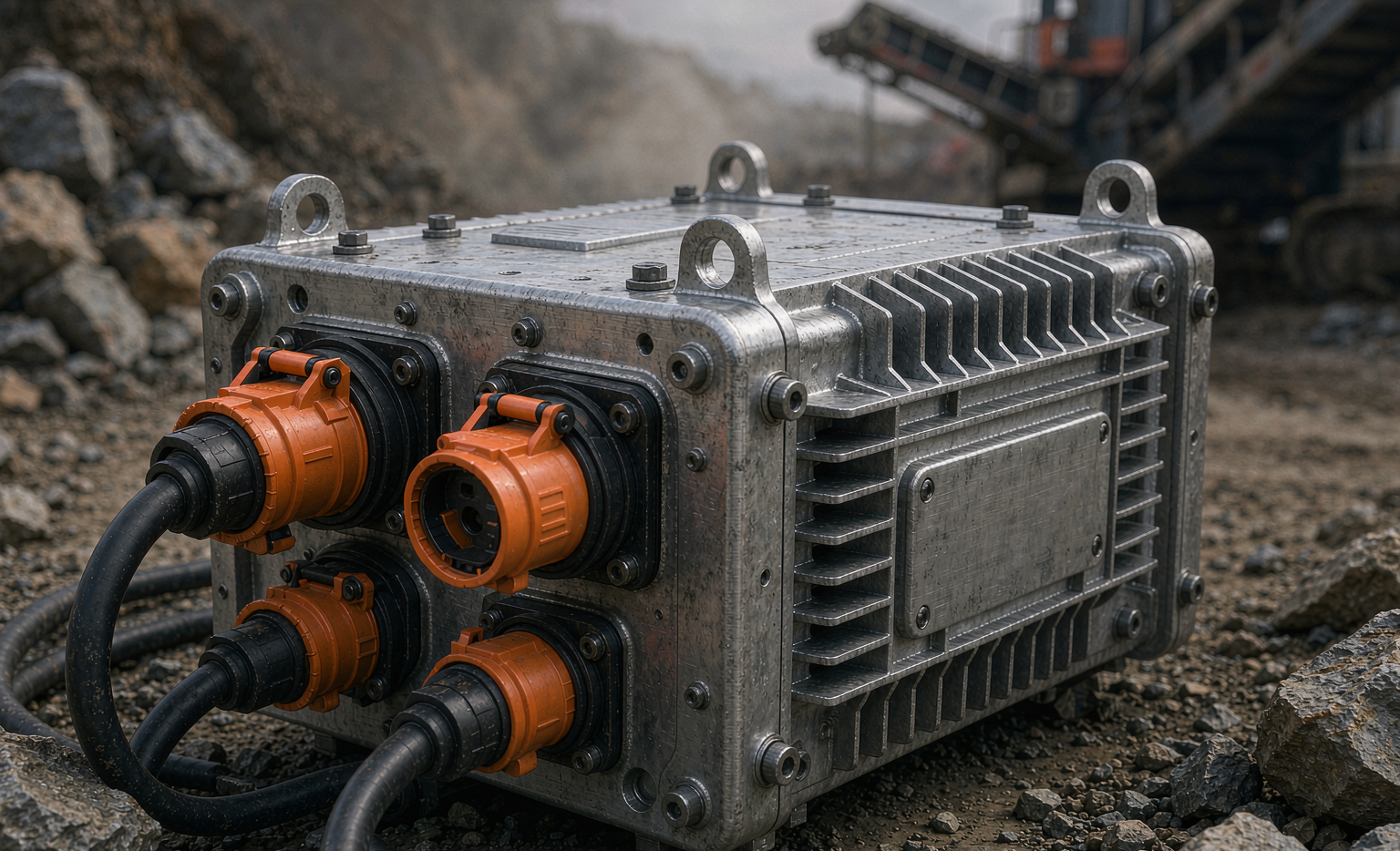
Liquid cooling is non-negotiable above roughly 150 kW. We target a temperature spread under 5 degrees Celsius across the pack using a dedicated coolant loop. The real enemy in a quarry is radiator fouling. Fine dust cakes a radiator in a single shift, so the design needs an easy-clean face, a coarse pre-filter, and a reversible fan purge cycle that runs at every shutdown. The battery enclosure is rated IP65 at minimum and IP6K9K where the operator pressure washes the machine.
Air drawn into any pack HVAC must be filtered to at least ISO coarse grade so the dust never reaches cells. The coolant loop is kept fully isolated from crusher hydraulics to avoid cross contamination. We hold cells in a 15 to 35 degrees Celsius window for longevity. The battery management system derates charge and discharge above 45 degrees Celsius and cuts the contactor at 60 degrees Celsius. That protection is what keeps a pack alive through a Mediterranean summer.
Charging Strategy at the Quarry or Depot
There are three practical ways to refill a crushing pack, and the right one depends on shift pattern. For a single shift, overnight depot charging on a CCS2 DC connector at 1 to 2 C is cheapest; a 1.5 MWh pack fills in one to two hours. Opportunity charging plugs the pack in for 30 to 60 minutes during conveyor maintenance or loader changes, which can stretch a marginal pack through a long day. Battery swap uses a second pack on a flatbed so the plant never stops; this suits 24/7 operations but doubles the capital.
The one rule we never break is never fast charge a hot pack. If the cells come off a shift above 40 degrees Celsius we cool first, then charge. Many sites keep a diesel genset purely as contingency, but the primary energy comes from the grid or a solar canopy over the laydown area. A custom battery solution should plan the charger and the pack together, because the connector, cable, and cooling must all be rated for the same current.
Vibration Isolation, Ingress Protection, and Standards
Crusher vibration is severe and continuous. We design to random vibration profiles aligned with IEC 60068-2-64 and MIL-STD-810 methods, mounting internal modules on elastomeric isolators with lockable latches and strain-relieved busbars so nothing works loose. The enclosure carries IP65 or IP67 sealing and a corrosion resistant coating rated C4 or C5-M under ISO 12944, because quarry moisture and de-icing salt will eat a standard paint system in a season.
The standards stack is consistent across the plants we deliver: IEC 62619 for the industrial cells, IEC 62133 for safety, UL 2580 for the traction battery, ECE R100.2 for high voltage vehicle safety, IEC 60529 for the ingress rating, and ISO 12405 for test methods, finished with a CE mark. Treating these as a checklist rather than an afterthought is what lets a pack pass a factory audit on the first visit.
BMS, Safety, and Zero Emission Compliance
The battery management system is multi-level. At cell level it watches voltage and temperature. At pack level it measures current and insulation resistance, which matters once the bus passes 600 volts. It talks to the plant controller over CAN or J1939 and enforces a current limit that protects the crusher drive from a stall event. For thermal runaway we build vent paths, a fire barrier between the pack and the hydraulics, and optional gas detection in enclosed sites.
The payoff is compliance. A zero local emission plant can work underground, in city centers, and beside residential areas where noise and particulate limits now block diesel. Many municipalities require low or zero emission for urban demolition, and a battery solution is what makes the permit achievable. When we pair that with lower fuel cost and less maintenance, the business case usually closes inside two to three years of two-shift operation.
Frequently Asked Questions
What battery size does a mobile crusher need?
A mobile jaw crusher plant typically needs 1.2 to 1.5 MWh for a 10 hour single shift, scaled up for 24/7 duty or larger inlet sizes. Size peak power first, usually 200 to 600 kW, then shift energy at a 0.3 to 0.6 load factor, and keep 20 percent reserve so you are not relying on a diesel genset.
Is LFP or NMC better for crushing plants?
For the main crushing pack we recommend LFP because its 4000 to 6000 cycle life, thermal stability, and abuse tolerance suit dusty hot quarry duty. NMC is lighter and denser, so it fits smaller screen-only or urban demolition units where weight and footprint are tight.
How do you charge a battery powered crusher on site?
Overnight depot CCS2 DC charging at 1 to 2 C is cheapest for single shift work. Opportunity charging during breaks or a swapped second pack covers long or 24/7 operation. Always cool the pack below about 40 degrees Celsius before fast charging to protect cell life.
Can a battery handle jaw crusher current spikes?
Yes, if the bus voltage and inverter are sized for peak, not average, demand. A 600 to 800 V bus keeps current manageable, and the BMS current limit plus low impedance cells absorb the millisecond torque pulses when the jaw bites hard stone.
What IP rating is needed for quarry battery packs?
We specify IP65 minimum with IP6K9K where the machine is pressure washed, plus a C4 or C5-M corrosion coating under ISO 12944. Filtered HVAC intake keeps fine cement-like dust away from the cells even in a dry summer quarry.
Are mobile crushing batteries safe to use underground?
Safe when built to industrial standards such as IEC 62619 and UL 2580 with insulated high voltage monitoring and thermal runaway containment. Zero local emissions are exactly why battery plants are chosen for underground and urban sites where diesel exhaust is prohibited.
Further Reading
References