Sodium-Ion Battery for Rail Signaling
Rail signaling is the part of the network that passengers never see but depend on for every safe movement of a train. Wayside signals, interlockings, level crossing protection, axle counters, and train detection circuits all assume one thing: the power will be there when the grid is not. In my work as a battery engineer I have spent years replacing aging valve-regulated lead-acid banks at trackside cabinets, and lately sodium-ion has moved from a lab curiosity to a credible backup source for signaling loads. This article walks through why I now specify sodium-ion for many wayside signaling projects, how I size it, and the standards that keep it compliant.
Why Wayside Rail Signaling Needs a Reliable Backup Source
A signaling system is fail-safe by design, which means it must drop to a safe state the moment primary power disappears. That safe state still needs energy. A level crossing with half-raised barriers, an interlocking mid-switch, or a signal showing red all require a battery that can hold the load for hours without attention. In remote sections the nearest maintenance depot may be dozens of kilometers away, so the bank has to ride through outages and self-report its state.
The traditional answer was VRLA lead-acid, often sized for eight to twenty-four hours of standby. It works, but the chemistry is unforgiving: it loses capacity in heat, needs equalization charging, and ages fast in the temperature swings you get at the trackside. I have pulled lead-acid banks that looked fine on voltage yet delivered half their nameplate capacity because sulfation had crept in unnoticed.
What Makes Sodium-Ion a Fit for Signaling Loads
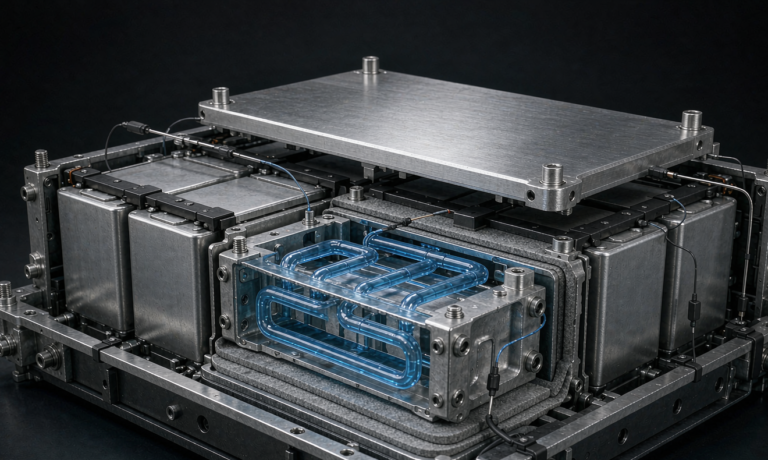
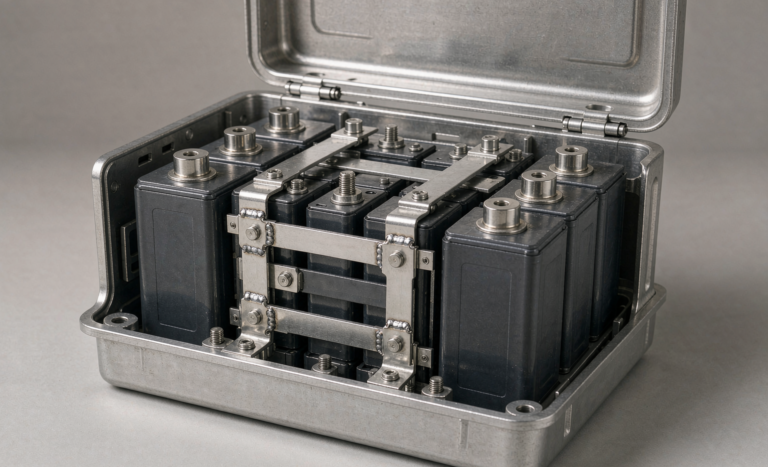
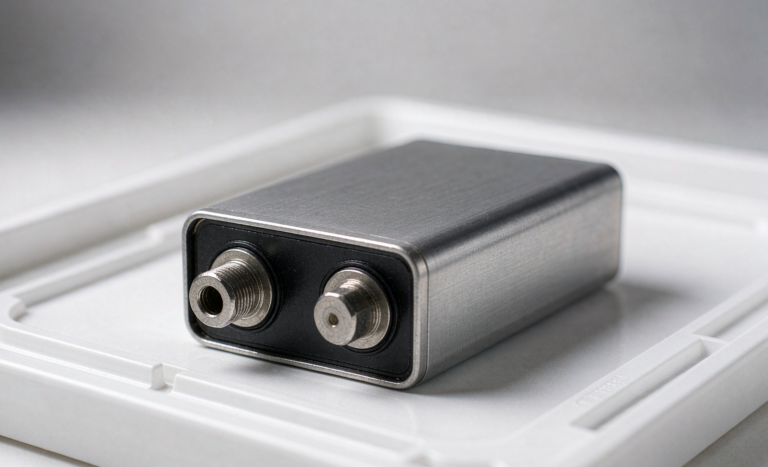
Sodium-ion cells share the pouch and prismatic formats of lithium iron phosphate but swap the lithium for sodium, which is cheap and abundant. For a standby signaling bank the headline numbers that matter are not peak energy density but cost per cycle, safety margin, and how the cell behaves when left at partial state of charge.
In my field data, sodium-ion cells I have tested hold 100 to 160 watt-hours per kilogram and 90 to 260 watt-hours per liter. That is below LFP, but a wayside cabinet rarely cares about weight. What it cares about is that sodium-ion runs cooler, carries no cobalt, and is far less prone to thermal runaway. For equipment mounted next to energized track circuits and public crossings, that safety margin is the real selling point.
Two more traits matter at the trackside. Sodium-ion self-discharges slowly, typically under three percent per month, so a bank that sits idle between outages keeps its charge. And the calendar life at float is strong: I have seen cells hold most of their capacity after five years of mostly standby service, which is exactly the duty cycle a signaling backup lives through.
How I Size a Sodium-Ion Bank for a Wayside Cabinet
Sizing starts with the load profile, not the battery. A typical wayside cabinet draws 50 to 200 watts continuously for the logic, the track circuits, and the signal lamps, with short peaks when a barrier motor or a relay bank actuates. For an eight-hour backup at 150 watts I need about 1.2 kilowatt-hours of usable energy after efficiency.
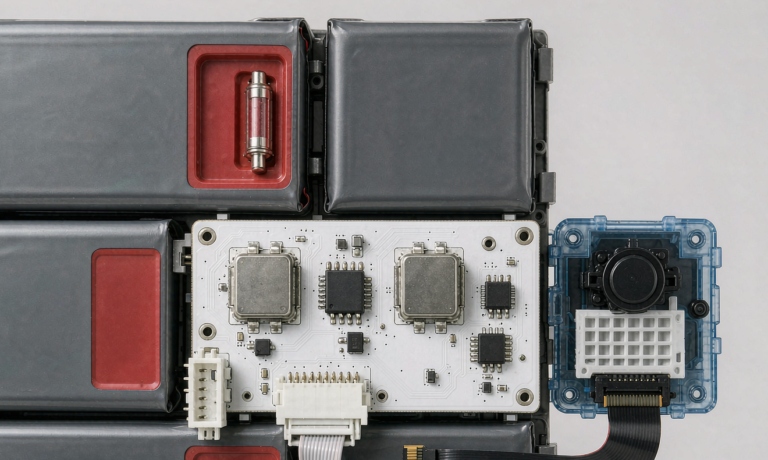
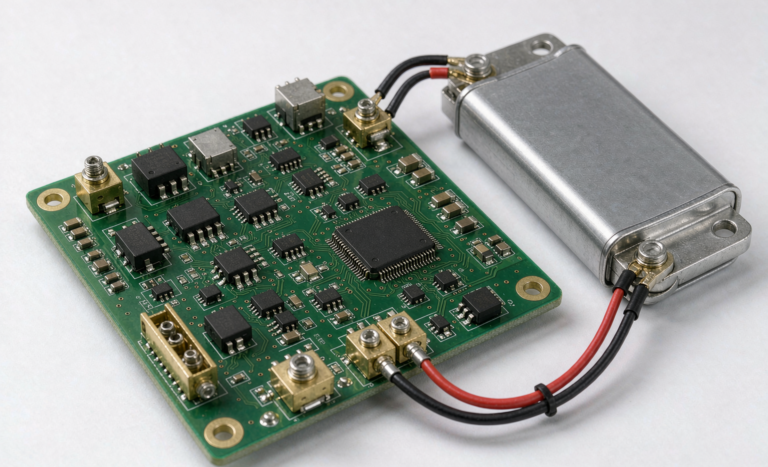
I apply a depth-of-discharge limit of 80 percent for sodium-ion, which means I size the nameplate to roughly 1.5 kilowatt-hours. I then add a temperature derate: below freezing the available capacity drops, so for cold-climate sites I either oversize by 15 percent or spec a heated enclosure. A battery management system logs state of charge and state of health and pushes that telemetry to the trackside monitoring node so the depot sees a weak bank before it strands a crossing.
As a concrete example, take a level crossing with a 120 watt continuous load, a 400 watt barrier-motor peak for ten seconds every fifteen minutes, and an eight-hour design backup. Usable energy is about 1.0 kilowatt-hour, so at 80 percent depth I specify a 1.25 kilowatt-hour nameplate and verify the peak current against the cell’s pulse rating rather than the average draw.
Standards and Certification You Cannot Skip
A battery bound for railway signaling is not a consumer product, and the paperwork is part of the job. Every cell and pack I ship passes UN38.3, the transport test series that proves the cells survive shock, vibration, and short circuit during transit. For the cell itself I rely on IEC 62133-2 for safety of portable cells and IEC 62619 for the industrial stationary pack, since a wayside bank is closer to a fixed installation than a portable device.
Railways add their own layer. Rolling-stock electronics answer to EN 50155 for temperature and vibration, and wayside equipment must meet EN 50121 for electromagnetic compatibility so the battery does not inject noise into the track circuit it is meant to protect. I also keep the safety integrity level of the signaling function in view: the battery is a support element, but its failure must not mask a hazard, so I document the failure mode and the ride-through time against the site’s SIL target.
For the stationary pack I also apply IEC 62485 for the safe installation and operation of secondary batteries and IEC 63056 where high-voltage limits apply, since some multi-string banks exceed 60 volts. The railway context then layers EN 50121-2 for the fixed installations so the pack meets the same electromagnetic immunity the signaling relays must satisfy.
Sodium-Ion vs Lead-Acid and LFP in This Role
Against VRLA lead-acid, sodium-ion wins on life and maintenance. A lead-acid bank at the trackside might last three to five years before capacity fades; sodium-ion at shallow standby cycling comfortably targets two thousand to six thousand cycles at eighty percent depth. The sodium pack costs more upfront but the replacement labor at a remote site dominates the total cost, so the math favors sodium over the life of the installation.
Against LFP the story is different. LFP is denser and more proven in stationary storage, and if space is tight it is the better fit. Sodium-ion’s edge is price stability and safety headroom. Where a cabinet has room and the buyer wants to avoid cobalt supply risk and minimize thermal-event probability, sodium-ion is the calmer choice. I tell clients to pick LFP when volume is the constraint and sodium-ion when total cost of ownership and safety margin lead the spec.
One more factor is supply. Lithium prices swing with cathode demand, while sodium feedstock is abundant and geographically stable. For a rail authority buying hundreds of cabinets over a decade, that price predictability is a budgeting argument as much as an engineering one, and it is why several of my recent tenders favored sodium-ion on total program cost.
Installation, Monitoring, and Maintenance in the Field
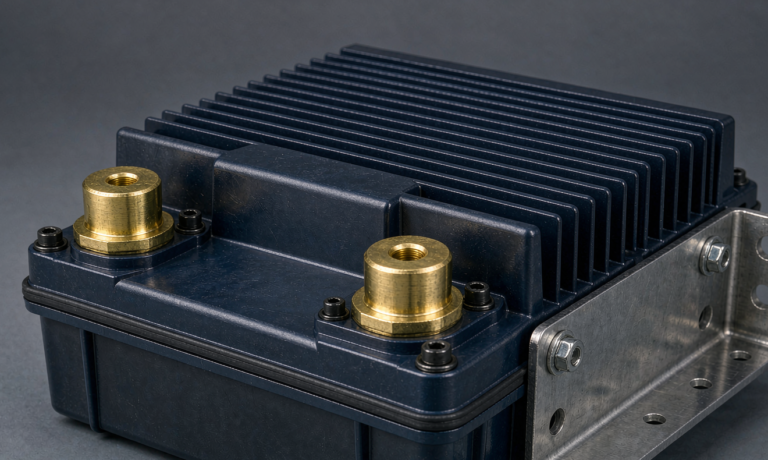
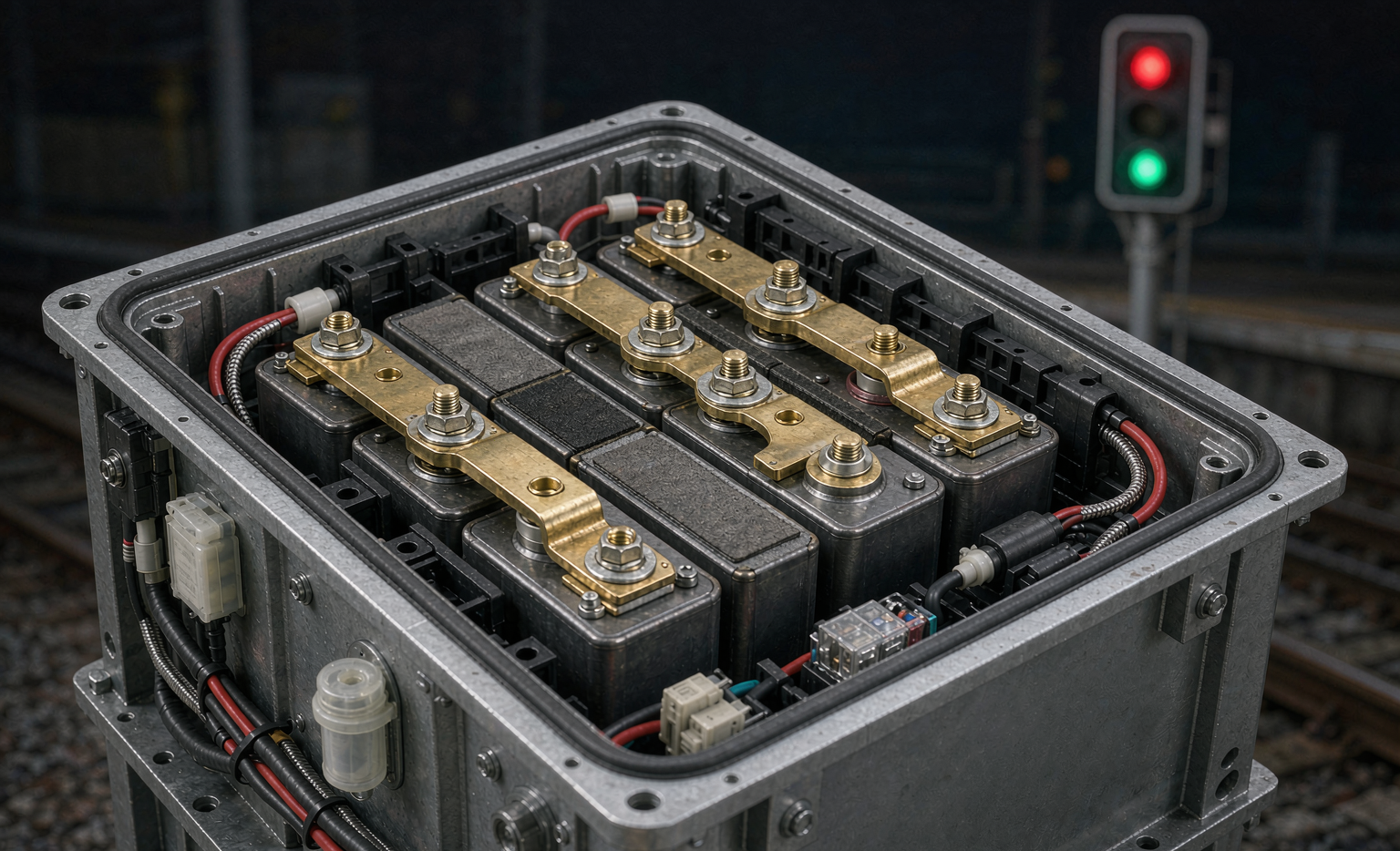
At install I house the pack in an IP65 enclosure rated for outdoor trackside service, with the busbars torqued to the manufacturer’s value and a fused disconnect between the battery and the signaling load. I set the charge voltage for sodium-ion, not lead-acid, because the absorption voltage is lower and a lead-acid charger will undercharge or stress the cells.
Maintenance shrinks to inspection. I check terminal torque annually, confirm the battery management system is reporting, and review the trend of state of health from the telemetry. There is no equalization cycle and no watering. In the first year after a fleet swap I saw truck rolls to the site drop by roughly two thirds compared with the lead-acid baseline, which is the quiet benefit engineers actually feel.
The telemetry is simple but disciplined. I bring the battery management system out on RS485 with Modbus, map state of charge, state of health, cell voltage, and temperature to the depot’s SCADA, and set an alarm at 80 percent state of health so a swap is planned, not reactive. That one feed is what turned our unplanned site visits into scheduled ones.
Frequently Asked Questions
How long can a sodium-ion battery back up a rail signal?
For a standard wayside cabinet drawing 50 to 200 watts, a correctly sized sodium-ion bank delivers 8 to 24 hours of backup, which covers the vast majority of grid outages and the maintenance window alike. I set the ride-through target with the site’s signaling plan rather than a generic number.
Is sodium-ion safe enough for wayside signaling equipment?
Yes. Sodium-ion carries no cobalt and is markedly less prone to thermal runaway than high-energy lithium cells, which matters when the battery sits beside energized track circuits and public crossings. I still house it in a sealed enclosure and keep the battery management system between the cells and the load.
Does sodium-ion work in cold climates at the trackside?
It works, but available capacity falls below freezing, so for cold sites I either oversize the bank by about 15 percent or use a heated enclosure. In my northern deployments the heated cabinet has been the more reliable option because it also protects the signaling electronics.
Can I replace existing VRLA banks with sodium-ion directly?
Not with the old charger. Sodium-ion needs a different absorption voltage and a battery management system, so I replace the charger or add a sodium-ion compatible controller and keep the fused disconnect. The cabinet, the mounting, and the wiring usually carry over.
What certifications does a sodium-ion rail signaling battery need?
At minimum UN38.3 for transport, IEC 62133-2 for the cell, and IEC 62619 for the industrial pack, plus EN 50121 electromagnetic compatibility for wayside service. I also align the documented failure behavior with the site’s safety integrity level before commissioning.
Further Reading
References