Home Battery for Home Elevators and Lifts
As a senior lithium battery engineer, I have spent the last fifteen years specifying packs for everything from drone propulsion to grid-scale storage. One application that quietly demands a great deal from a battery is the home elevator. A residential lift is not a toy; it carries family members, sometimes elderly parents or small children, between floors several times a day. When the grid drops, that same elevator must still be able to lower a passenger safely to the ground floor. That is where a properly engineered home battery becomes a life-safety device rather than a convenience.
Most homeowners discover the gap only during their first blackout. The cab stops between floors, the telephone inside goes silent, and the only way down is a manual release most people have never practiced. A dedicated home battery backup closes that gap. In this article I walk through how I size, select chemistry for, and integrate a lithium battery system behind a residential elevator, using the same engineering discipline we apply to commercial energy storage. For families planning to age in place, that backup is not a luxury; it is what keeps a multistory home usable when the grid does not cooperate.
Why a Home Elevator Needs Its Own Battery
Most residential elevators are wired straight to the main panel. The moment utility power fails, the cab stops wherever it was, the cab telephone goes quiet, and the only way down is a manual lowering procedure that most households have never rehearsed. Modern safety codes such as ASME A17.1 and the Canadian CSA B44 require that a lift be able to return a passenger to a designated landing during a power loss. A dedicated home battery is the cleanest way to meet that requirement without relying on a whole-house generator that may take ten to thirty seconds to spin up.
In my field experience specifying lithium packs for residential lifts, the battery does three jobs at once. It powers a controlled descent to the ground floor, it keeps the cab light and the communication handset alive, and it absorbs the regenerative energy that a descending cab feeds back through the motor. That last function is often overlooked, yet it is the difference between a pack that runs for years and one that overheats on the first outage.
Sizing the Battery for a Residential Lift
Sizing starts with the energy of a single trip. A typical two or three stop home elevator draws between 1.5 and 4 kW while the motor is active and only a few watts at standby. A full descent from the top floor typically consumes 0.2 to 0.6 kWh. The mistake I see most often is planning for a single trip. During a multi-hour blackout, a family may need ten or more controlled descents plus several ascents when power returns. I normally size for at least fifteen full cycles, which places most single-family installations in the 5 to 12 kWh band.
Peak power matters more than total energy. The motor controller can demand three to five times its running current for a fraction of a second at startup. A lithium battery paired with a capable inverter-charger handles that inrush without sagging, whereas a small sealed lead-acid bank often collapses the bus and trips the lift’s own protection. If your lift uses regenerative braking, budget for it: a well-tuned system can return twenty to thirty percent of the descent energy to the pack, stretching the available cycles and reducing how often the home energy storage system needs to recharge from the grid.
Choosing the Chemistry: LFP Over NMC
For a device installed inside a living home, lithium iron phosphate, or LFP, is the chemistry I recommend without hesitation. Its olivine crystal structure stays stable even under abuse, it tolerates ambient temperatures up to forty five degrees Celsius without rapid aging, and it delivers 3000 to 6000 full cycles before reaching eighty percent of original capacity. Nickel manganese cobalt, or NMC, offers higher energy density, but it runs hotter, is more sensitive to overcharge, and ages faster in a warm utility closet. For an elevator you want to forget about for a decade, the thermal margin of LFP is worth far more than the few kilograms you might save.
Cell-level safety is governed by IEC 62133-2, which I insist every supplier demonstrate with test reports rather than a logo on the label. The pack as a system should comply with UL 1973 for stationary batteries and, together with its inverter, UL 9540 for the energy storage system. None of these are optional in my book when the equipment sits a few meters from where people sleep. A lithium battery built to these benchmarks is the baseline, not a premium option.
Standards and Certifications That Actually Matter
Buyers are bombarded with badges, so let me name the ones that carry legal and engineering weight. UN38.3 covers the transport and shipping of lithium cells and remains relevant even when you move a pack at end of life. IEC 62133-2 verifies cell safety under short circuit, overcharge, and crush. UL 1973 and UL 9540 are the North American benchmarks for stationary storage. The National Electrical Code Article 706 defines how an energy storage system must be wired and disconnected. Finally, the elevator itself falls under ASME A17.1 or CSA B44, which is where the battery backup requirement originates.
When a vendor hands me a quote, I ask for the actual test files, not a marketing sheet. A home battery that cannot show IEC 62133-2 and UL 1973 documentation is a liability, not a convenience. The same discipline applies whether I am qualifying a drone battery line or a residential lift pack; the paper trail is the product.
Installation, Ventilation and Electrical Integration
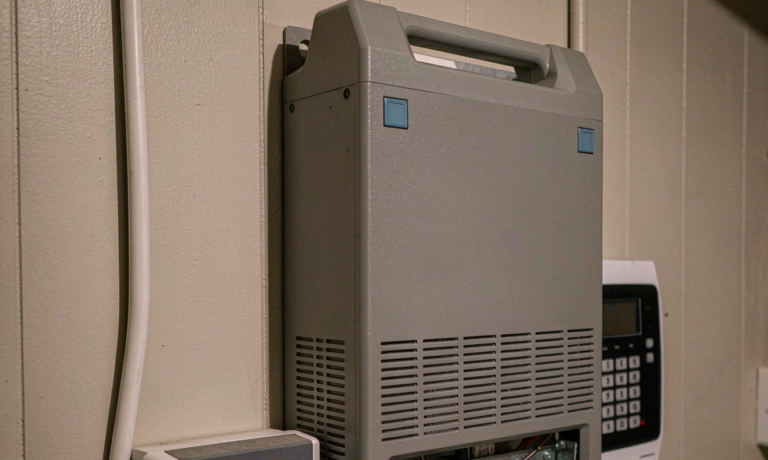
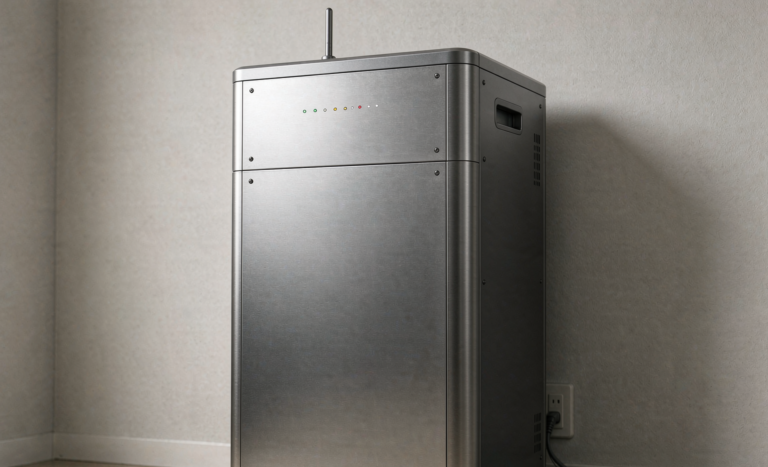
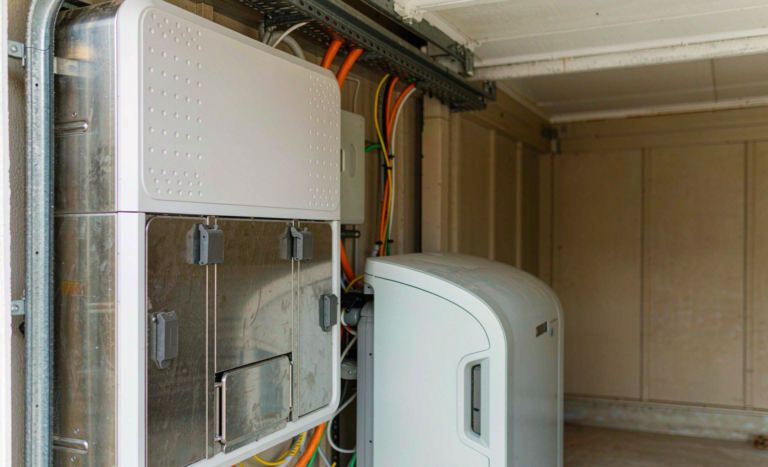
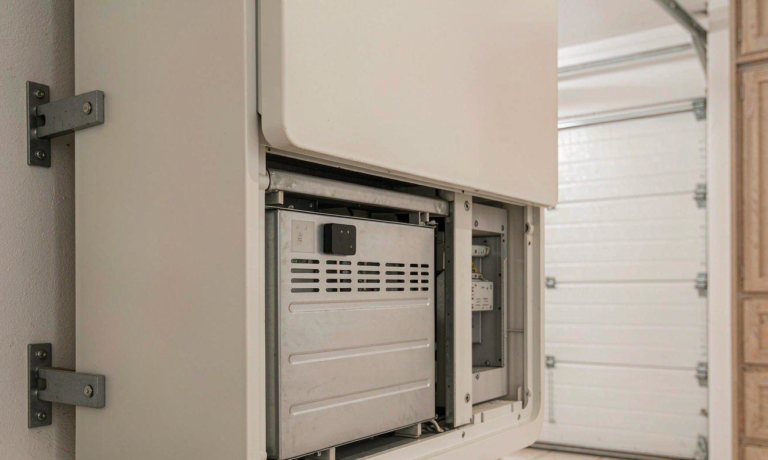
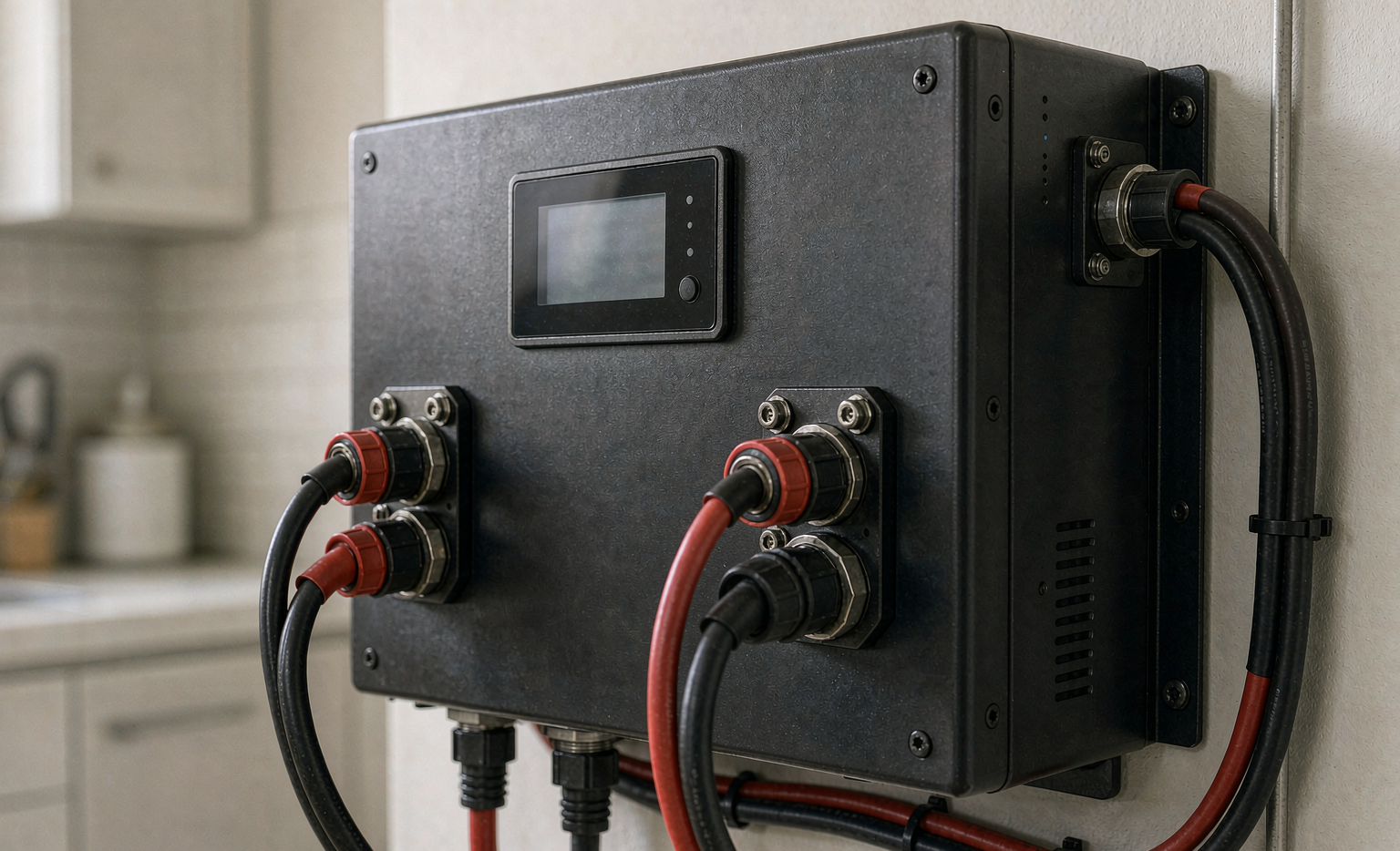
Location is the first decision. I place the home battery in a dedicated, ventilated enclosure that is reachable for service but separated from living space, keeping it within a few meters of the elevator controller to minimize voltage drop on the DC bus. The operating window I design for is zero to forty five degrees Celsius, and I avoid direct sun or boiler-adjacent walls. A listed inverter-charger bridges the pack to the lift, charging from the grid during normal operation and seamlessly taking over the load the instant utility voltage disappears.
A properly coordinated transfer switch is non-negotiable. The elevator controller must see a clean, uninterrupted source, so the switchover has to happen faster than the lift’s capacitors can discharge. I also confirm that the building’s main panel can accept the inverter’s back-feed under NEC Article 706 isolation rules, and that the BMS can signal the lift controller before the pack reaches a low-voltage cutoff.
Maintenance, Monitoring and End of Life
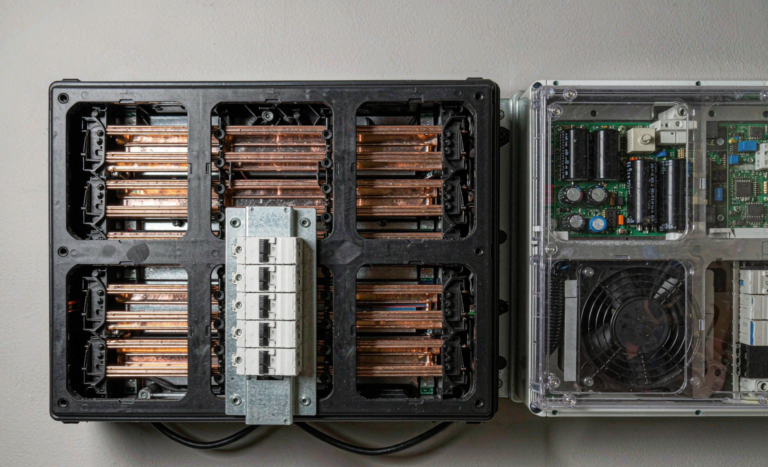
A modern lithium home battery is largely maintenance free, but it is not invisible. The battery management system, or BMS, should report cell voltage, temperature, and state of charge to a dashboard you actually check once a quarter. I schedule a visual and electrical inspection every twelve months: torque the terminals, verify the cooling path is clear, and confirm the communication link to the elevator controller still works.
When capacity fades to roughly seventy to eighty percent of nameplate, the pack is no longer ideal for life-safety duty but still useful for less critical home energy storage loads. At true end of life, recycling follows local regulation, and UN38.3 still governs how the pack is transported to a facility. A reputable custom battery solution provider will take the pack back rather than leave you to navigate disposal alone.
How many trips can a home battery provide during a blackout?
For a typical two or three stop residential lift, a 5 to 12 kWh lithium battery supports roughly ten to twenty controlled descents, depending on cabin weight and whether the system captures regenerative energy. I size for at least fifteen cycles to cover a full-day outage with margin.
Can a home elevator battery be charged from solar panels?
Yes. The inverter-charger can accept DC from a rooftop array during the day and still draw from the grid at night, so the home battery charges from whichever source is available. This also lowers the lifetime cost of keeping the lift ready.
What size battery do I need for a two-stop home lift?
Most two-stop lifts land in the 5 to 8 kWh range after accounting for motor inrush and several repeated descents. I always measure the actual motor startup current before finalizing, because that peak, not the average draw, drives inverter selection.
Is a lithium battery safe inside a residential home?
A certified LFP pack built to IEC 62133-2 and UL 1973 is safe in a home when installed in a ventilated enclosure per NEC Article 706. LFP is far more thermally stable than other lithium chemistries, which is exactly why I specify it for occupied buildings.
How long does a home elevator battery last before replacement?
An LFP home battery typically delivers eight to twelve years or 3000 to 6000 cycles before dropping to eighty percent capacity. Annual inspections and keeping the pack between twenty and eighty percent state of charge during idle periods extend that service life.
Further Reading
References