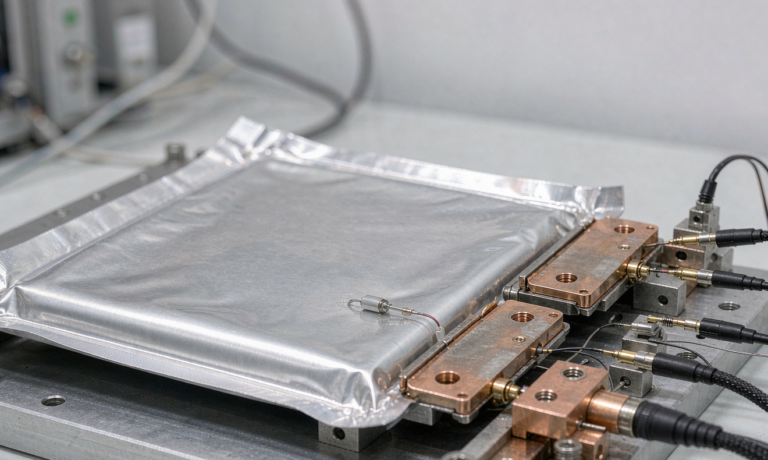
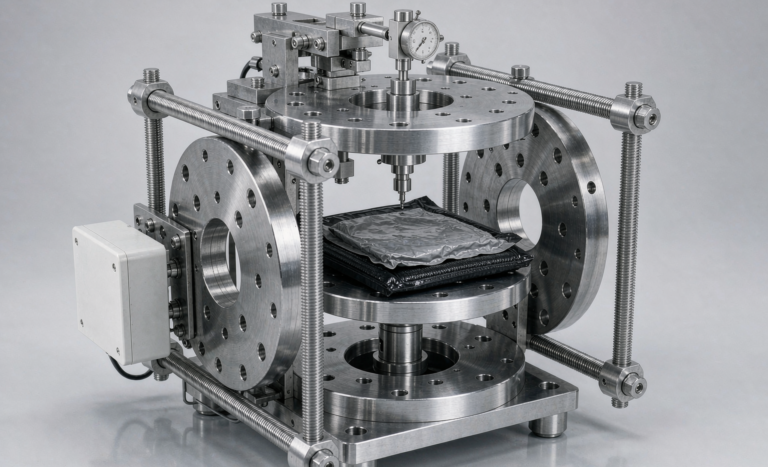
Semi-Solid Cell Thermal Abuse and Stability Explained
As a senior lithium battery engineer at Horizon Power, I have spent the last decade moving cell chemistries from the lab bench to certified production lines. One question keeps coming up from procurement and safety teams when they evaluate semi-solid state battery samples: how safe is the cell under heat abuse? Thermal abuse is the single most decisive test family for any high-energy cell, and semi-solid designs behave differently from both liquid-electrolyte lithium-ion and from true solid-state cells. In this guide I cover what thermal abuse means, which standards apply, how we measure stability, and the design choices that decide a pass or fail. If you are sizing a custom battery solution for an unmanned aircraft, an industrial robot, or a stationary storage cabinet, the numbers below are the ones I ask suppliers to prove.
What Thermal Abuse Testing Means for a Semi-Solid Cell
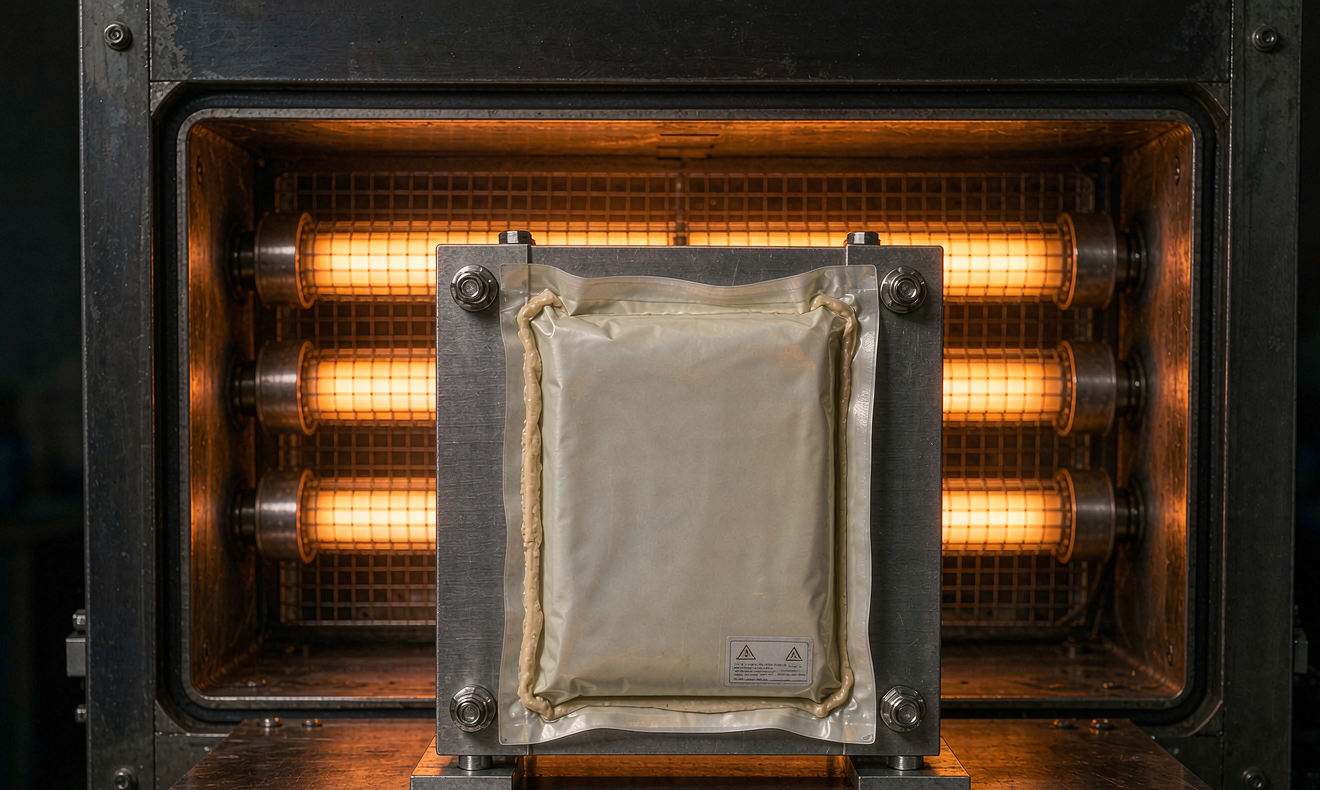
Thermal abuse testing subjects a cell to heat rather than to an external electrical or mechanical load. The goal is to find what happens when a cell meets an environment it was not designed for: a nearby fire, a faulty heater, a parked vehicle in direct sun, or a shipping container above its rated ambient. The classic tests are the oven test, also called the hot-box test, the heating-plate test, and the forced thermal ramp. In each case we record the cell surface temperature, the onset of self-heating, venting, ignition, and whether the cell stays intact.
For a semi-solid state battery the electrolyte is a gel or composite that still contains some solvent but far less free liquid than a conventional lithium-ion cell, which changes the failure path. A liquid cell stores a large amount of flammable solvent that can boil and eject; a semi-solid cell carries a reduced solvent budget and a more rigid matrix, which raises the onset temperature of violent failure. It does not make the cell immune.
Why the Semi-Solid Electrolyte Changes the Thermal Picture
The thermal behaviour of a cell is dominated by three things: the cathode material, the amount and nature of the electrolyte solvent, and the separator. In a semi-solid cell the cathode is typically a layered oxide such as NMC or NCMA, the same family used in high-energy lithium-ion cells, so the intrinsic cathode risk is similar. The difference is the electrolyte.
Because the semi-solid electrolyte immobilises most of the solvent in a polymer or oxide matrix, the cell has less mobile, flammable liquid to feed a growing reaction. In our internal oven trials a representative semi-solid pouch cell with an NMC811 cathode began sustained self-heating around 145 degrees Celsius, roughly 15 to 25 degrees Celsius higher than a comparable liquid-electrolyte pouch with the same cathode, and the peak exotherm was lower. Those margins matter when a pack designer chooses fuses, vent paths, and enclosure materials.
Still, the semi-solid cell is not a solid-state cell. It still contains a solvent fraction, and at high enough temperature the cathode releases oxygen, the electrolyte decomposes, and the cell can enter thermal runaway. The engineering job is to push that onset as high as practical.
The Test Standards That Govern Thermal Abuse
Three documents shape almost every thermal abuse qualification I run.
UN38.3 is the global transport safety test. For air and sea shipping, a cell or battery must pass a series of tests including altitude simulation, thermal test, vibration, shock, external short circuit, impact, overcharge, and forced discharge. The thermal test in UN38.3 exposes the cell to a temperature profile of 72 plus or minus 2 degrees Celsius for at least 6 hours, then a second dwell at minus 40 degrees Celsius, with no mass loss, leakage, venting, or explosion allowed. FAA and EASA accept UN38.3 as the baseline for air transport of lithium cells.
IEC 62133-2 is the international standard for safety of portable lithium cells and batteries. It includes a specific oven test, often referenced as the high temperature test, where the cell is placed in a circulating-air oven and the temperature is ramped to 130 degrees Celsius and held. The cell must not explode and must not catch fire. Many OEM specs now ask for a pass at 130 degrees Celsius with margin, and some industrial buyers request an extended hold or a higher set point as a design verification test.
UL 1642 and UL 2580 add further abuse and fire-containment requirements for cells and for battery packs used in larger systems. For stationary and mobility applications, the pack-level thermal propagation test in UL 2580 and in the UN R100 and ECE regulations is the next step beyond the single-cell abuse test.
Measuring Thermal Stability and Onset Temperature
Before a cell ever reaches an oven, we characterise its thermal stability in the lab. Two instruments do most of the work.
Differential Scanning Calorimetry, or DSC, heats a small sample of harvested electrode or electrolyte and measures heat flow. It tells us the temperature at which the electrolyte begins to decompose and where the cathode begins to release oxygen. For a semi-solid cell we typically see the first exothermic electrolyte event between 120 and 160 degrees Celsius, depending on the solvent loading.
Accelerating Rate Calorimetry, or ARC, places a whole cell in an adiabatic environment and lets it self-heat. ARC reports the self-heating onset temperature, the onset of thermal runaway, and the maximum temperature and pressure. In my experience a well-built semi-solid pouch shows self-heating onset near 140 to 150 degrees Celsius and thermal runaway onset above 200 degrees Celsius, but those numbers move with cathode chemistry, state of charge, and cell format.
A practical rule I give customers: always request the ARC self-heating onset at the same state of charge the cell will actually ship and operate at. A cell tested at 30 percent state of charge looks far safer than the same cell at 100 percent, and that gap is exactly where field failures hide.
Design Levers That Improve Abuse Tolerance
When a sample fails thermal abuse, the fix is rarely one change. The levers I tune, in order of impact, are these.
Cathode choice is first. Moving from a high-nickel NMC811 to an NMC622 or to an LFP blend lowers the oxygen-release temperature risk and the peak energy, trading some energy density for a wider safety margin. For many drone and robotics packs the energy density is worth it, but for enclosed or occupied spaces LFP-blended semi-solid cells are the safer default.
Separator design is second. A ceramic-coated separator or a separator with a thermal shutdown layer closes its pores near 130 degrees Celsius, slowing the internal reaction before it cascades. In semi-solid cells the reduced solvent load already helps, but the separator remains the last mechanical line of defence.
Electrolyte solvent loading is third. Less free solvent means less fuel, but it also raises internal resistance and hurts low-temperature performance, so there is a real trade with the operating window. At Horizon Power we treat solvent loading as a co-design variable with the customer rather than a fixed spec.
Current collector and enclosure complete the picture. A thin, high-purity aluminium collector resists deformation, and a vented, gasketed enclosure gives the cell a defined failure path.
What to Ask a Supplier Before Sign-Off
If you are buying semi-solid cells for a product, do not accept a marketing sheet that claims high safety. Ask for the actual evidence.
Request the UN38.3 test report and the IEC 62133-2 oven test result, with the set temperature and hold time stated. Ask for an ARC self-heating onset temperature at your target state of charge, not at the supplier’s favourite low state of charge. Ask whether the cell was tested as a bare cell or inside the enclosure you will actually use, because the pack changes everything.
Finally, ask how the cell behaves after a marginal thermal event. A cell that survives the oven test but swells past its mechanical limit, or loses 40 percent capacity after a near-miss, is a poor choice for a fielded custom battery solution. Real safety combines a high onset temperature with a graceful, contained failure mode.
At what temperature does a semi-solid cell begin to self-heat?
In our ARC work a well-built semi-solid pouch typically shows self-heating onset near 140 to 150 degrees Celsius at a high state of charge, with thermal runaway onset above 200 degrees Celsius. The exact value depends on the cathode, the solvent loading, and the state of charge, so always request the number at the state of charge you will actually ship.
How is a thermal abuse test different from a thermal runaway test?
A thermal abuse test applies a controlled external heat profile, such as the IEC 62133-2 oven test at 130 degrees Celsius, and checks that the cell does not explode or ignite. A thermal runaway test pushes the cell past its limits to measure how violent the failure is and whether the event propagates to neighbouring cells. Abuse testing proves the cell is safe under defined conditions; runaway testing measures the worst case.
Does a semi-solid electrolyte remove the need for UN38.3 testing?
No. Every lithium cell shipped by air or sea must pass UN38.3 regardless of electrolyte form, and aviation authorities such as the FAA and EASA accept UN38.3 as the transport baseline. The semi-solid electrolyte may raise the failure temperature, but it does not exempt the cell from certification.
What does the oven test in IEC 62133-2 require?
The cell is placed in a circulating-air oven and the temperature is ramped to 130 degrees Celsius and held for the specified time. The pass criterion is that the cell must not explode and must not catch fire. Many industrial buyers add a margin by requesting an extended hold or a higher set point as a design verification test.
How should I read a supplier thermal abuse report?
Check three things: the test standard and set temperature, the state of charge at which the cell was tested, and whether the cell was tested alone or inside your actual enclosure. A pass at a low state of charge or as a bare cell is not proof of field safety. Also look for the ARC self-heating onset and the post-test capacity retention.
Thermal abuse is not a box to tick; it is the boundary that defines where a semi-solid cell can be used safely. The good news is that the semi-solid electrolyte genuinely widens that boundary versus liquid lithium-ion when the cathode, separator, and solvent loading are co-designed with the application. At Horizon Power we qualify every custom battery solution against UN38.3 and IEC 62133-2 and we share the ARC data with customers before sign-off, because a number you can verify is worth more than a claim you must trust.
Further Reading
References