School and Transit Bus Battery Systems: Fleet Buyer Guide
I get called in when a transit agency is about to order its first electric buses, and the conversation almost always starts with range. Range matters, but it is the least interesting part of the problem. The decisions that decide whether a fleet stays in service for twelve years are chemistry, pack architecture, charging strategy, and the documentation that proves the pack is safe. In this guide I walk through how I size a battery solution for school and transit bus duty cycles, using commissioning data and warranty claims from the past decade.
I am Karl Huang, a senior lithium battery engineer. I design and qualify traction packs for commercial vehicles and have spent years on the bench watching what actually fails. Treat the numbers below as a working framework, because every route and grid differs.
Start With the Duty Cycle, Not the Nameplate
The first question I ask is not how many kilowatt-hours a fleet wants, but how many miles it runs between depot returns, how long it dwells, and how much of that time is available for charging. A school bus has a punishing but predictable pattern: two long suburban loops, then hours of parking. A transit bus may run eighteen hours with short layovers. Those profiles need very different packs.
Build the energy budget from measured segments. A typical electric school bus consumes 1.3 to 2.0 kilowatt-hours per mile depending on route, grade, and HVAC load. A forty-mile day therefore needs near 60 to 80 kilowatt-hours at the wheels, before reserve. I specify a 20 to 30 percent state-of-charge buffer at shift end, because cold snaps and detours happen. Peak power is a separate constraint: a loaded bus leaving a stop can demand 150 to 250 kilowatts briefly, so the pack must deliver high C-rate bursts without excessive voltage sag.
Record auxiliary loads too. Cabin heating in winter can draw 8 to 15 kilowatts continuously, which over a three-hour run rivals traction energy. A pack sized only on propulsion will strand the fleet in January.
Chemistry: Why LFP Dominates Passenger Transport
For carrying passengers, I steer clients toward lithium iron phosphate, or LFP, in most cases. The reason is thermal stability. The olivine cathode holds its oxygen tightly, so LFP cells tolerate abuse and high ambient temperatures far better than nickel-rich chemistries. Typical LFP traction cells deliver 3,000 to 6,000 full equivalent cycles before falling to 80 percent state of health, and their flat voltage curve makes state-of-charge estimation predictable.
Nickel manganese cobalt still wins on energy density, often 220 to 260 watt-hours per kilogram at cell level versus 150 to 190 for LFP. That matters only when weight limits passenger capacity or range. For a floor-mounted bus pack, weight is rarely binding, and the safety margin of LFP is worth more. I have reviewed too many incident reports where a nickel-rich module propagated a thermal event to dismiss the difference.
Sodium-ion is a credible option for depot fleets where low-temperature behavior matters more than energy density. Whatever the chemistry, insist on cells from a qualified supplier with traceable lots and a documented formation process. Cheap cells are the most common source of field failures.
Pack Architecture and Battery Management
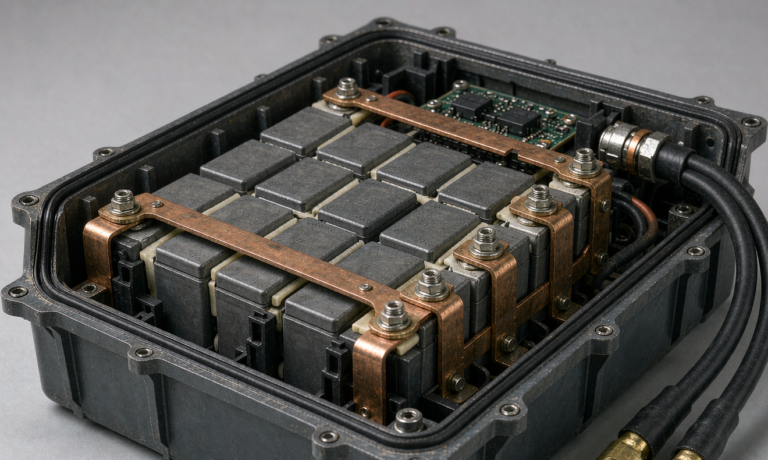
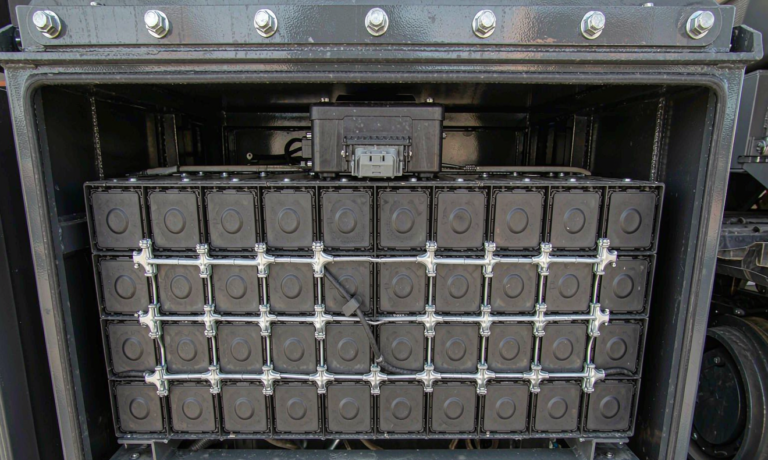
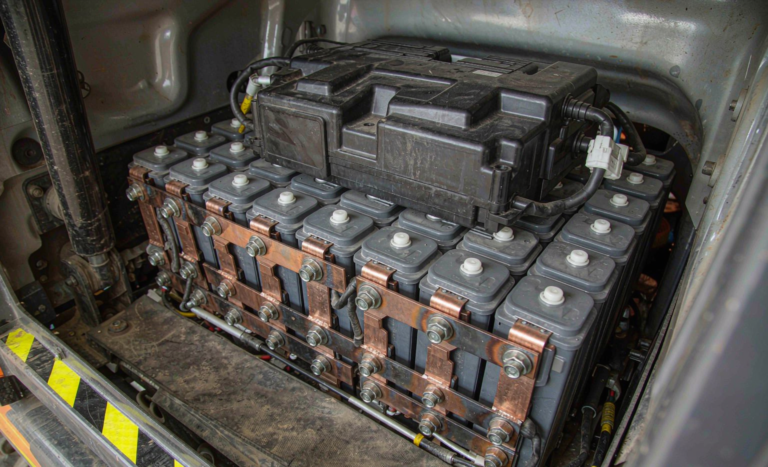
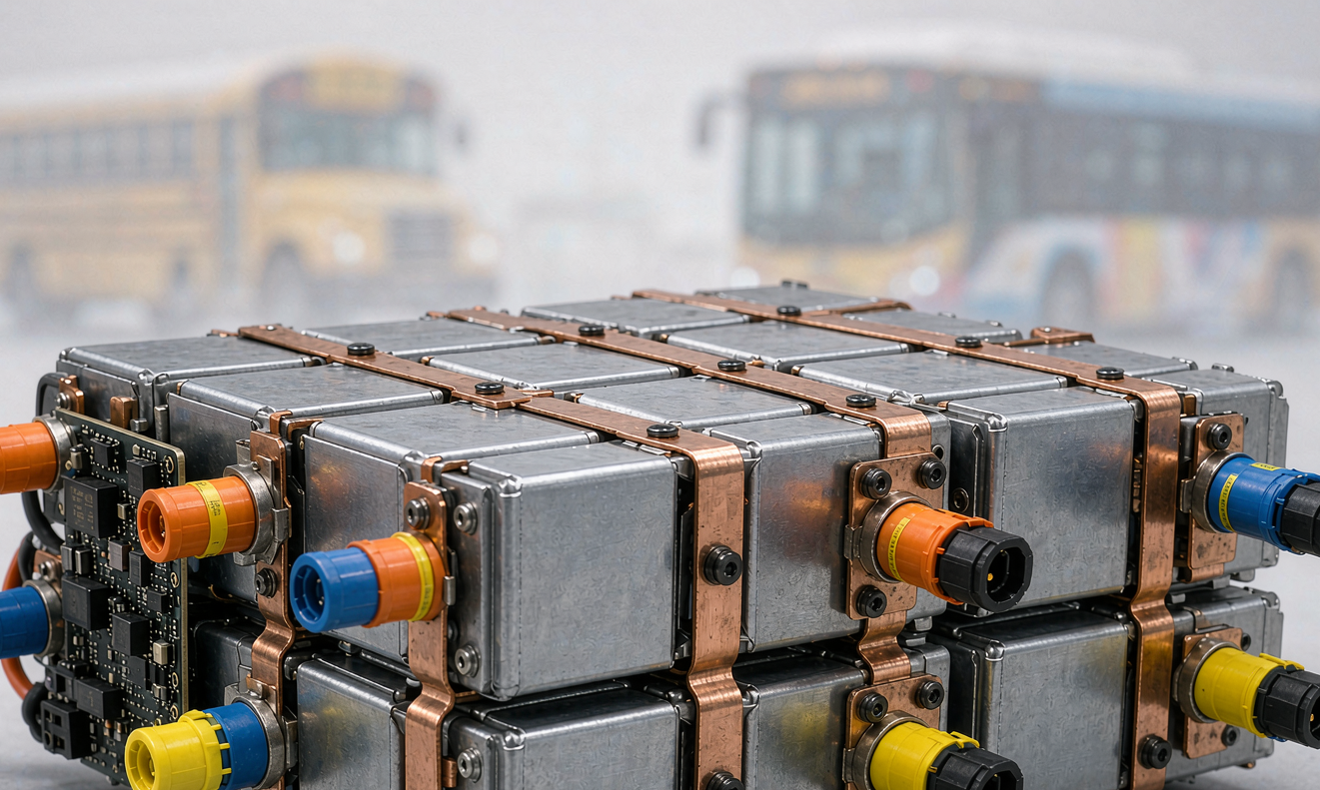
A bus pack is a system of systems. Cells form modules, modules form strings, and strings form a high-voltage assembly with contactors, fusing, a current sensor, and a manual service disconnect. I look for a modular design that lets a faulty module be swapped without scrapping the pack, because that dominates lifetime repair cost. Busbar geometry matters: undersized copper creates hot spots under high acceleration pulses, so I check cross-section and torque on every design review.
The battery management system is what I scrutinize most. It must estimate state of charge within a few percent across temperature and aging, balance cells, and log fault codes a technician can read. Passive balancing at a few tens of milliamps suits packs that see full charge regularly; fleets living between 20 and 80 percent state of charge should ask about active balancing. Cell voltage resolution near 5 millivolts and a trigger threshold near 30 millivolts are reasonable specification numbers.
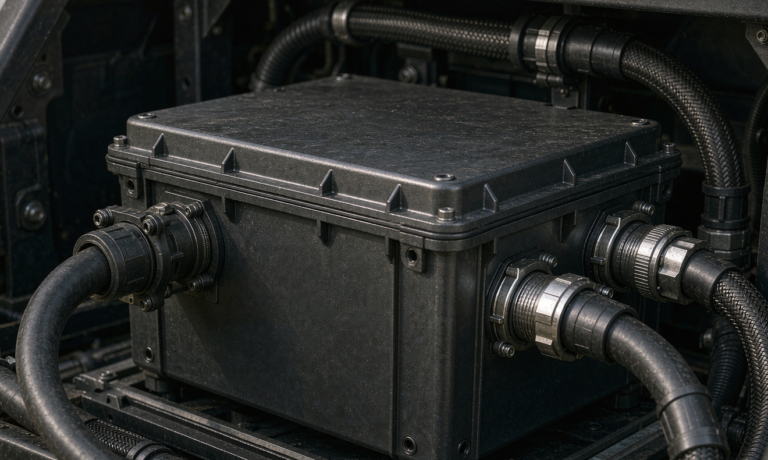
Thermal design is not optional. Liquid cooling with a glycol loop gives far better temperature uniformity than forced air, and it enables liquid heating in winter using the same plumbing. I specify an enclosure rated IP67 at minimum, with IP69K around the service areas that get pressure-washed, plus corrosion-resistant fasteners and sealed connectors. Vibration and shock qualification to ECE R100 or an equivalent automotive standard belongs in the validation file, not assumed.
Charging Strategy: Depot Versus Opportunity Charging
Charging strategy and pack size trade against each other, and getting this wrong is expensive. Depot charging uses the long overnight dwell and favors a larger battery with modest charge power, typically 60 to 150 kilowatts per vehicle. It is gentler on cells and easier on the grid. Opportunity charging uses high-power pantographs or connectors at stops or terminals, often 300 to 450 kilowatts or more, and lets a smaller, lighter pack cover the same daily mileage. The price is complex infrastructure, high demand charges, and more thermal stress on the cells.
For school buses, I almost always recommend depot charging. The vehicles sit for fourteen hours, which is more than enough to refill even a 100-kilowatt-hour pack at a moderate rate, and it avoids installing high-power equipment at every school. For high-frequency transit routes running all day, opportunity charging can be the only workable answer. A mixed approach is common: a base depot charge overnight plus a top-up at a terminal to extend the shift.
Do not ignore the charge curve. A pack may accept 300 kilowatts at 20 percent state of charge but taper sharply above 60 percent as voltage rises. Planning around peak nameplate power alone overstates what the fleet can absorb in a fifteen-minute layover. I require preconditioning so the pack reaches ideal charge temperature before high-power sessions, and keep routine charging in the 10 to 90 percent window.
Safety Standards and Homologation
A bus battery solution lives under a stack of standards, and a serious supplier hands over test reports, not just a claim. UN 38.3 governs transport of the cells and packs and covers altitude, thermal, vibration, shock, external short circuit, impact, overcharge, and forced discharge. It is a shipping requirement, not a proof of in-vehicle safety, and I see that confusion often. For stationary and industrial cells, IEC 62619 is the relevant safety standard; IEC 62133 applies to portable sealed cells and should not be cited as evidence for a traction pack.
On-vehicle, ECE R100 is the reference most transit programs accept for electric power train safety in Europe and many other markets, covering electrical safety, crash integrity, and specific tests on the rechargeable energy storage system. In North America, UL 2580 is widely requested for electric vehicle batteries, and SAE J2929 provides safety criteria for propulsion systems. I ask for thermal propagation data showing that a single-cell event does not ignite the neighboring modules within the required escape interval, plus evidence of controlled venting so gas does not accumulate in the underfloor cavity.
Documentation is part of the deliverable. Keep cell certificates, pack test reports, the fault log format, and an as-built drawing set with serial numbers. When an incident happens, or an insurer asks questions, that folder is what protects the operator. A pack with no traceable validation file is a liability regardless of how good the cells are.
Cold Weather, Lifetime Cost, and Warranty
Cold is the quiet enemy of electric fleets. Below about 10 degrees Celsius, charge acceptance drops and lithium plating becomes a real risk, so I limit fast charging to warmed packs and set low-temperature charge current caps. Preconditioning the battery while it is still plugged in, using grid power rather than battery energy, preserves range and protects the cells. A well-managed thermal system can keep usable capacity loss in winter to a modest fraction; a poorly managed one can cut a route short on the first freezing morning.
On cost, look beyond the purchase price per kilowatt-hour. Total cost includes replacement modules, downtime, charging infrastructure, and demand charges. I evaluate warranties on two axes: calendar years and guaranteed state of health, commonly 70 to 80 percent at the end of an eight-to-twelve-year term. Ask how a claim is measured and who pays for the diagnostic labor. A fleet that tracks state of health monthly can plan a module replacement during a scheduled service window instead of losing a vehicle at rush hour, and that operational discipline is worth more than a slightly cheaper cell.
Frequently Asked Questions
How many kilowatt-hours does an electric school bus battery need?
Most electric school buses use packs between 60 and 130 kilowatt-hours. The right size comes from the longest daily route, measured energy per mile, HVAC load, and a 20 to 30 percent reserve. A forty-mile route at roughly 1.6 kilowatt-hours per mile needs about 65 kilowatt-hours at the wheels, so I would specify around 85 to 95 kilowatt-hours to keep a healthy buffer through winter.
Is LFP or NMC better for transit buses?
For passenger transport I favor LFP because of its thermal stability and 3,000 to 6,000 cycle life. NMC offers higher energy density, which helps only when weight or space is the limiting factor. Since a bus pack is floor-mounted and weight is rarely critical, the safety and longevity of LFP usually outweigh the extra range that NMC would buy.
What standards should a bus battery pack meet?
At minimum, ask for UN 38.3 transport reports for the cells and packs. For on-vehicle safety, look for ECE R100 testing and, in North American programs, UL 2580 certification, with IEC 62619 covering the industrial cell qualification. Be cautious of suppliers citing only IEC 62133, which covers portable cells rather than traction batteries.
How long does a transit bus battery last?
A well-specified LFP pack typically reaches eight to twelve years of service or 3,000 to 6,000 equivalent full cycles before dropping to 70 to 80 percent state of health. Actual life depends on depth of discharge, temperature, charge rates, and how consistently the fleet avoids deep depletion. State-of-health tracking is the best predictor of remaining life.
Can bus batteries charge safely in cold weather?
Yes, with controls. Below roughly 10 degrees Celsius, charge acceptance falls and fast charging risks lithium plating, so the battery management system should limit current and the thermal system should warm the pack first. Preconditioning on grid power before departure preserves range and cell life, which is why I specify liquid heating as well as cooling.
What warranty should a fleet expect on a bus battery?
Look for eight to twelve years with an explicit state-of-health floor, commonly 70 to 80 percent, and clear terms on what triggers a claim. Check whether diagnostic labor and module shipping are covered, how state of health is measured, and whether the warranty survives a module swap. A vague warranty is often worth less than a shorter but precisely defined one.
The Bottom Line
A battery solution for school and transit buses is won in the specification, not the showroom. Start with the real duty cycle, choose a chemistry that prioritizes passenger safety, demand a modular architecture with a serious battery management system, and match charging to the dwell time you have. Back it with traceable test reports and a warranty with measurable thresholds. Get those right and range follows.
Further Reading
References