Battery Solution for Concrete Mixer and Pump Trucks
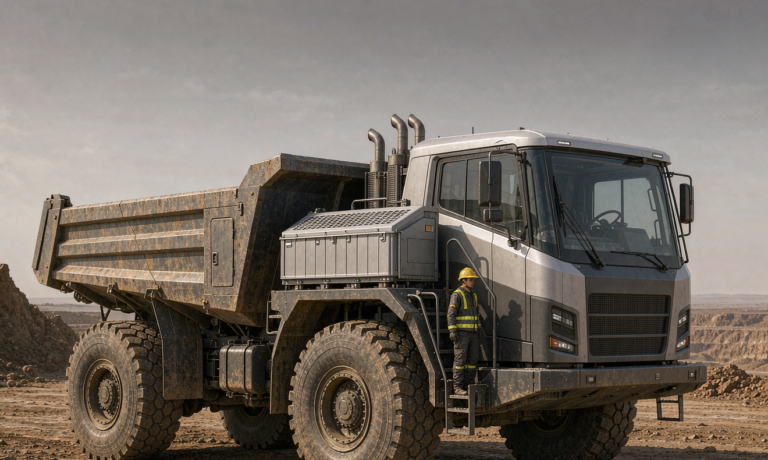
As a senior lithium battery engineer at Horizon Power, I have spent the last decade on the dirty, demanding side of electrification: construction sites. Concrete mixer trucks and concrete pump trucks are among the hardest vehicles to convert to battery power, and most early failures come from treating them like a passenger car with a bigger pack. A purpose-built battery solution for concrete mixer and pump trucks has to survive dust, vibration, shock loads, and a power profile that swings from near zero to full surge in seconds. In this article I will walk through the duty cycles, pack architecture, thermal strategy, and the certifications that actually matter when you put a high-voltage lithium pack on a chassis that tips, pumps, and climbs job-site ramps all day.
Why a Standard EV Pack Fails on Mixer and Pump Trucks
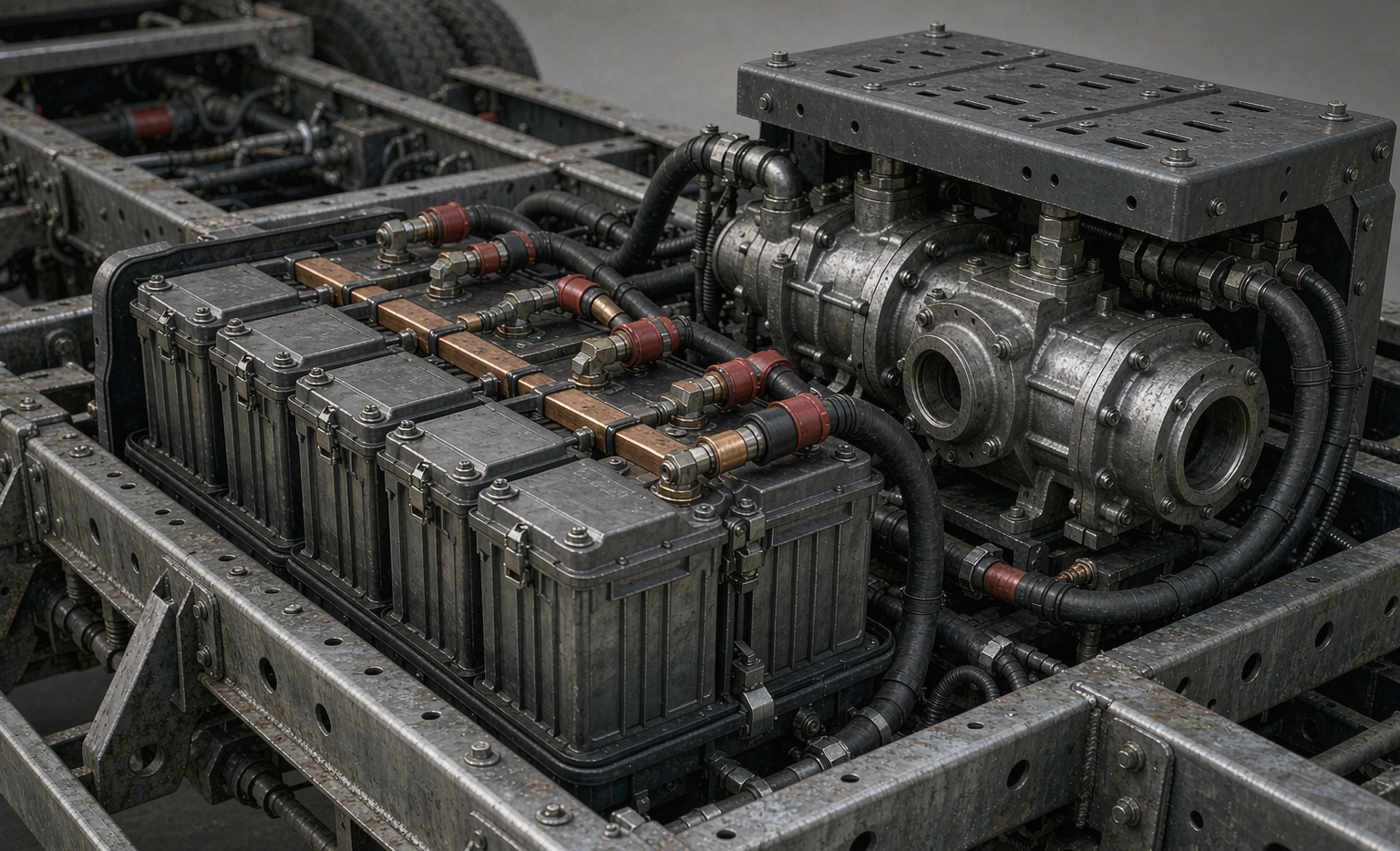
The first mistake fleet managers make is assuming any commercial electric vehicle battery will do. A concrete mixer drum is rotated by a hydraulic pump that draws a steady several kilowatts while the truck is parked and pouring, then a much larger surge when the drum reverses or accelerates a full load from rest. A pump truck is worse: the boom and the pumping cylinders demand sharp, repeated pressure spikes that translate into current spikes of two to three times the continuous rating. A pack sized only for average load will see its bus voltage sag, its contactors chatter, and its cells heat unevenly. A real battery solution has to be rated on peak pulse current and on the thermal cost of those pulses, not just on nameplate kilowatt-hours.
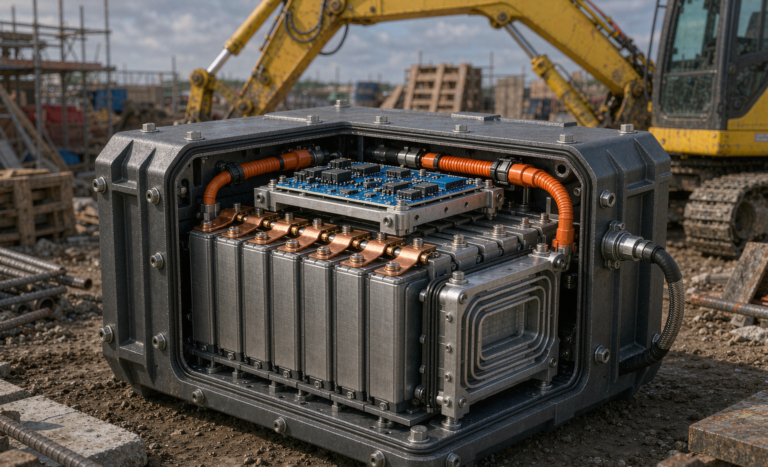
Then there is the environment. Construction sites throw silicate dust, diesel exhaust residue, and wash-down water at the enclosure every day. A pack that is sealed only to IP54 will fail within a season. At Horizon Power we specify IP67 sealed enclosures with breather valves and conformal-coated electronics for this duty. Vibration is another quiet killer: a pump truck boom resonates at frequencies that loosen cell interconnects over months. We validate every battery pack design against IEC 60068 random-vibration profiles before it ever reaches a chassis.
Pack Architecture and the Voltage Platform
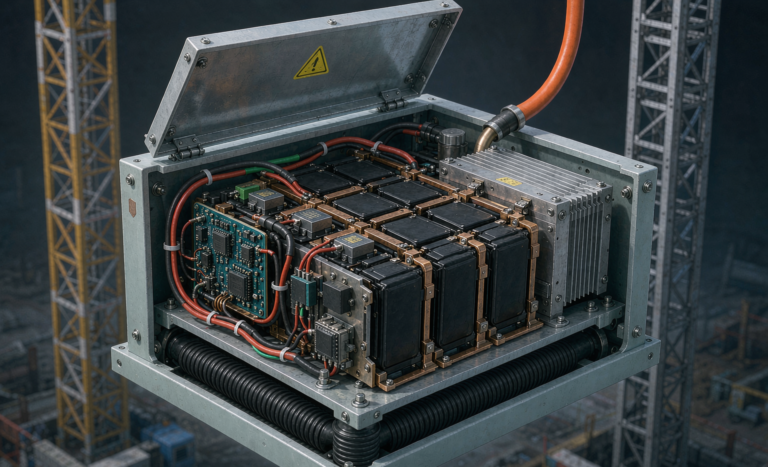
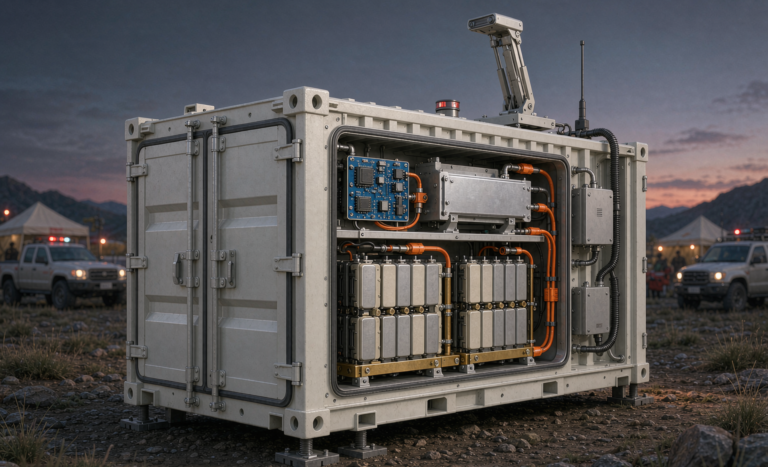
For mixer and pump trucks the right voltage platform is usually 600 to 800 volts. A higher platform keeps cable cross-sections manageable when you are pushing 400 to 600 amps during a pump surge, and it reduces I squared R losses in the long cable runs from the pack to the hydraulic power unit. We build the pack from automotive-grade prismatic lithium iron phosphate cells, arranged in modules with laser-welded busbars and a structural tray that doubles as the chassis mounting frame.
A custom battery solution here is not about chemistry alone. It is about where the energy lives and how it is delivered. We split the pack into two or three physically separated segments so a single point puncture or a thermal event in one segment does not take down the whole vehicle. Each segment has its own fuse, its own contactor, and its own current sensing. The hydraulic pump gets the first priority on available pulse power; the drum rotation gets a softer ramp so it never starves the pump mid-pour.
Thermal Management Under Stationary Load
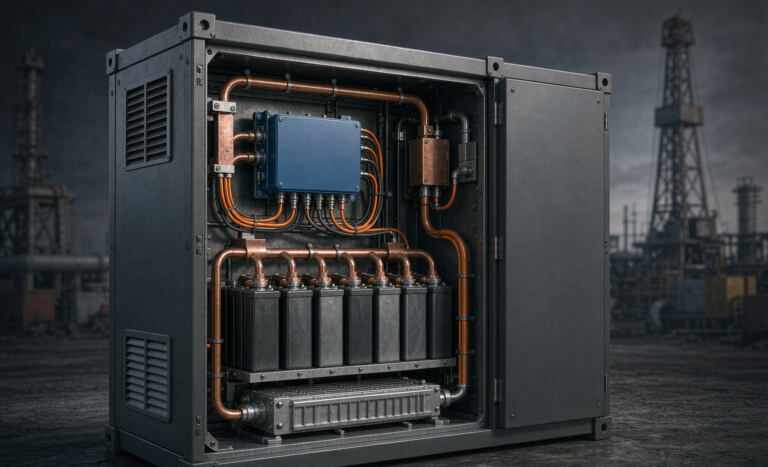
Here is a detail many designers miss. A pump truck often pours for thirty to ninety minutes while sitting still, with no road airflow to cool the pack. The cooling system that works fine while driving can overheat while parked and pumping. We use active liquid cooling with a dedicated pump and a small radiator with its own fan, sized for the stationary worst case rather than the driving average. In cold climates the same loop preheats the cells before a morning pour so the pack delivers full pulse power from the first cylinder stroke.
This is where a good BMS solution earns its keep. The battery management system must model cell temperature not just at the surface but at the core, because a cell can read safe on the wrapper while the jelly roll inside is climbing. We sample every module, balance continuously, and isolate a module the moment its delta from neighbors crosses a threshold. On a job site, a single thermal trip that safely stops the pack is a nuisance; a thermal runaway is a catastrophe.
Safety Standards and Certifications That Matter
For industrial lithium packs the certification list is not optional. Every pack we ship for mixer and pump trucks carries UN38.3 transport certification, because these vehicles cross state and national lines. The cells and pack carry IEC 62133 for portable safety and, more importantly for stationary industrial duty, IEC 62619 for industrial lithium battery safety. We add IP67 ingress protection, vibration qualification to IEC 60068, and a documented thermal-propagation test so the customer can show their insurer and their site safety officer that a single cell failure will not propagate.
I tell customers to ask for the propagation test report by name. A battery application solution that cannot show you a pass on thermal propagation is not ready for a diesel-equivalent duty cycle, no matter how cheap the quote. The cost of a fire on a crowded urban job site is measured in lawsuits and shutdowns, not in replacement packs.
Sizing the Energy and the Charge Plan
Sizing is straightforward once you respect the duty cycle. A typical 8 to 10 cubic meter mixer drum rotation load runs in the low tens of kilowatt range, while a pump truck pouring at full rate can pull two to three times that in pulses. We size the usable energy to cover a full shift at the site plus reserve, then we design the charge plan around depot opportunity charging rather than fast roadside charging. A pack that charges slowly overnight at the depot and tops up during lunch breaks lasts far longer than one hammered by DC fast charging every few hours.
A custom battery solution also means matching the pack to the truck’s actual route. A mixer that drives twenty kilometers to site, pours, and returns needs less buffer than a pump truck that relocates its boom across a site all day. We log a week of telematics before we fix the pack size, because oversizing wastes money and undersizing strands a truck mid-pour, which is the one failure a contractor will never forgive.
Lifecycle, Maintenance, and Second Life
These packs are expensive, so lifecycle matters. We design for a usable state of health window of around 80 percent over roughly 2,000 to 3,000 equivalent full cycles in this duty, with the BMS logging every cycle so the operator can see degradation coming. When a pack drops below threshold for vehicle duty, it does not go to scrap. The modules still hold useful capacity for stationary storage at a depot or a solar buffer, which is a battery solution that pays back twice.
Maintenance is mostly software. There are no filters to change and no oil to sample. The operator reviews the BMS dashboard weekly, watches for rising internal resistance in any module, and schedules service before a fault. In my experience the fleets that treat the battery like a monitored system, not a black box, are the ones still running three years later.
What size battery does a concrete mixer truck need?
A mixer drum rotation load sits in the low tens of kilowatts, so most 8 to 10 cubic meter trucks need roughly 120 to 200 kilowatt-hours of usable capacity to cover a full shift plus reserve. We log a week of telematics before fixing the size, because route length and pour frequency change the number far more than the drum rating alone. Oversizing wastes money and undersizing strands a truck mid-pour.
How long does a pump truck battery last on a single charge?
A pump truck pouring at full rate can draw two to three times the continuous current in pulses, so a typical shift pack ranges from 200 to 350 kilowatt-hours depending on boom hours and pour pressure. We design around depot opportunity charging with a lunch-break top-up rather than relying on roadside fast charging, which protects cycle life and keeps the truck working through a full day on site.
Can the same battery power both the drum and the pump?
Yes, but only with priority power management. The hydraulic pump must get first claim on available pulse current, while the drum rotation receives a softer ramp so it never starves the pump mid-pour. We split the pack into segmented modules with independent fusing and contactors so a single load event cannot take down the whole vehicle during a critical pour.
What certifications are required for these battery packs?
At minimum you need UN38.3 for transport, IEC 62133 for cell and pack safety, and IEC 62619 for industrial lithium battery safety, plus IP67 ingress protection and IEC 60068 vibration qualification. The one report I insist on is a documented thermal-propagation test, because a single cell failure must not propagate into a pack-level fire on a crowded job site.
How do you cool a battery while the truck is stationary?
Stationary pouring removes the road airflow most packs rely on, so we use active liquid cooling with a dedicated pump, radiator, and fan sized for the parked worst case, not the driving average. In cold climates the same loop preheats cells before a morning pour so the pack delivers full pulse power from the first cylinder stroke instead of limping through a cold start.
Is a custom battery solution worth the cost over a standard pack?
For mixer and pump trucks, yes. A standard EV pack sized on average load will sag, chatter its contactors, and overheat while parked and pumping, and it will not carry the industrial certifications a job site insurer demands. A battery solution built around the real pulse profile, cooling worst case, and vibration duty pays for itself by avoiding stranded trucks and fire-risk shutdowns.
Further Reading
References