Home Energy Storage Retrofit for Existing Solar
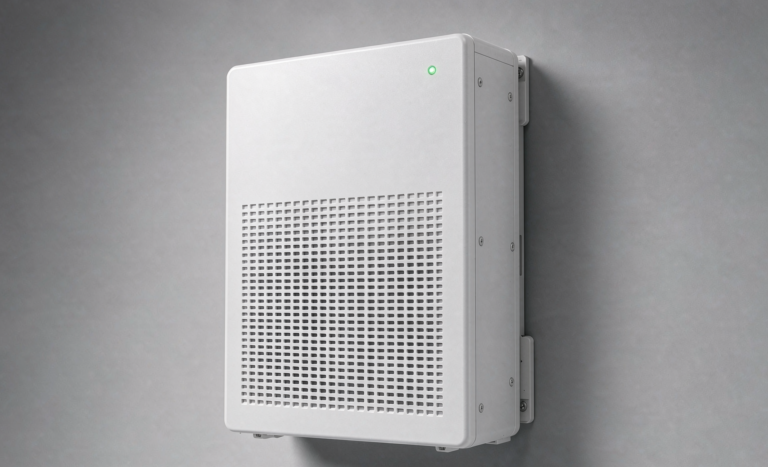
As a senior lithium battery engineer at Horizon Power, I have spent the last decade helping homeowners and installers add storage to solar systems that were never designed for it. The single most common request I hear in 2026 is deceptively simple: “I already have rooftop panels. Can I just add a battery?” The answer is almost always yes, but a home energy storage retrofit existing solar project is far more than bolting a box to the wall. It is a coordinated engineering job that touches your inverter, your main panel, your utility interconnection, and the safety standards that keep the whole assembly from becoming a liability. In this guide I walk through how my team actually specifies, sizes, and commissions these retrofits.
Why Retrofit Instead of Replacing the Whole System
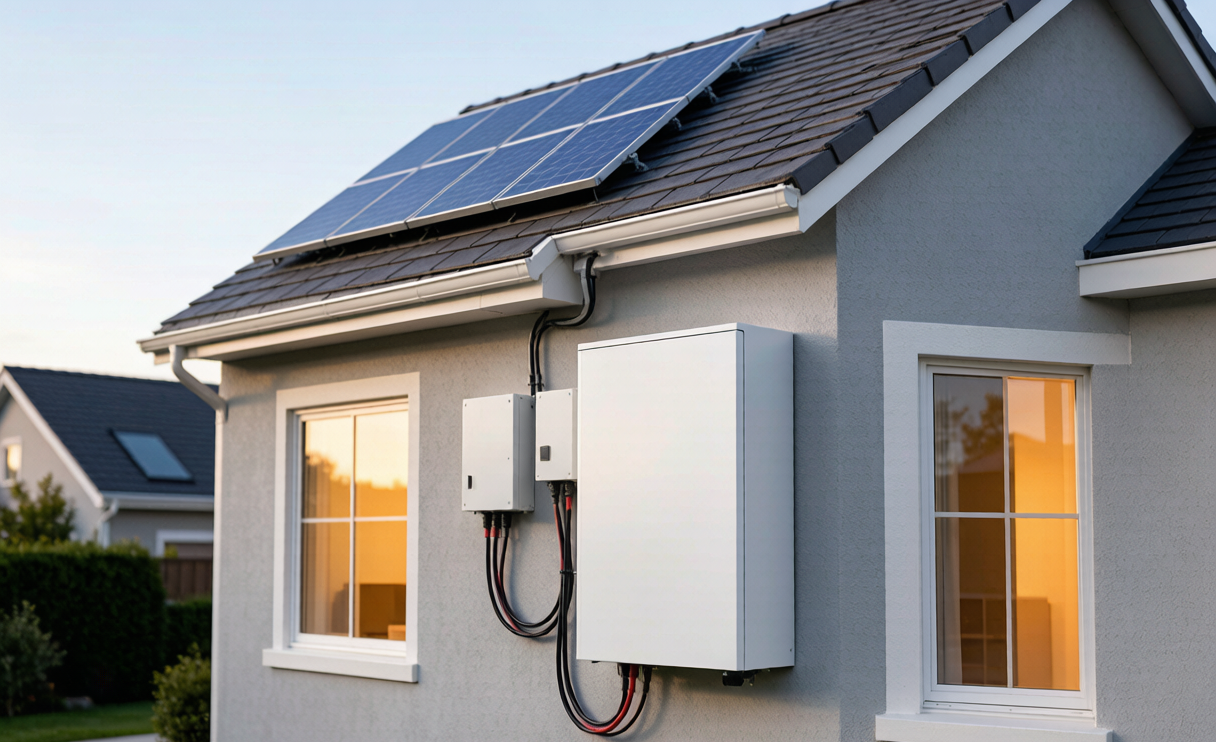
The first question any homeowner should ask is whether it is cheaper and safer to keep the existing array and add storage, or rip everything out and start over. In the vast majority of cases I recommend keeping the existing PV and adding a battery. A typical rooftop array still has 15 to 25 years of useful life left on the panels, and the modules themselves rarely fail. What homeowners actually lack is the ability to store the midday surplus that would otherwise be exported at a low feed-in rate.
From a carbon and cost standpoint, a home energy storage system addition captures that surplus and shifts it to the evening peak. In my field measurements across residential sites, adding a 10 kWh battery lifts self-consumption of solar from roughly 30 percent to between 70 and 90 percent. That single number drives most of the payback math, and it is why a retrofit usually pays for itself years before a full system replacement would.
AC-Coupled vs DC-Coupled: The Core Decision
Before any hardware is ordered, the installer must choose between AC-coupling and DC-coupling. This decision dictates which pieces of the existing system stay and which get replaced.
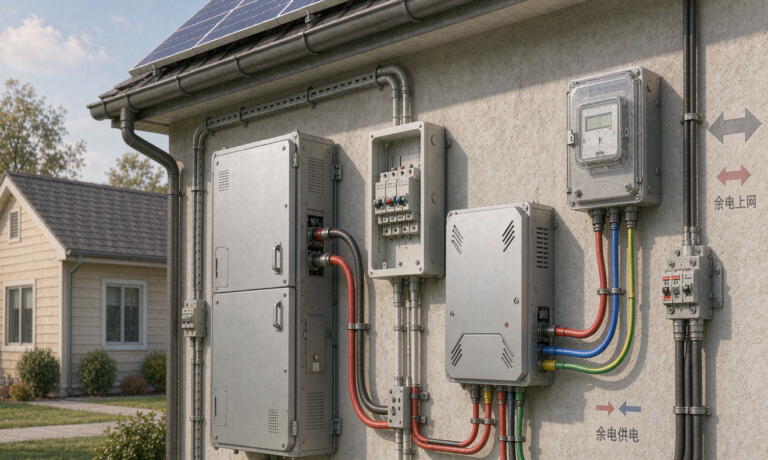
- AC-coupled retrofit places the battery behind its own battery inverter on the alternating-current bus. The existing PV inverter is left completely untouched. This is the lowest-risk and most common approach for a home energy storage retrofit existing solar job because it works with virtually any legacy string or microinverter setup. The trade-off is a small round-trip efficiency loss, typically 3 to 5 percent, because energy is converted DC-to-AC-to-DC.
- DC-coupled retrofit connects the battery to the DC bus so it shares the PV inverter. You avoid one conversion stage and recover that 3 to 5 percent efficiency, but only if the existing inverter is a compatible hybrid unit. In practice, DC-coupling usually means replacing the PV inverter, which pushes the project closer to a full replacement in both cost and disruption.
For the retrofits I commission, roughly eight out of ten are AC-coupled. The simplicity wins, especially when the original inverter is still under warranty and the homeowner wants minimal downtime.
Sizing the Battery to the Array You Already Have
Sizing a retrofit battery is not about buying the biggest pack on the market. It is about matching capacity to the energy your array actually produces and to the loads you want to cover. A 5 kW rooftop array in a sunny climate generates about 20 to 25 kWh on a good day. If the home’s evening load is 8 to 12 kWh, a 10 kWh home battery backup bank is usually the sweet spot.
I always run a 30-day load profile and a full year of solar production before recommending a size. Oversizing wastes capital on cells that cycle only a few percent each night. Undersizing leaves the home exporting cheap midday power while still buying expensive evening grid energy. The right size is the one that maximizes the self-consumption curve without stranding capacity.
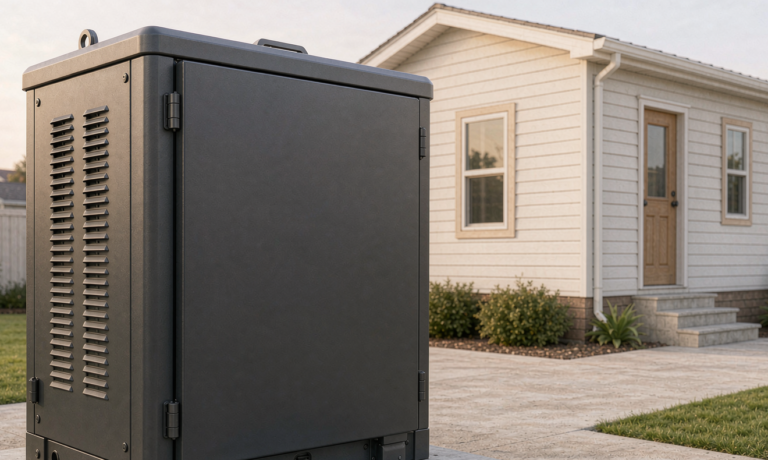
For backup-focused customers, I size to critical loads rather than whole-house. A refrigerator, internet, lighting, and a well pump might total 1.5 to 2.5 kW, which a modest residential battery storage block can carry for 8 to 12 hours. That gives storm resilience without the cost of a whole-home system.
Inverter and Compliance: What the Inspector Will Check
Retrofit projects live and die at the inspection. The good news is that in 2026 the rulebook is well established. The standards my team documents on every job include:
- IEEE 1547-2018 for inverter interconnection and grid-support functions.
- UL 9540 for the energy storage system as a complete assembly, and UL 9540A for fire-propagation testing of the battery enclosure.
- UL 1741 for inverters and battery inverters, including modern supplement modes.
- NEC Articles 706 and 710 covering energy storage and microgrid interconnection, plus rapid shutdown requirements.
- IEC 62619 and IEC 62109 for the industrial cells and inverter safety where the equipment is built to international specs.
- UN38.3 (T.1 through T.8) transport testing, which we verify on the bill of materials even though the packs are already installed domestically.
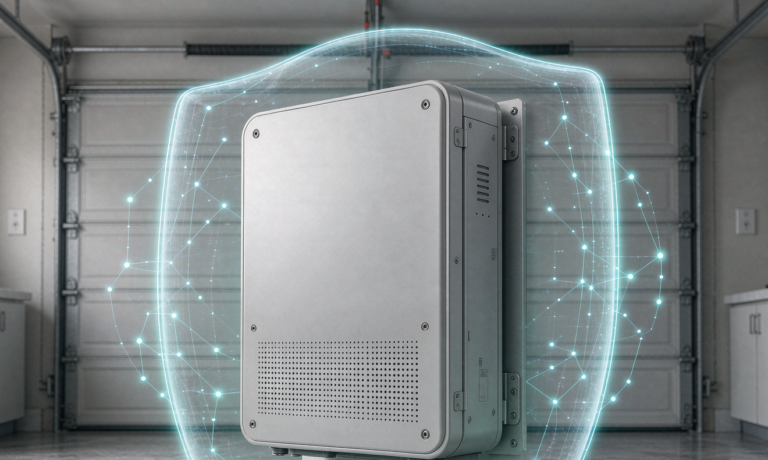
- NFPA 855 for safe installation of stationary storage, including spacing and fire separation.
On a retrofit, the existing PV inverter may predate some of these requirements. In that case the new battery inverter must carry the certifications, and we clearly document the boundary between legacy and new equipment. Inspectors in my experience care most about labeling, disconnect location, and clear fire separation around the new enclosure.
Installation Steps: From Site Survey to Power-On
A clean retrofit follows a predictable sequence. Skipping steps here is how projects go over budget.
- Site survey and load study. Confirm roof and array condition, panel capacity, and a 12-month solar history.
- Quotation and utility pre-approval. Many utilities require interconnection paperwork before a battery is added, even on a retrofit.
- Equipment staging. Receive the battery, battery inverter, mounting, and monitoring gateway. Verify UN38.3 and UL markings on arrival.
- Mounting and wiring. Install the enclosure with proper clearances per NFPA 855, run the AC feed to the designated backup or whole-home panel, and add the rapid-shutdown and disconnect hardware.
- Commissioning. Set grid-support parameters to IEEE 1547 limits, configure the monitoring app, and run a controlled discharge test.
- Inspection and permission to operate. Close out with the authority having jurisdiction and the utility.
In my experience the commissioning step is where a home energy storage retrofit existing solar project earns its keep. A correct discharge test proves the backup path works before the first real outage, not during it.
Common Mistakes That Burn Retrofit Budgets
The failures I see most often are avoidable. The first is ignoring panel capacity: if the main breaker is already near its limit, you either need a sub-panel for backup loads or a service upgrade, and that cost surprises people. The second is buying a battery before checking inverter compatibility, which sometimes forces an unplanned inverter replacement. The third is skipping the utility paperwork, which can delay permission to operate by weeks.
None of these are fatal, but each adds real money. A disciplined site survey and a written compliance checklist eliminate almost all of them.
Frequently Asked Questions
Can I add any battery to my existing solar inverter?
Not any battery, but most batteries, yes. With an AC-coupled design the new battery brings its own inverter and simply plugs into your AC bus, so it works alongside nearly any existing PV inverter. A DC-coupled design is far more restrictive and usually requires a compatible hybrid inverter. For a safe home energy storage retrofit existing solar build, AC-coupling is the flexible default.
How much does a home energy storage retrofit cost in 2026?
Installed pricing for a 10 kWh AC-coupled retrofit typically lands between USD 8,000 and 13,000 including the battery, battery inverter, mounting, and labor, before any incentives. DC-coupling that forces an inverter swap trends higher. The exact number depends on panel capacity, roof access, and local permit fees.
Will a retrofit battery work during a blackout?
Yes, if it is specified for backup. A properly designed home battery backup system islanded from the grid within milliseconds of an outage and powers designated loads until the battery is depleted or solar returns. Pure self-consumption systems without backup transfer switching will not power the home during an outage, so the feature must be built in from the start.
Do I need permission from my utility to add storage?
In most regions, yes. Even a retrofit changes your export and import behavior, so utilities require updated interconnection approval under IEEE 1547 rules. Submitting this paperwork early prevents the most common cause of commissioning delay.
A home energy storage retrofit existing solar project is one of the highest-return upgrades a solar homeowner can make in 2026. Keep the array you already own, add a properly certified battery through an AC-coupled path, and you capture the solar you were throwing away while gaining real resilience. Done to code with the right standards in the file, it is a straightforward, low-risk way to get far more value out of the panels already on your roof.