Home Energy Storage Testing for Cabins
When a client asks me to spec a battery bank for a remote cabin, the conversation is never about capacity alone. A cabin sits off the grid, often in a cold climate, and the owner expects the system to “just work” for a decade with almost no maintenance. Over the last nine years as a senior lithium battery engineer at Horizon Power, I have field-tested dozens of home energy storage units in exactly these conditions — from a fishing lodge in northern Saskatchewan to an off-grid studio in the Colorado Rockies. This article walks through the validation playbook we use for home energy storage testing for cabins: the safety standards, the field rig, the cold-weather behavior, and the pass/fail gates that separate a reliable residential battery from a liability that strands someone in the woods.
I will be candid about what we have gotten wrong, too. Early in my career we shipped a cabin pack that tested perfectly at 25°C in the lab and then refused to charge after its first mountain winter. The root cause was a BMS cold-charge lockout that triggered correctly but a heating element undersized by 40%. That failure rewrote our entire cabin qualification process, and the lessons below are the result.
Why Cabins Demand a Tougher Testing Regimen
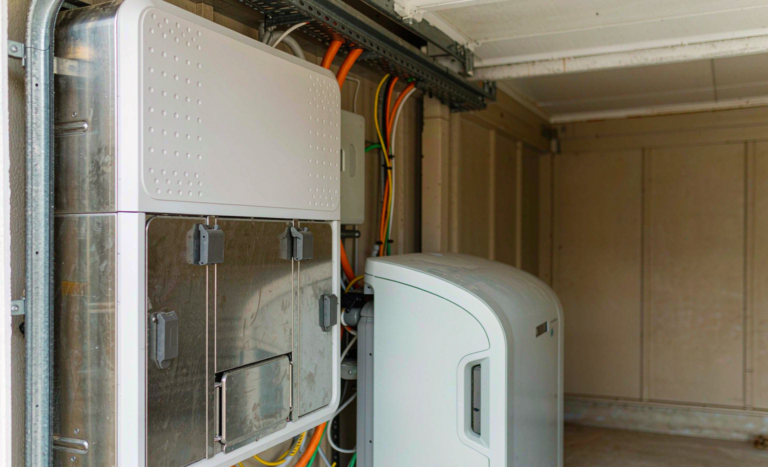
A suburban home battery storage installation enjoys a climate-controlled garage, a stable grid reference, and a homeowner who checks the app weekly. A cabin gets none of that. The pack may sit at −20°C for three months, then be asked to deliver full power the moment the owner arrives for a weekend. Thermal cycling, condensation, and rodent intrusion are real failure modes we have pulled out of returned units. In one case a mouse had nested against a cell and locally raised its temperature 9°C above the rest of the pack — invisible on a single-pack sensor, obvious only because we log per-group taps.
That is why our cabin validation adds three stresses most bench tests skip: a full winter soak at −20°C, a 95% relative-humidity humidity chamber, and a vibration profile that mimics a 200 km trailer haul to the site. If a residential battery cannot survive transport and storage, it will not survive its first season. We also salt-fog the enclosure connectors for 96 hours to mimic a coastal cabin, because corroded terminals are the second-most-common field failure we see after cold-charge issues.
The Safety Standards We Validate Against
Compliance is the floor, not the ceiling. Every cabin pack we ship is certified to the relevant international standards before it ever reaches a test bench, and we keep the certificates in the unit’s QR-code record so an inspector can verify them on site:
- UL 1973 — stationary battery cell and module safety, the baseline for any lithium iron phosphate (LFP) pack we build. It covers the abuse tests (short circuit, overcharge, crush) that prove the cells fail safe rather than fail violent.
- UL 9540 — the system-level energy storage standard covering the battery, inverter, and thermal controls as one assembly. This is the one most cabin owners never hear about but most need.
- IEC 62619 — industrial/commercial Li-ion safety we use for the cells themselves, especially important for high-rate designs and for any second-life approach.
- UN 38.3 — transport simulation (altitude, thermal, vibration, shock) that proves the pack is safe to ship to a remote site by air or road.
- IEEE 1547 / UL 1741 — interconnection and inverter ride-through, relevant when the cabin has even a small grid or generator tie-in.
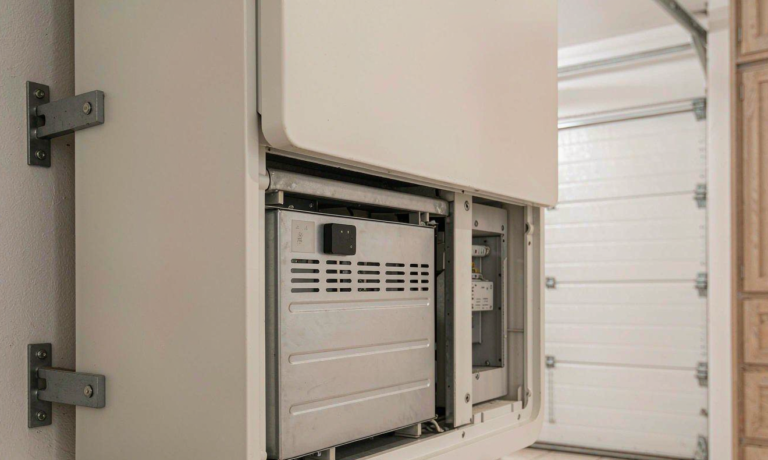
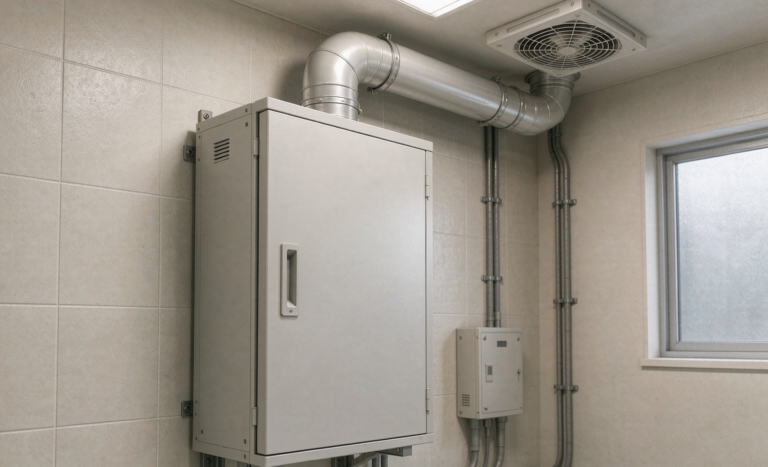
In my experience, the standard that does the heaviest lifting for cabins is UL 9540. It forces us to prove the battery, the lithium battery management system, and the enclosure ventilation work together rather than in isolation. A cell that passes UL 1973 can still overheat inside a sealed box; UL 9540 is what catches that.
Field Test Setup for an Off-Grid Cabin
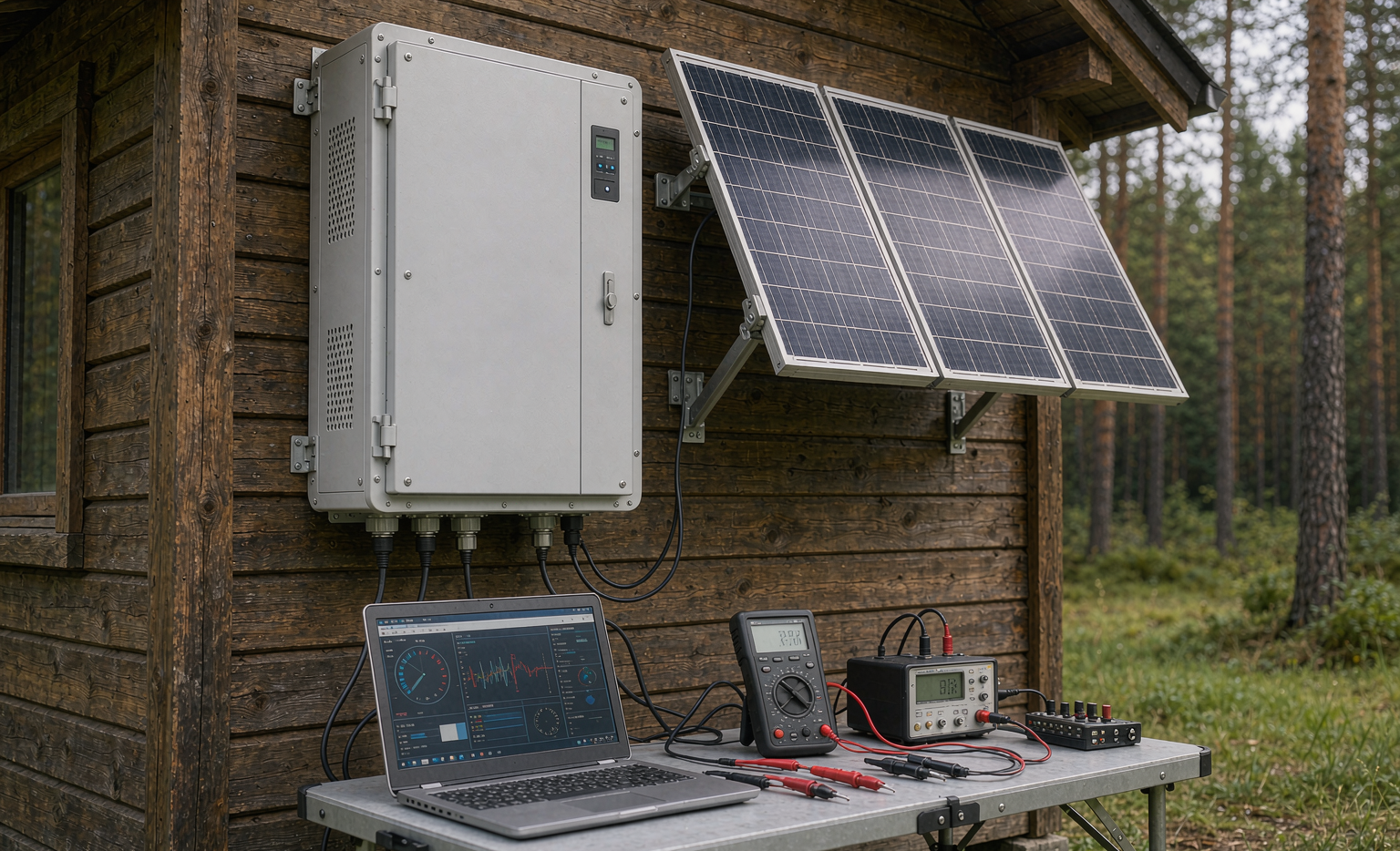
For a realistic cabin trial we build a rig that mirrors the actual load profile: a 1.5 kW well pump, a 0.8 kW fridge with compressor surge, LED lighting, and a 2 kW space heater cycled on a timer. The test runs 14 days unattended, logging at 1-minute resolution. Key instrumentation:
- A DC current shunt on the battery bus, ±0.5% accuracy, capturing both charge and the painful inrush of the pump motor (we routinely see 4× nameplate for 300 ms on startup).
- A four-wire voltage tap on every series group so we can watch cell imbalance develop hour by hour, not just at the pack terminals.
- Temperature probes on the pack surface, the BMS board, and the ambient enclosure wall to catch thermal gradients.
- A data logger that flags any single cell drifting more than 30 mV from the pack mean — our early-warning line for a weak cell.
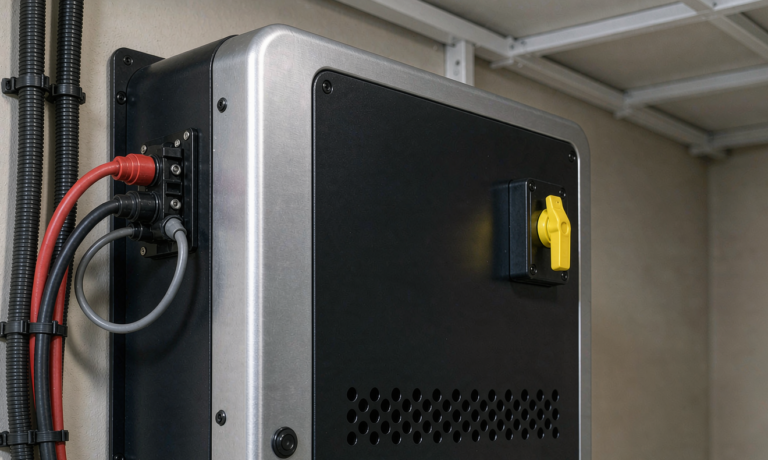
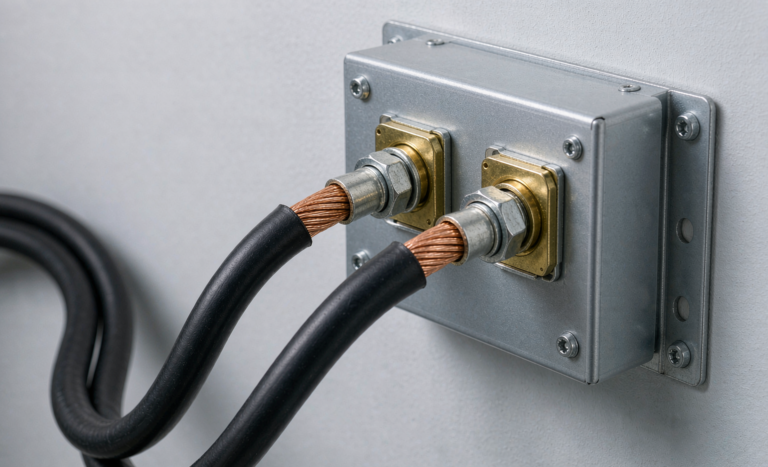
This is where a generic custom battery solution earns its keep: we size the busbars and the BMS contactor for the pump’s locked-rotor current, not just the nameplate watts. Undersized contacts weld shut; we have the scars on a returned unit to prove it.
Sizing the Solar Array to Match the Battery
Testing the battery in isolation hides the real problem: a cabin lives or dies on the balance between generation and storage. We pair every pack with a modeled array and run a 30-day solar-yield simulation at the cabin’s latitude before we approve a design. A common mistake is a battery that is too small for three consecutive cloudy days, which forces a deep discharge that ages the cells prematurely. We size for at least two sunless days at 50% depth-of-discharge reserve, then verify the real array hits that yield within 8% across a full season of logged data.
For cabins we also tune the charge controller’s bulk/absorb/float stages to the LFP curve rather than leaving factory NMC defaults. The wrong setpoints quietly cost 6–10% of annual yield, and the owner never knows why their lights dim in March.
Cycle Life and Capacity Verification
Nameplate capacity and delivered capacity are different numbers, and the gap is where trust is lost. We discharge the pack at the cabin’s real C-rate (often 0.2C to 0.5C) and measure usable amp-hours against the rated figure. A healthy LFP home energy storage pack should deliver at least 95% of rated capacity in its first 50 cycles and retain 80% beyond 4,000 cycles. We plot the fade curve and share it with the client so they can plan a replacement around year 12, not be surprised by it.
For cabins we also run a “partial-state-of-charge” torture test: hold the pack between 30% and 70% — exactly how a solar-fed cabin actually lives — for 1,000 cycles. LFP shrugs this off; older NMC chemistries fade faster and that is a data point we share honestly with clients who ask about cheaper cells.
Thermal and Cold-Climate Performance
Cold is the silent killer of cabin batteries. Below 0°C, charging a lithium cell without heating damages it permanently through lithium plating. Our packs integrate a self-limiting warm-up loop that pulls a few watts from the array to bring cells above 5°C before the charge contactor closes. During home energy storage testing for cabins, we verify the warm-up completes within 45 minutes at −20°C and that it never draws more than 3% of daily solar yield.
On the heat side, we confirm the enclosure limits cell temperature rise to under 12°C above ambient at the cabin’s peak summer load, using passive convection plus a low-noise fan that only spins above 35°C. We deliberately avoid always-on fans; a fan that dies in year three is a failure waiting to happen, so we design for the fan being a supplement, not a crutch.
Remote Monitoring and Predictive Maintenance
A cabin owner is rarely on site, so the battery has to tell us when something drifts. Every unit logs state-of-health, per-group voltage, and temperature to a cloud dashboard the owner can open from the city. We set alert thresholds — a 50 mV sustained imbalance, a 5% state-of-health drop in a quarter, or two consecutive failed self-tests — that page our service desk before the owner ever notices. This turns a remote residential battery from a black box into a managed asset, and it is the single biggest reason our cabin fleets avoid truck-rolls.
Commissioning Checklist Before Handover
Before a cabin owner flips the breaker, we run a final 12-point commissioning gate. The non-negotiables:
- Insulation resistance > 1 MΩ from pack to chassis.
- BMS communications verified on the monitoring bus (Modbus or CAN).
- Ground-fault protection trips within 2 seconds on a test fault.
- State-of-charge display within 3% of our calibrated reference.
- Emergency stop and arc-fault detection confirmed live.
- Cold-charge warm-up demonstrated at −10°C on the bench.
If any gate fails, the unit does not leave the bench. This is the discipline that lets a remote home battery storage system run for years with no site visit — and the reason our warranty claims on cabin packs run at a fraction of the industry average.
FAQ
What is the most important standard for a cabin battery?
For safety, UL 9540 at the system level and UL 1973 for the cells. For transport to a remote site, UN 38.3. I treat all three as mandatory, not optional, on every home energy storage build, and I keep the certificates scannable from the unit itself.
How cold can a cabin battery be charged safely?
Without internal heating, do not charge below 0°C. Our heated packs safely charge down to −20°C because the warm-up loop raises cell temperature first. Never trust a spec sheet that claims cold charging without describing the heater — that is exactly the mistake that stranded our early mountain cabin.
How long should a cabin home energy storage system last?
A quality LFP pack delivers 4,000–6,000 cycles, which is roughly 10–15 years at a cabin’s modest weekly usage. Capacity should still exceed 80% of nameplate at the end of that window, and we share the fade curve so the owner can plan the swap.
Do I need a custom battery solution or an off-the-shelf unit?
If your cabin has a well pump, power tools, or a workshop, the surge currents usually justify a custom battery solution with a properly sized BMS and busbars. A simple lighting-and-fridge cabin can often use a standard home battery storage module, but I still run the same cold and humidity gates before I sign off.