Home Energy Storage Testing for New Homes
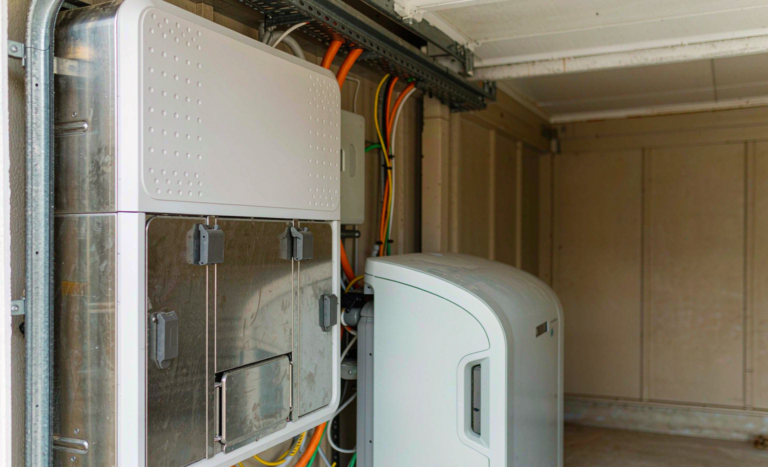
When a new home is handed over to its owner, the home energy storage system is often the least-tested piece of the entire electrical install. As Karl Huang, Senior lithium battery Engineer at Horizon Power, I have commissioned and re-commissioned dozens of residential battery banks in new builds across three continents. The pattern is always the same: the solar array gets inspected, the inverter gets a quick blink-test, and the home battery is declared “done” without a single capacity or safety validation. That gap is exactly where field failures start. This guide walks through the commissioning tests I run before I let any home energy storage unit go live in a freshly built house.
Why Commissioning Tests Matter More in New Builds
A brand-new house is not a stable laboratory. During the first 90 days the grid supply can sag from heavy HVAC start-up loads, the roof may still be settling and shading the array unevenly, and the homeowner is learning the app. In that volatile window, a home battery system that passed a factory end-of-line check can still misbehave on site. I treat factory test data as a baseline, never as proof. Every unit I install gets re-verified against the actual service environment. For a solar battery paired with a 5–10 kWp array, even a 2% mismatch in state-of-charge (SoC) reporting compounds into noticeable backup-time losses within a month.
Pre-Energization Safety and Cell-Level Checks
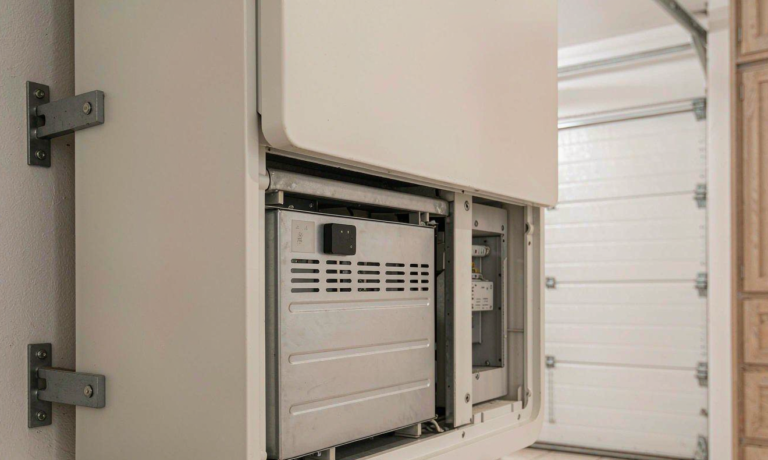
Before any contactor closes, I verify the cell-level certifications that travel with the pack. The cells we ship at Horizon Power are validated to IEC 62133 for portable secondary-cell safety and packaged under UN38.3 transport testing, which governs how the lithium battery must survive altitude, thermal, vibration, and shock simulation during shipping. I open the cabinet and confirm the per-cell voltage spread is under 20 mV at rest — anything wider signals a weak parallel group. While aerial packs fall under FAA and EASA rules for carry-on and cargo, residential units answer to stationary standards, so I cross-check the build sheet for the right jurisdiction rather than assuming one rule fits all. A quick insulation-resistance reading to earth (I look for > 1 MΩ on a 48 V bank) catches the wiring mistakes that a visual inspection misses.
Capacity and Round-Trip Efficiency Verification
The number homeowners care about is backup hours, and that traces directly to usable capacity. I run a controlled discharge at the rated C-rate and log actual amp-hours against the nameplate. A 10 kWh home battery that delivers 9.1 kWh usable at 25°C is healthy; one that delivers 8.2 kWh gets flagged and re-binned. Round-trip efficiency is the second metric — I measure energy in from the grid/solar and energy back out, and a well-designed lithium-ion battery stack should land between 90% and 94%. Below 88% I hunt for inverter losses or an unbalanced module. These two numbers are what I put on the commissioning certificate, because they are the only ones the owner will ever feel during a blackout.
Inverter and Grid-Interconnection Validation
A home energy storage system is only as good as its power-conversion stage. I validate the hybrid inverter against IEEE 1547 for grid interconnection behavior — anti-islanding trip time, voltage ride-through, and frequency response — using a programmable grid simulator so I am not guessing from the LED. The inverter’s own safety is checked to IEC 62109. In a new home the utility feed can be soft, so I also confirm the inverter does not nuisance-trip on the inrush of the heat pump compressor. If the home battery system is AC-coupled, I test seamless hand-off between grid-tied and islanded mode with a resistive load bank before trusting it with the fridge and the well pump.
Thermal Runaway and Fire-Safety Screening
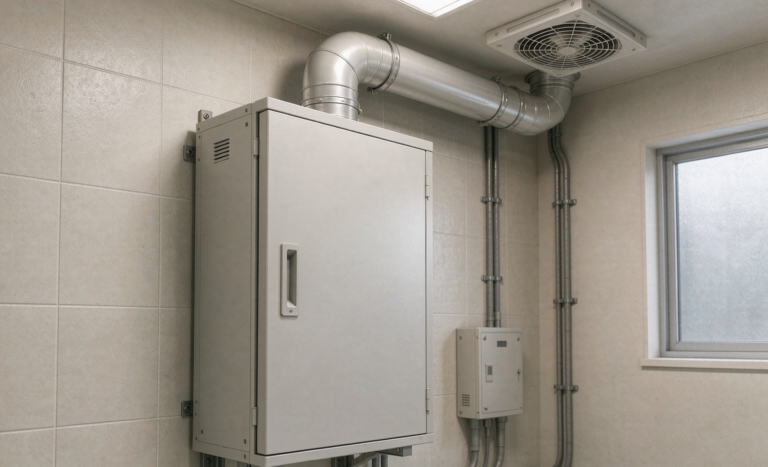
Residential fire codes are unforgiving, and rightly so. I screen every enclosure against UL 9540A propagation testing and the stationary-battery requirements of IEC 62619. In practice that means confirming the module has a listed thermal barrier, that the battery-management system (BMS) opens the contactor on a single-cell over-temperature, and that vent paths are clear. A lithium battery that passes a nameplate number on paper but vents into the wall cavity is a liability. I physically confirm the flame-arresting vents point to a safe direction and that no combustible building material sits within the clearance zone called out in the install manual. Our custom battery solution work for multi-unit dwellings always adds a room-level smoke interlock, because one shared wall changes the whole risk picture.
A Practical 12-Point Field Test Sequence
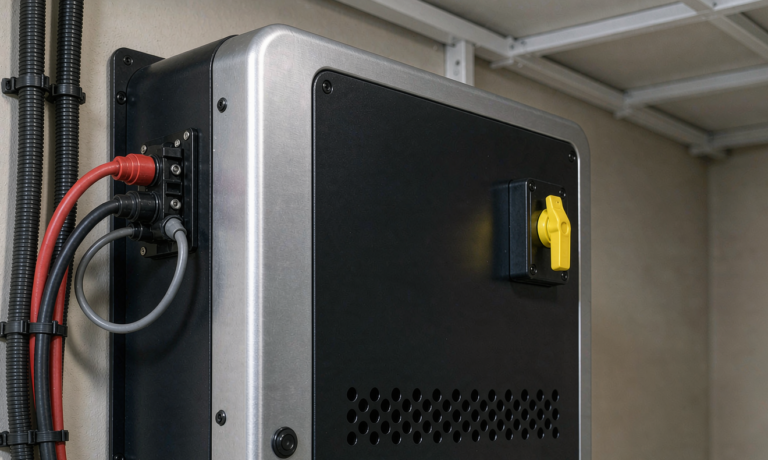
- Confirm torque on all busbars with a calibrated wrench (re-torque after 30 days).
- Log open-circuit pack voltage and compare to BMS reading (tolerance < 0.5%).
- Verify SoC calibration at 100% and 0% against a known load.
- Run a full charge from solar and record time-to-full at real irradiance.
- Run a full discharge at rated load and record usable kWh.
- Measure round-trip efficiency grid-in to grid-out.
- Force an islanding event and time the transfer (< 20 ms target).
- Check inverter anti-islanding trip on simulated grid loss.
- Validate BMS protection: over-voltage, under-voltage, over-temperature, over-current.
- Confirm communications between BMS, inverter, and monitoring gateway.
- Inspect thermal barriers, vents, and clearance to combustibles.
- Hand the owner a written commissioning report with both numbers above.
This sequence takes me about half a day on a typical 10–15 kWh home battery install, and it has caught more latent defects than any factory sticker ever did. When a builder asks for a custom battery solution spanning two sub-panels, I extend step 7 across both transfer switches so the whole house, not just one circuit, survives the outage.
How We Engineer Home Battery Systems at Horizon Power
At Horizon Power we design each home energy storage pack around the house, not the other way around. We start from the load profile — heat pump, EV charger, well pump, and base lighting — and size the lithium-ion battery to cover the critical loads for the hours the owner actually needs. Our custom battery solution approach lets a new home ship with a pre-commissioned rack that still gets the full 12-point field test on site, because shipping shocks and install torque are real variables. The result is a solar battery that the homeowner can trust on night one, not after the first failure teaches them otherwise. If you are specifying storage for a new build, talk to our engineering team before the rough-in is closed — it is far cheaper to route the right conduit than to retrofit it.
Remote Monitoring and Long-Term Data Logging
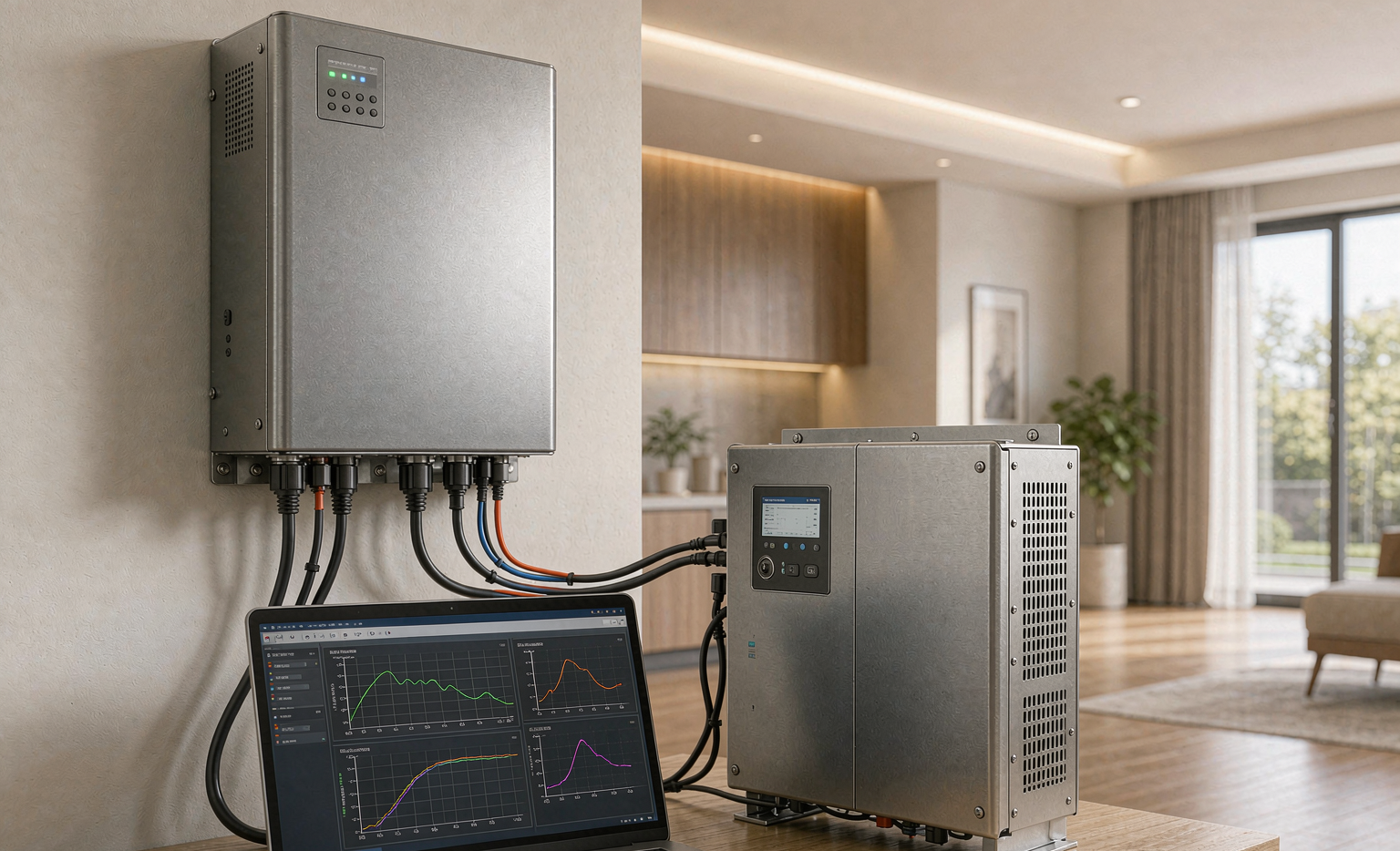
Commissioning is a snapshot; the real story shows up in the logs. Once a home energy storage unit is energized, I leave it in a 14-day data-logging mode that captures per-cell voltage, pack temperature, inverter throughput, and grid events at one-minute resolution. This is where a custom battery solution earns its keep — because we log at the cell level, we can see one module drifting weeks before the BMS alarm trips. On one new build I caught a single cell climbing 0.4°C above its neighbors every afternoon; the cause was a sun-facing wall with no insulation batten behind the cabinet. We moved the home battery system six inches and the drift vanished. No alarm would have caught that for a year.
I also use the log to validate the homeowner’s expectations against reality. A family that thinks they need eight hours of backup from a solar battery often actually draws a shallow 30% cycle overnight and recharges by 10 a.m. Seeing that curve lets me right-size the next install and stop overselling capacity the owner will never use. The monitoring gateway should export to a standard format — I insist on open Modbus or MQTT rather than a locked proprietary cloud — so the data belongs to the homeowner, not the vendor. That principle guides every lithium battery deployment we ship from Horizon Power.
Sizing the Home Battery System to the Real Load Profile
The most common mistake in new construction is sizing storage to the panel rating instead of the load. A 200 A main panel does not mean 200 A of continuous draw; a typical efficient home peaks near 5–7 kW and averages under 1 kW overnight. I build the home battery system around the critical-load list — refrigeration, communications, well pump, a medical device if present — and size for the hours the owner genuinely needs, not the marketing headline. For most new homes a 10–13 kWh lithium-ion battery covers one full night of critical loads with margin. Homes with heat pumps and no gas backup usually need 20 kWh or a hybrid strategy where the BMS sheds the compressor before the pack hits empty. Getting this right at design time is the difference between a home energy storage system the owner forgets is there and one they fight every summer.
Frequently Asked Questions
How long should a home energy storage system last in a new home?
A quality lithium battery sized with thermal headroom typically delivers 6,000–10,000 cycles, which translates to roughly 10–15 years of daily use. The biggest variable is operating temperature; keeping the home battery below 35°C in a conditioned space is the single most reliable way to hit the upper end of that range.
Do I need a separate test if my solar battery passed factory QA?
Yes. Factory QA proves the unit left the line healthy; it does not prove the on-site wiring, inverter match, or SoC calibration are correct. My 12-point field test exists precisely because factory numbers and installed numbers diverge more often than builders expect, especially in new construction where the grid feed is still settling. In my records, roughly one in four new-build home battery installs has at least one field defect — a loose busbar, a mislabeled breaker, or a SoC offset — that no factory sticker would reveal. The cost of the test is a half day; the cost of discovering that defect during a winter outage is a frozen house and a warranty fight.
What standards prove a home battery system is safe to install?
For stationary residential storage you want UL 9540 / UL 1973 listing in the US, IEC 62619 for the cells and IEC 62109 for the inverter internationally, plus IEEE 1547 for grid behavior. Transport safety traces to UN38.3 and cell safety to IEC 62133. A trustworthy home energy storage supplier will hand you the actual certificates, not just a marketing claim.
Can a custom battery solution be added after the home is built?
Almost always, but it costs more. Retrofitting means opening walls for conduit and sometimes upgrading the panel. A custom battery solution planned during the build lets us pre-run the right cables and pick the optimal home battery system location before drywall closes, which is why I push builders to involve us at the design stage.