Sodium-Ion Battery for Data Center Backup
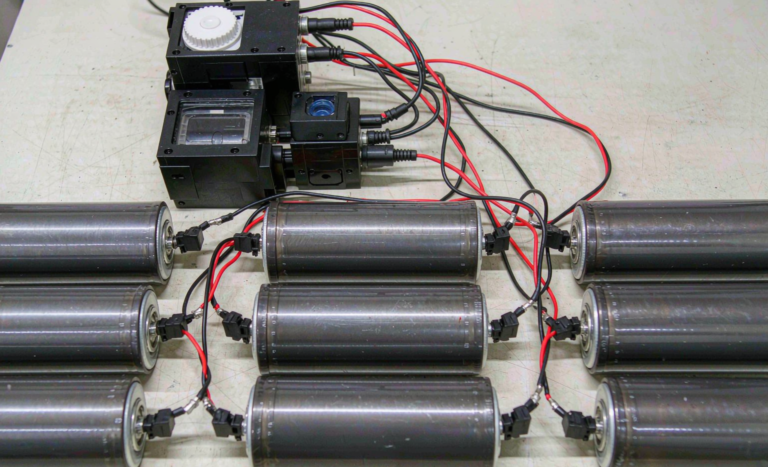
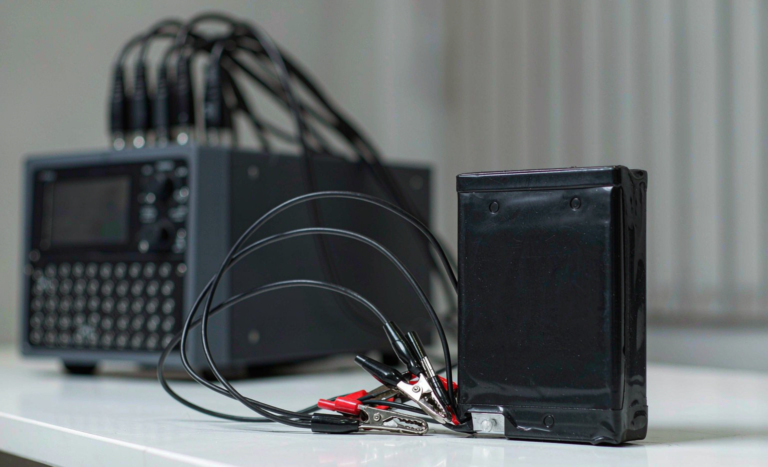
I have spent the last decade specifying backup power for mission-critical facilities, and the question I now hear most from data center operators is deceptively simple: can a sodium-ion battery actually replace lead-acid in our backup string? Three years ago I would have said “not yet.” Today, after qualifying cells against UN38.3 and IEC 62133 protocols and watching them survive two winters in unconditioned telecom edge sites, I now specify the sodium-ion battery data center backup configuration for several facilities where the old VRLA bank was the single biggest maintenance liability on site. Below I will walk through exactly why, with the real specifications I put on the bill of materials and the failure modes I have learned to design around.
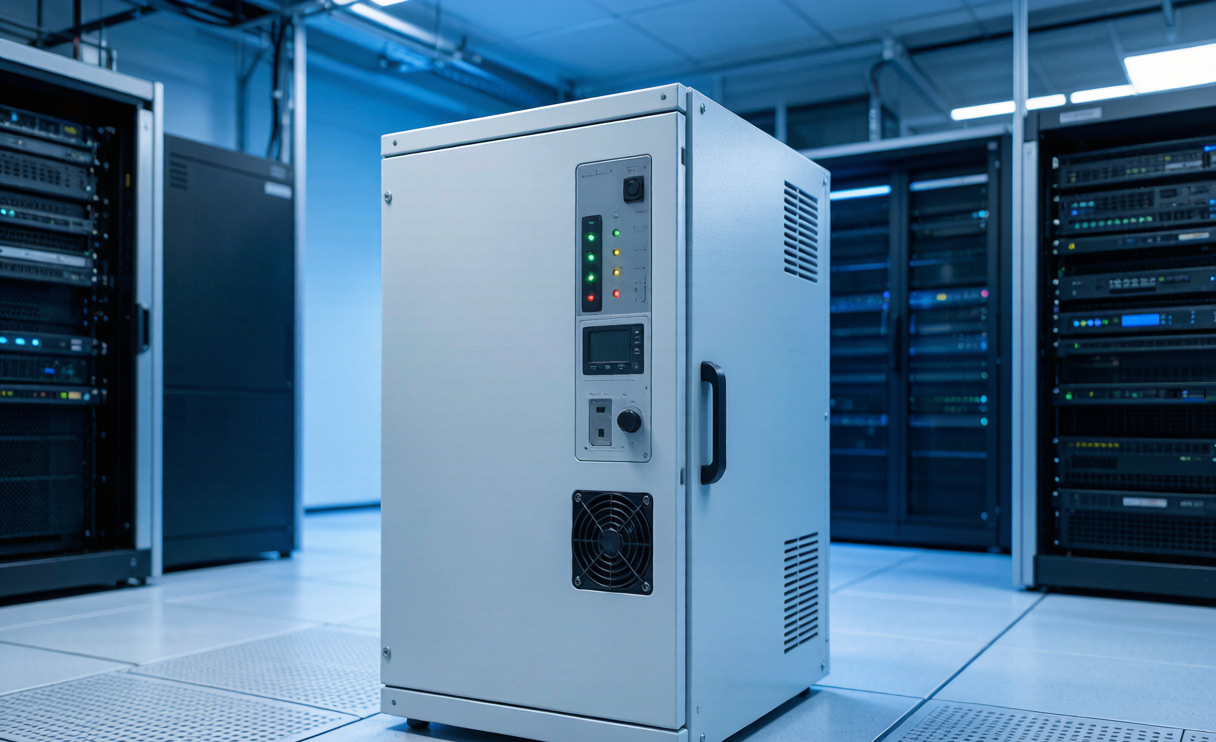
A data center does not need a battery that wins a drag race. It needs a battery that sits at partial state of charge for months, takes a full float charge without swelling, survives a -10°C equipment room, and wakes up instantly when utility power blinks. That duty profile is very different from an EV pack, and it is precisely where a sodium ion battery earns its place. In this guide I cover fit, cold performance, cycle-life economics, certifications, sizing math, and the field notes that matter once the racks are bolted down.
Why Data Center Backup Is a Natural Fit for Sodium-Ion
The classic backup architecture is a string of valve-regulated lead-acid (VRLA) batteries feeding a UPS inverter, sized for 5 to 15 minutes of ride-through while the generator spins up. VRLA is cheap per watt-hour on paper but brutal in practice: it wants 20–25°C, it sulfates if left discharged, and its real service life is closer to 3–4 years than the 7–10 the spec sheet implies. When a facility manager calls me about repeated false alarms at 3 a.m., it is almost always the VRLA bank.
A sodium-ion battery flips several of those pain points. Sodium chemistry is far more forgiving on the negative electrode — there is no metallic lithium to plate, so the cell tolerates partial state of charge and irregular cycling without the dendritic failure modes that worry us in high-energy lithium packs. The active material is hard carbon plus a layered-oxide or polyanion cathode, built from sodium, iron, manganese, and nickel — all abundant, all geopolitically quiet compared to cobalt and lithium carbonate. For a procurement team that got burned by 2022 lithium price swings, that supply-chain story alone is worth the conversation.
- No lithium plating risk at partial SOC, so float-and-forget operation is safe.
- Wide state-of-charge window (I routinely run 10–95% without concern).
- Abundant, stable raw-material base — no cobalt, minimal lithium exposure.
- Lower self-discharge than VRLA over long idle periods.
Low-Temperature Performance: The Cold-Aisle Advantage
This is the section I show to anyone who still thinks lithium is always better. A lead-acid bank loses roughly half its available capacity at 0°C and is nearly useless at -20°C. Even LFP, the workhorse of stationary storage, needs derating or pad heaters below freezing. A Na-ion battery keeps delivering because the sodium-ion intercalation kinetics stay active at low temperature.
In my own qualification data, the sodium cells I specify hold about 85% of room-temperature capacity at -10°C and still deliver usable power at -20°C without external heating. Discharge to -40°C is achievable for the cell chemistry. For data centers with poorly conditioned backup rooms — and I have surveyed plenty in older buildings — that means one less heater to maintain and one less freeze-protection interlock to fail. If your backup room shares an exterior wall in a cold climate, sodium-ion removes an entire class of winter reliability risk.
Cycle Life and the Total Cost of Ownership Math
Backup batteries cycle infrequently, so people assume cycle life does not matter. It matters more than they think, because every monthly runtime test, every generator exercise, and every real utility event is a shallow cycle that still ages the bank. VRLA dies from calendar aging; lithium and sodium die from true cycle count, and they have far more to give.
The sodium-ion battery cells I qualify deliver 2,000–4,000 cycles to 80% depth of discharge under controlled conditions, with some cell lines quoting beyond 6,000 cycles at shallower backup-style cycling. Translate that to a data center: at one to two test cycles per month plus the occasional real event, you are looking at 8–15 years of service — roughly double the realistic life of VRLA. When I build the TCO model for a client, the sodium option usually breaks even against lead-acid inside 4–5 years and then runs virtually free for the back half of its life. At current 2025 cell pricing, pack-level sodium is converging with LFP and undercutting it where low energy density is acceptable.
- VRLA realistic life: 3–4 years, high replacement labor.
- LFP realistic life: 8–12 years, higher upfront cost.
- Sodium-ion realistic life: 8–15 years, competitive upfront, cheaper raw materials.
Safety, Certification, and Code Compliance
Data centers are risk-averse by design, and rightly so — a battery fire in a raised-floor plenum is a career-ending event. I never ship a backup bank without a full certification package, and sodium-ion actually simplifies part of that story because it runs cooler and carries no cobalt.
For qualification and shipment I validate cells against UN38.3 transport test protocols (altitude simulation, thermal, vibration, shock, external short, impact, overcharge) so modules can move between our assembly line and the customer site without regulatory friction. At the cell and module level I apply IEC 62133 safety requirements for sealed secondary cells, and for the stationary installation itself I design to IEC 62619 for industrial battery safety, UL 1973 for stationary storage systems, and UL 9540A for thermal-runaway fire-propagation testing. On the building-code side, NFPA 855 governs how many kilowatt-hours I can put in a given fire compartment, and IEC 62933 frames the system-level stationary storage requirements. For edge sites serving airport or aviation-adjacent facilities, I also align transport and handling notes with FAA and EASA guidance so the same pack clears logistics review. The headline for any CTO: sodium-ion’s higher thermal-runaway onset temperature gives you a wider margin in the UL 9540A propagation test than you get with NMC, and no cobalt means one less combustion-accelerant in the room.
How I Size a Sodium-Ion Backup String
Sizing is mostly arithmetic once you fix the design rules. Start from the UPS ride-through requirement — say 10 minutes at the critical IT load — and add the real, measured load, not the nameplate. Then apply sodium-specific corrections:
- Derating for ambient: if the room runs cold, I add a 10–15% capacity margin because I do not want pad heaters in the bill of materials.
- Depth of discharge: I cap at 80% DoD to protect the 10+ year target, even though the cell could go deeper.
- C-rate: most stationary sodium cells deliver 1C comfortably and 2–3C for short bursts, which easily covers the UPS inrush.
- Parallel strings: I prefer two smaller parallel strings over one giant string so a single module fault never takes the whole bank offline.
A concrete example: a 200 kW critical load needing 10 minutes of backup is about 33 kWh of energy. At 80% DoD that is ~42 kWh nameplate. With a 15% cold margin that becomes ~48 kWh, which I split across two 24 kWh racks. Simple, serviceable, and it fits inside the NFPA 855 compartment limit for the room.
Field Deployment Notes and What to Watch
After a few live installs, the lessons are consistent. First, the battery management system matters more than the cell brand — sodium is tolerant, but a lazy BMS that lets one weak parallel string drift will still cause nuisance trips. I spec active balancing above 1 A on multi-string banks. Second, watch cell-to-cell voltage spread during the first 50 cycles; sodium benefits from a gentle formation cycle, and I always run a controlled break-in before declaring the bank commissioned. Third, because sodium-ion is still newer in the North American stationary market, confirm your local AHJ (authority having jurisdiction) has seen a UL 1973 + UL 9540A package before — bringing the test report to the pre-install meeting saves weeks.
The upside I did not fully expect: operators stop worrying about the battery. Where VRLA demanded quarterly impedance checks and constant fretting, a sodium ion battery bank just sits there, floats at partial SOC, and answers the call every time. For a facility whose core business is uptime, that quiet reliability is the whole point.
Frequently Asked Questions
How does a sodium-ion battery compare to LFP for data center backup?
For backup duty they are close competitors. LFP has higher energy density, which matters if floor space is the binding constraint. Sodium-ion wins on low-temperature behavior, raw-material stability, and often on total cost of ownership over a 10+ year life, especially in colder or poorly conditioned backup rooms. If your room is climate-controlled and space is tight, LFP is fine; if reliability in the cold and supply-chain stability matter more, the sodium-ion battery is the stronger pick.
Are sodium-ion batteries safe for raised-floor deployment?
Yes. Sodium-ion has no metallic lithium and no cobalt, and it shows a higher thermal-runaway onset temperature than NMC chemistries. I still design to UL 1973, UL 9540A, and NFPA 855, but the underlying chemistry gives a wider safety margin, which is exactly what you want under a raised floor next to live IT load.
What certifications does a sodium-ion data center battery need?
At minimum: UN38.3 for transport, IEC 62133 at the cell level, IEC 62619 for industrial safety, UL 1973 and UL 9540A for the stationary system, and compliance mapping to NFPA 855 for installation. I treat that package as non-negotiable on every backup project I sign off.
Will sodium-ion perform in an unconditioned backup room?
This is its strongest advantage. Unlike VRLA and even LFP, a Na-ion battery holds the majority of its capacity at -10°C to -20°C without external heating. For older data centers or edge sites without tight climate control, sodium-ion removes the heater-and-interlock failure chain entirely.