Sodium-Ion Battery for Pipeline Cathodic Protection
As a senior lithium battery engineer at Horizon Power, I have spent the last decade shipping cells into fleets that cannot afford a quiet failure. When pipeline operators ask me how to protect a buried transmission line in a remote valley or a frozen right-of-way, the conversation always turns to cathodic protection, or CP. The rectifier that drives impressed-current CP normally hangs off the AC grid, and the moment that grid drops, so does the protection. A sodium-ion battery gives us a rugged, cold-tolerant, and intrinsically safer way to keep CP alive during outages and to power the remote monitoring nodes that prove the line is still protected. In this article I walk through how we size, enclose, and certify a sodium-ion battery for pipeline cathodic protection in the field, drawing on Horizon Power deployments along gathering lines and compressor-station laterals where the nearest utility pole is kilometers away.
Why Pipeline Cathodic Protection Depends on Uninterrupted Power
Buried carbon-steel pipelines corrode because they sit in an electrolyte: moist soil with shifting resistivity, stray currents, and microbial activity. CP forces the pipe to act as a cathode so it stops shedding metal ions into the ground. Two families exist. Galvanic, or sacrificial, anode systems need no external power but deliver limited current and are spent once the anode is consumed. Impressed-current cathodic protection, or ICCP, uses a rectifier to push controlled DC through an inert anode groundbed, and it is the workhorse for long transmission lines, tank farms, and compressor stations. The catch is that ICCP rectifiers are powered from AC mains. A grid fault, a blown fuse at the service tap, or a downed line means the pipe goes unprotected within minutes. For a hazardous-products line, that gap is a compliance and safety event, not just a maintenance note.
How Impressed-Current CP Loads and Fails
A typical ICCP rectifier outputs 5 to 50 amperes at 10 to 50 volts DC, set against soil resistance and the target pipe-to-electrolyte potential of about minus 0.85 volt versus a copper-copper sulfate reference electrode, the classic NACE / AMPP SP0169 criterion. The rectifier itself draws roughly 800 to 1,500 watts from the AC supply at full output, plus a small control load. When the AC disappears, protection current collapses. We therefore back up one of two things: the rectifier AC input through an inverter, or the monitoring and interruption equipment that proves the system is still protecting the line. In my field experience the monitoring side is where a sodium-ion battery earns its keep, because those nodes sit at valve sites and right-of-way markers with no utility power at all.
Why a Sodium-Ion Battery Fits CP Sites
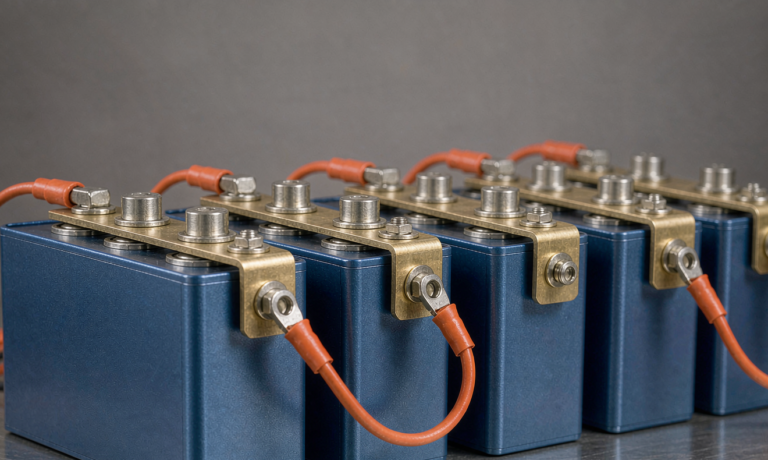
Pipeline CP duty is unusual. The battery may sit at a frozen right-of-way for months in float, then deliver a burst during a storm, then go back to sleep. Three sodium-ion traits matter here. First, low-temperature behavior: where an LFP pack can sag to 60 to 70 percent of nameplate below minus 20 degrees C, a good sodium-ion cell still delivers 85 to 90 percent, which matters for northern gathering lines and compressor stations. Second, intrinsic safety: sodium-ion chemistry carries no cobalt and is far harder to drive into thermal runaway, a real advantage next to hydrocarbon infrastructure. Third, materials: the sodium, aluminum, and iron-based chemistry avoids the lithium, nickel, and copper supply exposure that has swung cell pricing. For a fleet owner buying hundreds of remote nodes, that price stability is part of the engineering case, not a footnote. A modern sodium-ion battery is also lighter than the lead-acid bank it replaces, which simplifies the pole or pad mount.
Sizing a Sodium-Ion Battery for CP Backup
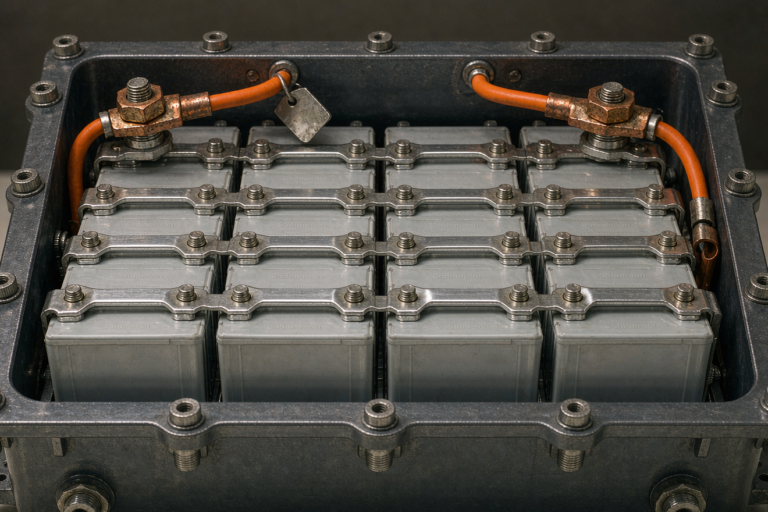
Sizing starts from the load. For rectifier AC backup, take the rectifier input watts and the required hold time. A 1,000-watt rectifier held for 8 hours needs about 8 kilowatt-hours at the DC bus, so we build a 48-volt string of roughly 170 ampere-hours and derate 20 percent for cold and age. For a monitoring node, the math is gentler: a remote RTU plus a current interrupter and a cellular modem might pull 25 to 50 watts, and with a 100-watt solar panel we size 2 to 5 kilowatt-hours for 7 to 14 days of cloud cover. I always model the worst month, not the average, because CP protects the asset every day of the year, and a missed winter week is exactly when corrosion accelerates. Depth of discharge on sodium-ion we keep at 80 percent, leaving margin for the next cold snap. As a concrete example, a 12-kilometer lateral with three monitoring nodes and one 20-ampere rectifier on a winter-peaking line needed a 48-volt, 210-ampere-hour sodium-ion bank plus a 300-watt panel at each node; that configuration rode through a nine-day grid outage in January with state of charge never falling below 55 percent.
Enclosure, Ingress Protection, and Hazardous-Area Rating
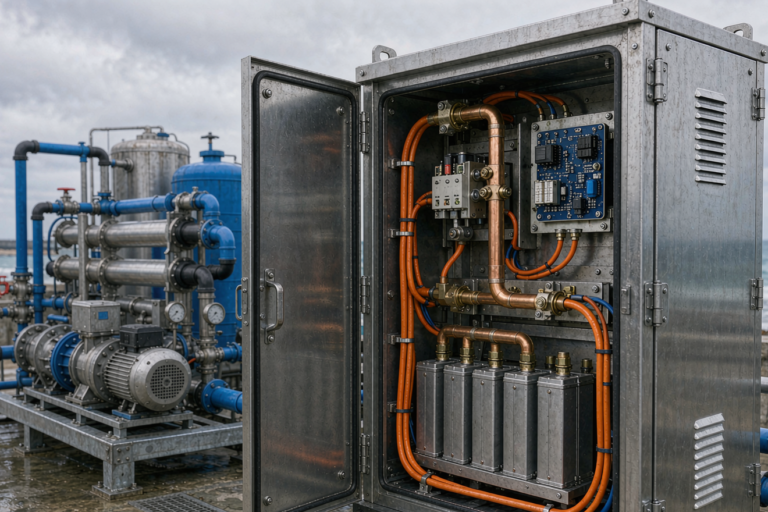
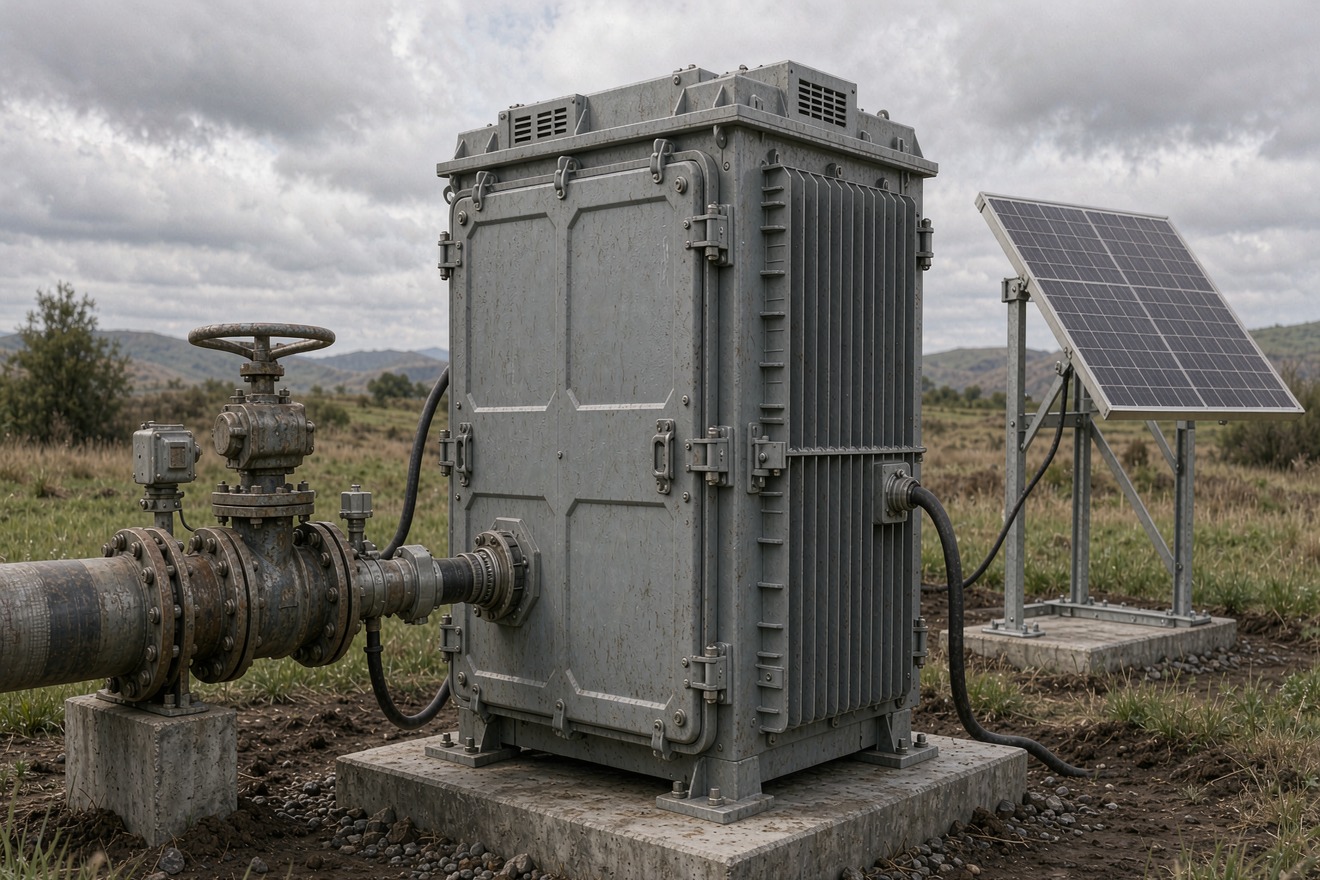
A CP battery lives outdoors next to a pipeline, so the enclosure is the product. We specify IP66 as a floor and NEMA 4X where road salt or coastal spray is expected, verified to IEC 60529. Around compressor stations and pump stations the air can carry flammable gas, so the pack and its DC-DC stage need IEC 60079, or ATEX and IECEX, certification for Zone 1 or Zone 2, with the correct gas group and T-rating. I insist on a sealed, vented-to-safe compartment design: sodium-ion off-gasses far less than lead-acid, but any enclosure in a hazardous area must be evaluated as a whole system, not a cell in a box. Cable glands, surge protection on the AC input, and a service disconnect are part of the same bill of materials, and we never let a field tech open a live compartment without the disconnect tagged out.
Cold-Weather and Standby Behavior in the Field
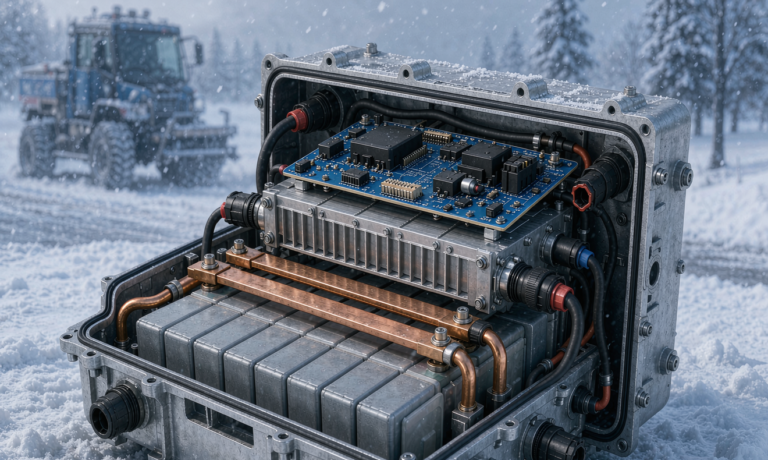
The quiet risk in CP is not the storm, it is the long float. A battery that self-discharges or ages in standby quietly loses margin. Sodium-ion holds calendar life well and tolerates partial-state-of-charge cycling, which suits solar-charged remote nodes that never see a full cycle. In cold commissioning we pre-condition the string with a low-rate charge acceptance test at minus 20 degrees C before we trust it; sodium-ion accepts charge at low temperature better than LFP, but you still verify, not assume. I log the first 30 days of voltage and temperature telemetry because that window shows most field failures, from a loose groundbed connection to a mis-set potential setpoint that quietly under-protects the line.
Commissioning, Monitoring, and Compliance
We commission a CP battery the same way we commission the rectifier: record the open-circuit potential, the applied current, and the pipe-to-electrolyte shift, then confirm the battery carries the load during a planned AC pull. Telemetry from the BMS, state of charge, cell temperature, and string current, flows to the same SCADA the CP engineer already watches, so the battery is one more tag, not a black box. On the compliance side we align the pack with UN38.3 for transport, IEC 62619 for industrial cells, and the relevant NACE / AMPP CP practice for the structure it protects. When an auditor asks whether the line stayed protected through last winter’s outage, the BMS log is the answer.
Frequently Asked Questions
Can a sodium-ion battery replace the grid for cathodic protection?
For small and remote CP loads, yes. A sodium-ion pack with an inverter can carry a monitoring node or a low-current rectifier through an outage. For a high-current transmission-line rectifier we usually back up the AC input rather than replace it, because the instantaneous current demand is large. The battery covers the gap, not the full duty.
How long does a sodium-ion CP battery last in float standby?
In float or partial-state-of-charge service we plan 8 to 12 years, driven more by calendar aging and the enclosure than by cycle count. CP nodes cycle little, so we size for the worst winter and the 10-year inspection interval the pipeline operator already owns.
Is sodium-ion safe in explosive atmospheres near pipelines?
Sodium-ion is intrinsically safer than cobalt-based lithium chemistries and off-gasses less, but safety in a hazardous area comes from the certified enclosure and system design, not the cell alone. We require IEC 60079, or ATEX and IECEX, rated assemblies for Zone 1 and Zone 2 locations.
What certifications apply to sodium-ion CP batteries?
We cite UN38.3 for shipping, IEC 62619 and IEC 63056 for industrial stationary cells, IEC 60529 for the enclosure ingress rating, IEC 60079 for hazardous areas, and the NACE / AMPP SP0169 practice for the cathodic protection design the battery supports.
How do I size the battery for a remote CP monitoring station?
Sum the RTU, interrupter, and modem load in watts, add the solar charge controller losses, pick the worst-month autonomy at 7 to 14 days, and size 2 to 5 kilowatt-hours at 48 volts. Keep depth of discharge at 80 percent and derate 20 percent for cold and age.
Does cold weather reduce sodium-ion CP capacity?
Less than LFP. At minus 20 degrees C a quality sodium-ion cell still delivers roughly 85 to 90 percent of nameplate, versus 60 to 70 percent for LFP, which is why we favor it for northern lines and compressor stations where winter outages matter most.
Further Reading
References