Sodium-Ion Battery Manufacturing for Street Lights
When people picture a battery breakthrough, they imagine electric cars or drone battery packs humming over a field. In my twelve years as a senior lithium battery engineer at Horizon Power, the most quietly transformative project I have shipped is far less glamorous: the humble street light. Municipal lighting runs unattended for a decade, endures heat, frost, salt spray, and the occasional stray golf ball, and it must never go dark. That is exactly why sodium-ion battery manufacturing for street lights has become one of our fastest-growing custom battery solution lines, and why I now spend as much time on hard-carbon anodes as I do on lithium chemistry.
In this playbook I will walk through why sodium chemistry fits street lighting so well, how we build the cells and packs on our line, how we integrate them into a pole-side cabinet, and the certifications a city procurement officer should demand. My goal is to give you the engineering reality, not a brochure.
Why Street Lights Are a Perfect Fit for Sodium-Ion
Street lighting is a stationary, temperature-variable, cost-sensitive application. It does not need the 250 Wh/kg of a premium lithium battery; it needs reliability, safety, and a price that survives a municipal budget cycle. A sodium-ion battery delivers roughly 100–160 Wh/kg, which is more than enough for a 60 W LED luminaire drawing a few hundred watt-hours per night. What it trades in energy density it returns in three ways that matter on a pole.
- Abundant, cheap raw materials. Sodium is effectively unlimited and avoids cobalt, nickel, and lithium carbonate exposure to volatile pricing.
- Inherent thermal tolerance. Sodium cells are far less prone to thermal runaway, which simplifies the enclosure and cuts cooling cost.
- Cold-weather behavior. Na-ion retains capacity at low state-of-charge and low temperature better than LFP, a real advantage for winter streets.
For a city replacing 5,000 poles, those three properties compound into a lower total cost of ownership over a 10-year life, which is the metric that actually wins tenders.
The Sodium-Ion Cell: Chemistry and What Makes It Street-Ready
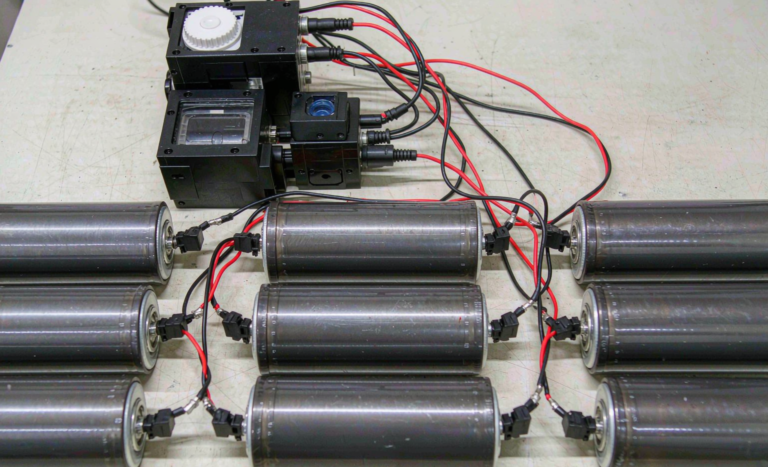
A modern Na-ion battery uses a layered oxide cathode (commonly a nickel-manganese-copper oxide, e.g. NaNi1/3Mn1/3Cu1/3O2) paired with a hard-carbon anode. During discharge, sodium ions shuttle from the anode through a liquid electrolyte and a glass-fiber separator into the cathode; charging reverses the path. Nominal cell voltage lands near 3.0–3.2 V, so a 12 V or 24 V street-light pack is built from four or eight cells in series.
The hard-carbon anode is the clever bit. Unlike graphite, which is tuned for lithium, hard carbon has a disordered structure that accommodates sodium ions at reasonable speed and survives thousands of cycles. In our qualification testing we target 3,000–6,000 cycles at 80% depth of discharge for street-light duty, which maps to roughly 8–12 years of nightly use.
Our Sodium-Ion Battery Manufacturing Line for Street Lights
When a client asks for sodium-ion battery manufacturing street lights as a finished product, we run a six-stage process. I have stood on this floor enough times to know where the failure modes hide, so each stage has an in-line check.
- 1. Electrode coating. Cathode slurry is cast onto aluminum foil; hard-carbon anode onto the other side. We control coat weight to ±2 g/m² to keep cell-to-cell balance tight.
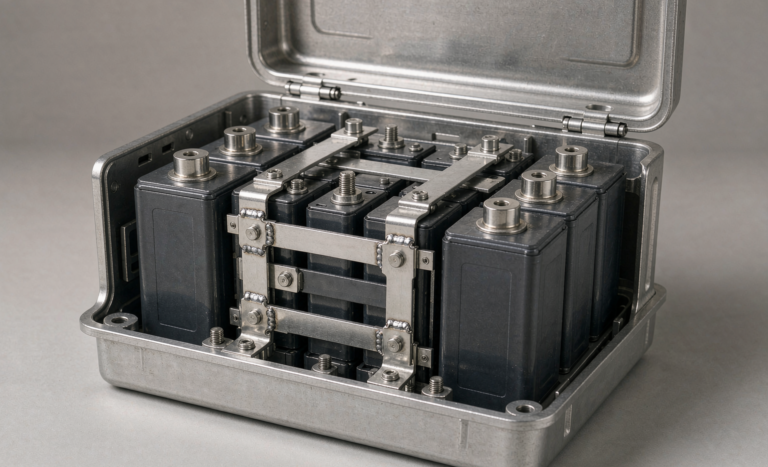
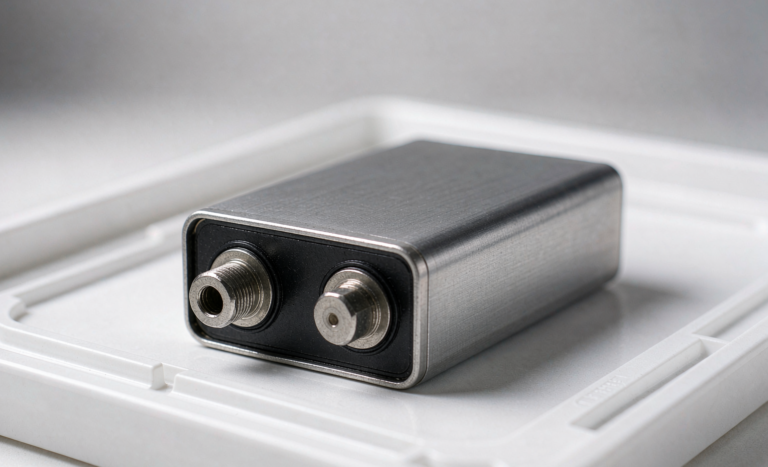
- 2. Stacking and enclosure. Prismatic cells are stacked and laser-welded, then pressure-balanced in a clean environment to avoid delamination.
- 3. Formation. Every cell is slow-charged through its first cycles to build the stable solid-electrolyte interphase. This is where we catch weak cells early.
- 4. Grading and matching. Cells are sorted by capacity and internal resistance so a pack never carries a weak member.
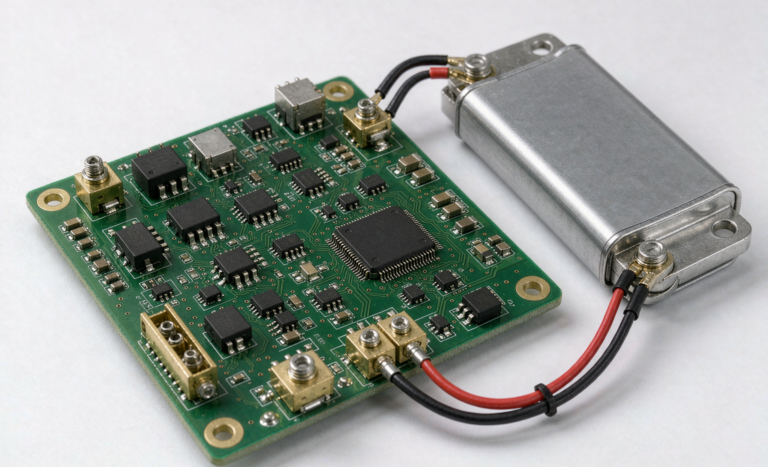
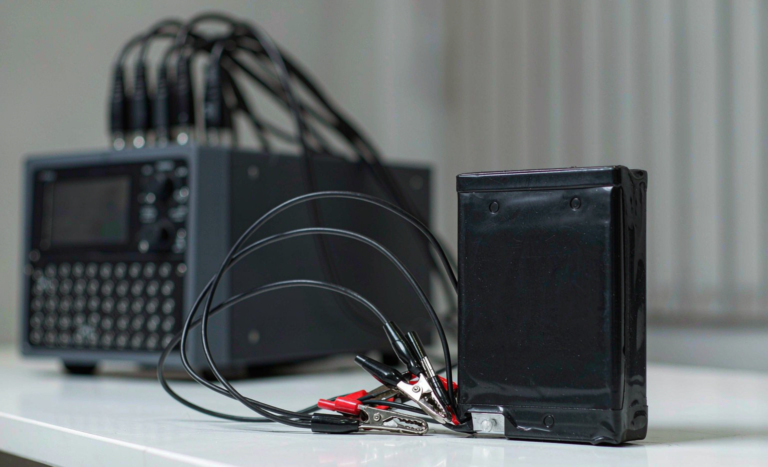
- 5. BMS integration. A street-light battery management system monitors per-string voltage, temperature, and state-of-charge, and talks to the luminaire controller.
- 6. Burn-in. Finished packs run a 48-hour load profile before they ever leave the building.
This discipline is what lets us promise a custom battery solution rather than a generic brick: pole height, solar array size, and local climate all change the pack we ship.
System Integration: From Cell to Street-Light Cabinet
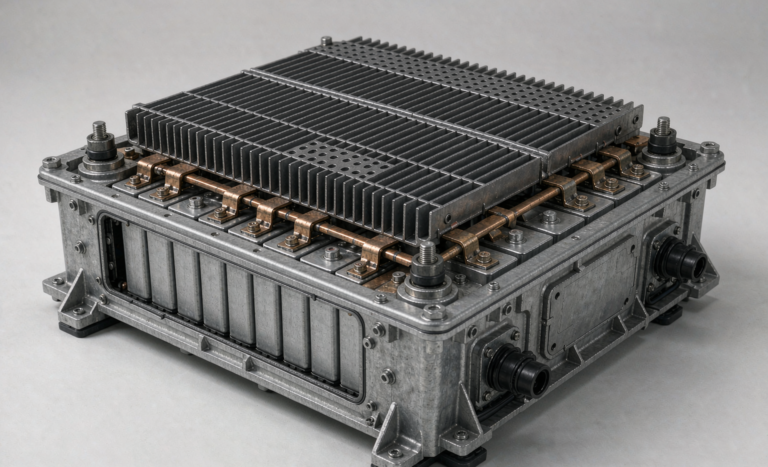
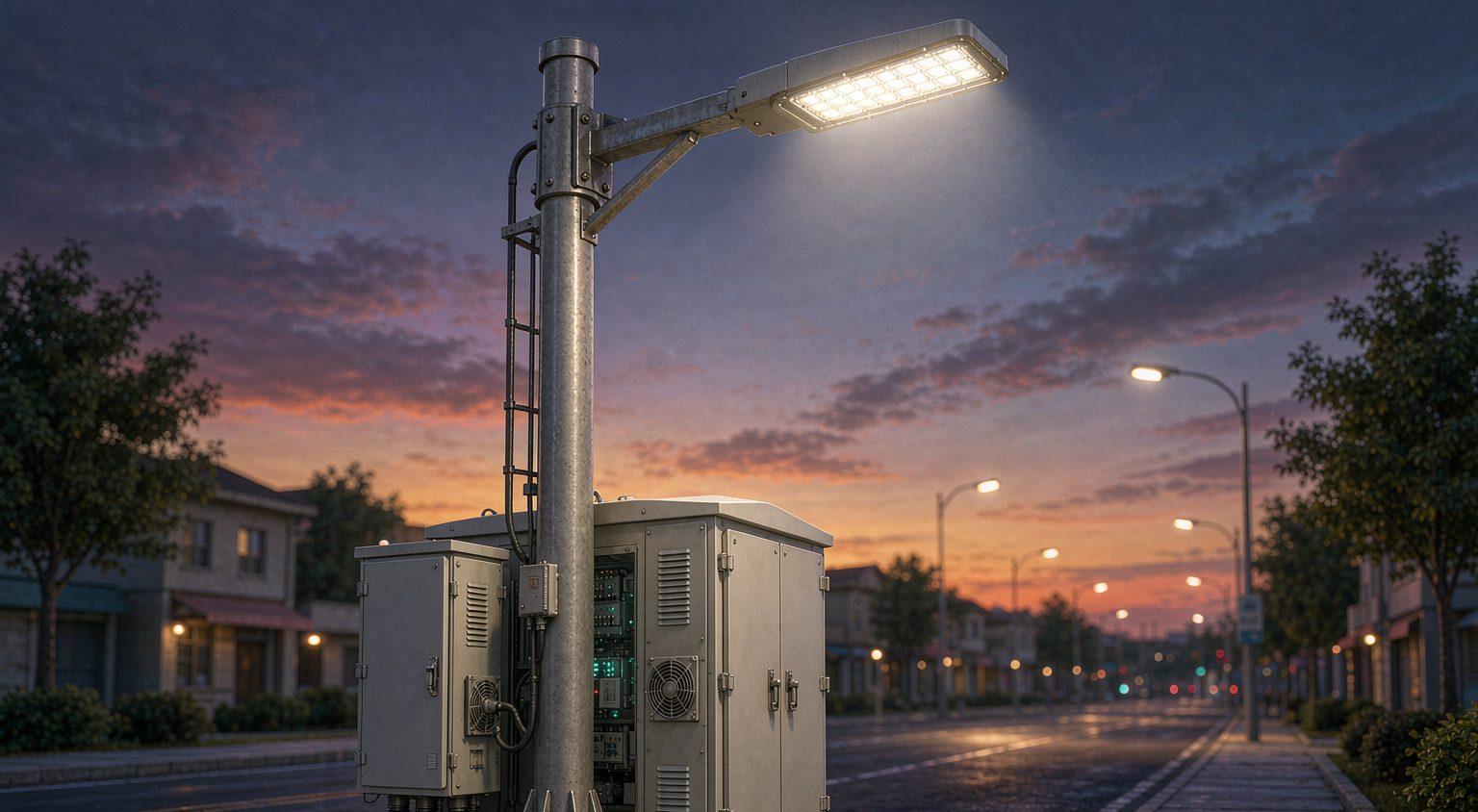
A street-light energy store is more than cells. We mount the pack in an IP65-rated cabinet at the base of the pole alongside a solar charge controller or grid-fed rectifier, a DC-DC converter, and the BMS. Typical configurations for a 60–120 W LED are 1.0–2.5 kWh of usable sodium capacity, sized for two to three cloud-covered nights of autonomy.
In one municipal deployment I engineered, a 6 km arterial road with 120 poles used 1.2 kWh Na-ion packs behind 80 W luminaires fed by 120 W solar modules. The sodium-ion battery gave three-night autonomy through the region’s heavy winter overcast, and the city reported zero dark-out incidents in the first 14 months. That is the kind of boring, repeatable result procurement teams should aim for.
Safety, Certification, and Cold-Weather Performance
Public infrastructure demands paperwork, and rightly so. Every pack we ship for street lighting is validated against the standards city inspectors recognize:
- UN38.3 — transport safety of lithium and sodium cells and batteries, required before anything ships.
- IEC 62620 — the key industrial sodium-ion cell standard covering performance and safety for stationary use.
- IEC 62619 — industrial secondary cell safety, our baseline for the pack-level build.
- UL 1973 — stationary storage system safety, expected by North American buyers.
- UL 9540A — fire-propagation testing of the enclosure, increasingly mandatory for pole-side cabinets.
- IEC 62485 / IEC 63056 — stationary battery safety and performance references we use for design margins.
Because sodium chemistry is intrinsically more stable, our enclosures need less active cooling and fewer fire barriers than an equivalent lithium battery system. In cold-climate chambers we see Na-ion hold capacity at –20 °C far better than LFP, which is why northern municipalities are the fastest adopters.
Sodium-Ion Battery vs Lithium: What Cities Should Know
The honest comparison buyers want is sodium-ion battery vs lithium. Sodium wins on material cost, safety margin, and cold performance, and it loses on energy density and, currently, on absolute cycle maturity at the very top end. For street lights, where weight and volume are not constraints and the pack sits in a ventilated cabinet, sodium’s strengths line up almost perfectly with the use case.
We still build lithium battery systems where space is tight or where a client already standardized on LFP. The point is not to crown a winner but to match chemistry to duty. As an engineer I would rather specify a chemistry that is boringly safe and cheap to maintain than one that is marginally denser.
A Deployment Checklist I Give Every City Partner
Before we sign a street-light contract, I walk the client through four numbers: nightly watt-hours per pole, required autonomy nights, local temperature extremes, and available solar or grid input. Those four inputs fix the pack size and the BMS setpoints. Skipping this step is the single most common reason a lighting project underperforms, and it is entirely avoidable with a proper custom battery solution specification.
Sizing the Pack: A Worked Example for Procurement Teams
To make the numbers concrete, consider a standard 90 W LED luminaire. It draws about 90 W at full output, but most smart drivers dim to 40–60% in low-traffic hours, so a realistic nightly average is 45–55 W across roughly 11 hours of darkness, or about 0.5–0.6 kWh per pole per night. For two-night autonomy you need roughly 1.2 kWh usable; for three nights, about 1.8 kWh. A sodium-ion battery pack at 120–150 Wh/kg and 85% usable depth delivers that in a 12–18 kg cabinet module, which a single technician can mount at the pole base without a crane. We then add 10–20% capacity margin for cell aging and the coldest month of the year. This is the arithmetic I insist every client confirm before we cut steel, because oversizing wastes budget while undersizing causes the dark-outs that ruin a contractor’s reputation. A proper custom battery solution starts with this worksheet, not with a catalog part number.
End-of-Life and the Sustainability Story
Sodium chemistry carries a quieter sustainability advantage that procurement officers increasingly ask about. The cells avoid cobalt and nickel entirely and use aluminum current collectors on both electrodes, which simplifies recycling relative to conventional lithium systems. While formal Na-ion recycling streams are still maturing, the absence of critical-mineral supply risk means a city is not exposed to the same geopolitical pricing swings that hit lithium battery programs in recent years. For a 10-year street-light asset, that supply stability is part of the total cost of ownership, not a footnote. We design our packs to be opened and module-swapped, so a single failed string becomes a field repair rather than a whole-cabinet replacement, which keeps waste and lifecycle cost down across the fleet.
FAQ
How long do sodium-ion street-light batteries last?
In our street-duty profile we design for 3,000–6,000 cycles at 80% depth of discharge, which translates to roughly 8–12 years of nightly operation before capacity falls to about 80% of nameplate. Real-world life depends on climate and how many autonomously dark nights the pack must cover.
Are sodium-ion batteries safe in public spaces?
Yes. Sodium chemistry is intrinsically more stable than high-nickel lithium and far less likely to enter thermal runaway. We still build to UL 1973 and UL 9540A and use IP65 pole-side cabinets, but the inherent safety margin is a genuine advantage for sidewalks and roadways.
Can sodium-ion replace lithium in existing solar street lights?
In most cases yes, provided the voltage and BMS communication match. Because Na-ion sits near 3.0–3.2 V per cell, a drop-in 12 V or 24 V pack is usually straightforward. We verify the charge controller profile before swapping to avoid over- or under-charging.
What does sodium-ion battery manufacturing cost compared to lithium?
Cell-level material cost is typically lower because sodium, iron, and manganese are cheap and abundant. Pack cost lands competitive with LFP once you factor in simplified thermal management. For a 5,000-pole program the lifetime savings usually outweigh the marginally lower energy density.
If you are planning a lighting tender and want the chemistry matched to your climate rather than to a catalog, that is the kind of custom battery solution our team at Horizon Power builds every week. The sodium-ion battery has earned its place on the pole, and the engineering only gets more convincing the closer you look.