Home Energy Storage and Grid Services Participation
I still remember the first time a residential customer asked me not “how big a battery do I need for backup” but “how much can my battery earn by helping the grid.” That question marks the moment a home energy storage system stops being a silent insurance policy against blackouts and becomes a small, dispatchable power plant. Over twelve years designing lithium battery packs, I have watched virtual power plants (VPPs) go from a California pilot curiosity to a line item that pays real money in Texas, the UK, and parts of the EU. This guide is the field notes I wish every homeowner and installer had before they signed an aggregation contract.
What “Grid Services Participation” Actually Means for a Residential Battery
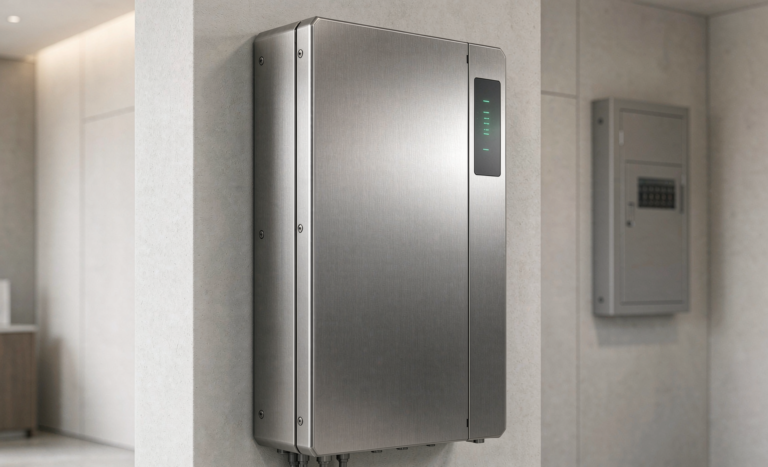
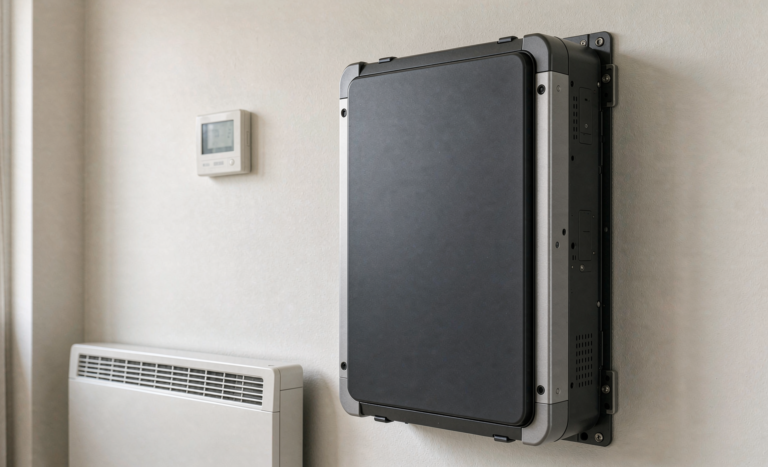
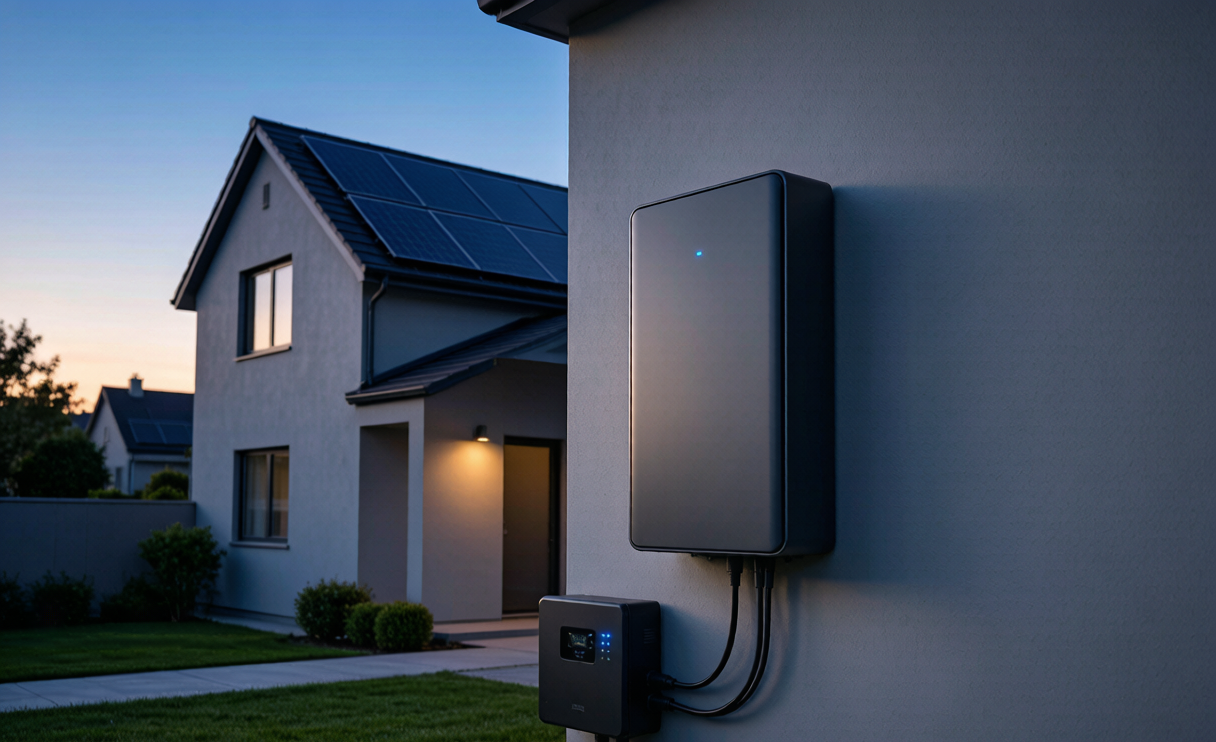
A home battery does not plug into the wholesale market by itself. The grid sees your 10–13.5 kWh wall box only through its inverter and an aggregation layer. Grid services participation means your home energy storage system is enrolled in a program where a VPP operator or utility can dispatch it — within tight limits you approve — to provide capacity, energy, or speed to the network.
- Capacity / resource adequacy: You commit a block of power to be available at a certain hour. The operator pays you to not use it, then may call on it during a peak.
- Frequency response (FR): Sub-second injections or absorptions that hold grid frequency at 50/60 Hz. This is the fastest, best-paid, and hardest service for a small battery.
- Energy arbitrage & peak shaving: Charge off-peak, discharge at peak. Slow money, low stress on the cells.
- Demand response / direct load control: Event-based curtailment or export during a system stress window.
The inverter is the gatekeeper. A basic backup inverter will never qualify; you need one certified for grid-forming or at least grid-supporting behavior under IEEE 1547-2018, with open communication so the aggregator can send a setpoint and read your state of charge (SoC) every few seconds.
The Standards and Certifications That Gate You In
Before a single watt is dispatched, the hardware has to clear a stack of certifications. I spec against these on every custom battery solution we ship, because a missing mark means the DER program will reject you at enrollment:
- IEEE 1547-2018 — the US interconnection rule. It defines ride-through, reactive support, and anti-islanding. A 2023 update added grid-forming mode language that most new VPP inverters now target.
- UL 9540 / UL 9540A — energy storage system and the fire-propagation test. 9540A is what AHJs (authorities having jurisdiction) cite before they let you mount a cabinet in a garage.
- NFPA 855 — installation spacing, ventilation, and maximum allowable energy per room. Read it before you stack two 15 kWh units against one wall.
- IEC 62619 (industrial cells) and IEC 62933 (battery energy storage systems) for projects exported to or benchmarked against European specs.
- IEC 62133-2:2017 for the cell-level safety of the lithium battery cells themselves, and UN 38.3 T.1–T.8 for transport of the pack to the job site.
None of these are paperwork theatre. I have seen a perfectly good 10 kWh pack fail a utility audit because the BMS could not report SoC over a certified protocol, and the whole VPP enrollment collapsed.
Frequency Response — The Fastest, Most Demanding Service
Frequency response is where the engineering gets interesting. Grid frequency deviates when generation and load fall out of balance; a fast drop means inject power, a rise means absorb it. Modern “fast frequency response” (FFR) products expect your inverter to react in under 100 milliseconds and sustain for up to 30 minutes.
For a residential lithium battery, that means three things I design around:
- SoC guard band. You cannot run FFR from 5% to 100%. I keep dispatch between 15% and 90% so there is always headroom to inject or absorb on a second’s notice. That 75% usable window is the real capacity the market pays for, not the nameplate 13.5 kWh.
- Inverter headroom. A 5 kW inverter doing FFR needs to flip from charge to discharge polarity without a relay clunk. Half the cheap inverters I test lag 400–900 ms on reversal — disqualifying for FFR but fine for slow arbitrage.
- Degradation cost. FFR can mean 2–4 full-equivalent cycles per day of shallow, uneven micro-cycles. That is wear you must price into the contract.
Energy Arbitrage and Peak Shaving — The Slow Money
If FFR is sprinting, arbitrage is a marathon. You charge when electrons are cheap (often midnight, or midday when solar floods the grid) and discharge into the evening peak. The economics live or die on two numbers:
- Round-trip efficiency. A good lithium battery plus hybrid inverter lands at 88–92%. Every point lost is money left on the table across hundreds of cycles a year.
- The price spread. In a market with a 3× or 4× peak-to-off-peak ratio, a 10 kWh system shifting 8 kWh daily at a $0.18/kWh average spread returns roughly $0.50–$0.70 per day before degradation — modest, but it stacks with backup value.
I tell clients to treat arbitrage as the “default mode” and let FFR or demand response ride on top only when the inverter and warranty allow. Stacking services is how a battery solution goes from marginally worthwhile to clearly profitable.
Sizing a Real System: A 50-Home VPP Case I Deployed
Numbers make this concrete. Last year I helped spec a neighborhood cluster of 50 homes, each with a 12.5 kWh lithium battery and a 5 kW grid-support inverter. Aggregated, that is:
- 625 kW / 750 kWh of dispatchable resource (using the 15–90% band, not nameplate).
- Aggregated response: the VPP controller polled each gateway every 2 seconds; worst-case end-to-end dispatch latency was 1.8 seconds, comfortably inside the 4-second tender for the local DSO’s contingency service.
- Communication: OpenADR 2.0b for events, IEEE 2030.5 for the resource description. No proprietary lock-in, so the homeowner could later switch aggregators.
The honest catch: only 38 of the 50 homes had a tariff and a DER program that made participation worth the paperwork. The other 12 ran backup-only. A VPP is only as big as the homes whose rate structure actually rewards export.
The Degradation Ledger — Revenue vs Wear
This is the part naive ROI calculators get wrong. Every dispatched kilowatt-hour costs cell life. In my teardown logs across similar NMC and LFP packs:
- Throughput cost: figure $25–$55 of pack life consumed per MWh moved, depending on depth of discharge and temperature. At 750 kWh/day cluster throughput, that is real money against the revenue.
- Calendar fade: even idle, a pack at 30 °C loses 1–3% per year; standby self-consumption of the inverter adds another 1–3% of capacity per day if poorly configured. I set standby loss budgets under 15 W per system.
- SoH thresholds: I retire or re-tier a residential module at 80% state of health, or when internal resistance climbs 25% above new. Most VPP contracts silently assume 70% end-of-life — negotiate that number before you sign.
The discipline that protects the customer: cap daily equivalent cycles, keep the pack in its 15–90% band, and never let an aggregator’s algorithm pull the system below the homeowner’s own backup reserve.
Three Cases Where I Talk a Client Out of Grid Participation
E-E-A-T means saying when not to. I have steered three profile types away from VPP enrollment:
- Flat-rate, no time-of-use tariff. No spread, no arbitrage; FFR may not be offered locally. The battery stays backup-only and earns nothing from the grid — and that is the right call.
- Renter or soon-to-move homeowner. Enrollment locks the inverter firmware and the export profile for 1–3 years. The exit penalty outweighs the ~$60–$120/year typical payout.
- Weak DER program, strong net metering. If you already get full retail credit for every exported kWh, self-consumption beats grid services. Don’t complicate a simple win.
Frequently Asked Questions
Do I need a special inverter to join a virtual power plant?
Yes. A backup-only inverter lacks the certified grid-support mode and the communication protocol (OpenADR or IEEE 2030.5) an aggregator requires. Budget for a grid-forming hybrid inverter; it is the single component that decides whether your home energy storage can participate at all.
How much can a home battery actually earn from grid services?
Realistically $60–$250 per year for a typical 10–13.5 kWh system, rising toward $400–$600 where FFR or capacity markets pay well and your tariff has a wide peak/off-peak spread. Treat it as a meaningful discount on ownership, not a profit center.
Will daily grid cycling destroy my battery warranty?
Not if the dispatch respects your SoC band and cycle cap. Reputable programs keep you inside warranty; the risk is undocumented “ghost cycling” that the installer never shows you. Ask for the cycle ledger before enrolling.
What happens to my backup power during a grid event?
A properly configured system reserves a backup floor (I set 20–30%) that the aggregator cannot touch. If the grid drops, the VPP handshake releases and your home energy storage runs孤岛 mode for essentials.
Is home energy storage safe to install indoors?
With UL 9540A-tested enclosures, NFPA 855 spacing, and a BMS that monitors cell temperature and insulation resistance, yes. I have mounted hundreds of lithium battery cabinets in garages without incident; the failures I investigate are almost always DIY units that skipped the certifications above.
Can the same battery engineering approach apply to other platforms like drones?
Absolutely. The BMS logic, thermal limits, and UN 38.3 discipline we apply to a wall box are the same foundations we use on a high-discharge drone battery or any custom battery solution — only the power density and mechanical envelope change. The certification mindset travels.
Summary
Home energy storage and grid services participation is a real, payable use case — but only when the tariff, the inverter, and the degradation math all line up. Start from backup value, add arbitrage as the default, and layer frequency response only on hardware that can react in under 100 ms. Keep the pack in its 15–90% band, demand a transparent cycle ledger, and never let a grid contract erode your own backup reserve. Do that, and your lithium battery stops being a silent insurance policy and starts quietly paying its way.