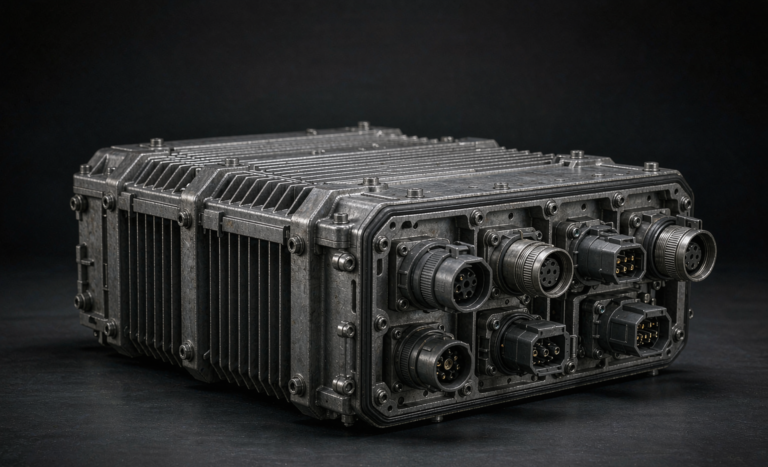
Battery Solution for Concrete Batch Plants
Ten years on battery packs for mobile machines, I still get called to concrete plants for the same reason: the site owner looks at a nameplate rating of 200 kilowatts and assumes the supply side is a solved problem. It is not. A batch plant is a duty cycle, not a load, and it punishes equipment that was engineered around a smooth mains feed. Over the last few seasons I have designed battery solution for concrete batch plants in three countries, and the pattern is always the same. The mixer drive slams, the screw conveyor stalls under a full cement load twice per batch, the dust collector fan kicks in at the worst moment, and the plant controller browns out right in the middle of a weigh cycle. This article walks through how I size, protect and commission those systems, with the real numbers so you can judge whether a lithium battery retrofit makes sense on your site.
What a Concrete Batch Plant Actually Draws From the Grid
Write down the loads before you write a single line of specifications. A mid-size ready mix plant, roughly 120 cubic meters per hour, carries a surprisingly long tail of electrical equipment. The twin shaft mixer drive is the biggest single item at 90 to 160 kilowatts depending on the drum size. Aggregate conveyors running under the silo bank add 30 to 55 kilowatts each while material is being transferred. The cement screw conveyor, often underrated on the drawings, pulls 18 to 30 kilowatts every time a full batch of cement is discharged. Dust collector fans sit at 15 to 25 kilowatts and run in fast pulses rather than continuously. On top of that you have the weigh batcher vibrators, the batching computer and PLC, site lighting, the washout tank pump, and a plant office that quietly eats five to eight kilowatts all day.
What matters for a battery solution is the shape of the curve, not the total. A typical working day shows a base load near 45 kilowatts, thirty minute peaks above 200 kilowatts during back to back batches, and deep troughs between plant cycles where the conveyor runs empty. That is a sawtooth profile. Diesel generators hate it, which is why so many plants run one generator at poor efficiency and still see voltage dips on the control bus. A lithium pack with fast, high multiple charge and discharge capability responds to that shape far better than a generator set does, because the battery will absorb the spike and give it back within one second of the mixer engaging.
Sizing a Battery Solution for Batch Plant Loads
Most sizing mistakes come from asking the wrong question. The pack does not need to run the plant. In the majority of projects I havecommissioned, the target is peak shaving, blackout ride-through for the batching controller, and replacing a generator that runs only a few hundred hours a year. Once the owner accepts that, the numbers get tractable. Call the hourly average load A, the sustained plant peak P, and the grid supply capacity S. The battery covers the difference P minus S for the duration that peak actually occurs. If your plant averages 52 kilowatts, sees 210 kilowatt bursts, and the mains feed is capped at 120 kilowatts, the battery only has to supply about 90 kilowatts of burst power.
A worked plant example
One plant in a coastal region had a 250 kilovolt ampere feed that the utility refused to raise because of upstream voltage limits. The mixer alone needed 160 kilowatts. We measured their loadLogger for eleven days: average draw 55 kilowatts, ninety fifth percentile 140 kilowatts, maximum 225 kilowatts for bursts of four to seven minutes. The design landed at a 140 kilowatt inverter section and a 280 kilowatt hour lithium iron phosphate pack, which covers roughly two full batch cycles at the ninety fifth percentile load. That pack buffers 60 percent of the energy the site buys, and the concrete mixer runs at full torque without touching the grid during a burst.
Do the same calculation with your own log data and you will usually find the pack can be 30 to 50 percent smaller than a first guess. Oversizing feels safe and it costs money in capital and in floor space, and a batch plant usually has neither to spare.
Chemistry and Pack Design for Plant Duty
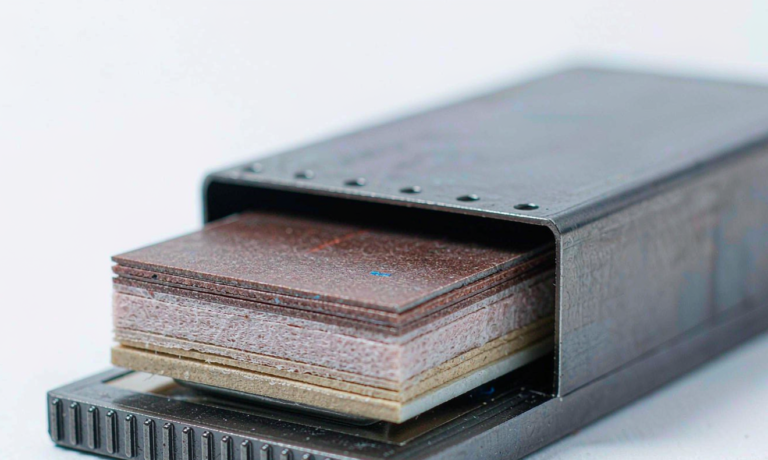
For stationary duty inside a batch plant, lithium iron phosphate is the honest answer. Cells rated 32700 or prismatic 50 ampere hour class give you 6000 to 8000 cycles at 80 percent depth of discharge, which for a plant running two shifts is close to a decade of calendar life. The flat voltage plateau of LFP also means the plant controller sees a stable bus while the state of charge swings, which keeps weighing logic stable. That last point is not trivial: batch plant automation cares about voltage stability because the load cell controllers sit on the same bus.
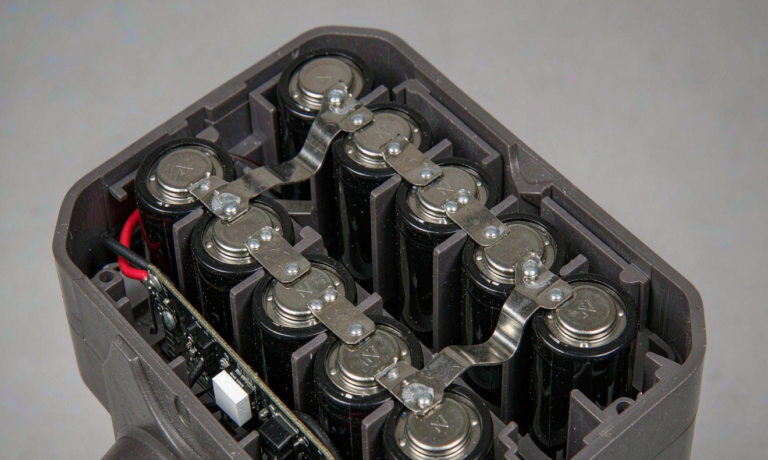
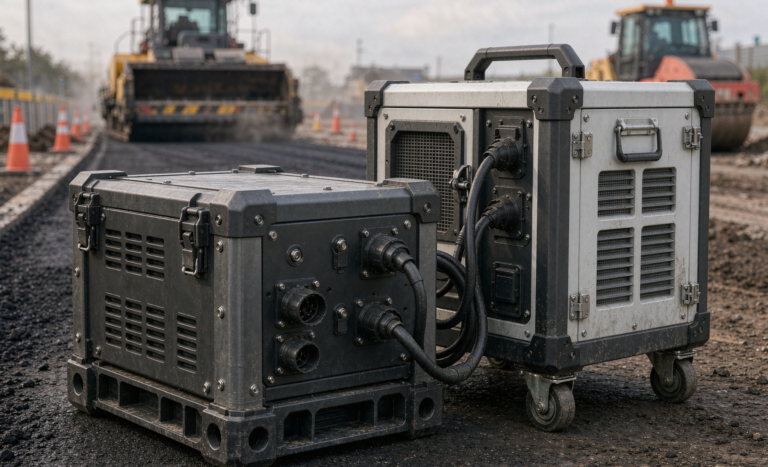
For the mobile side of the operation, the wheel loader, the site gantry, the concrete splitter on a mixer drum, the chemistry conversation changes. Vibration and shock rules out anything you would only specify for a rack. I build those packs around potted cell modules with a rigid frame and a shock isolator mount, and I keep the pack housing to at least IP54 with a positive latch on the service connector. A custom battery solution for a loader is a mechanical design problem before it is an electrical one, and the cells are the easy part.
Protection, Standards and Installation Details
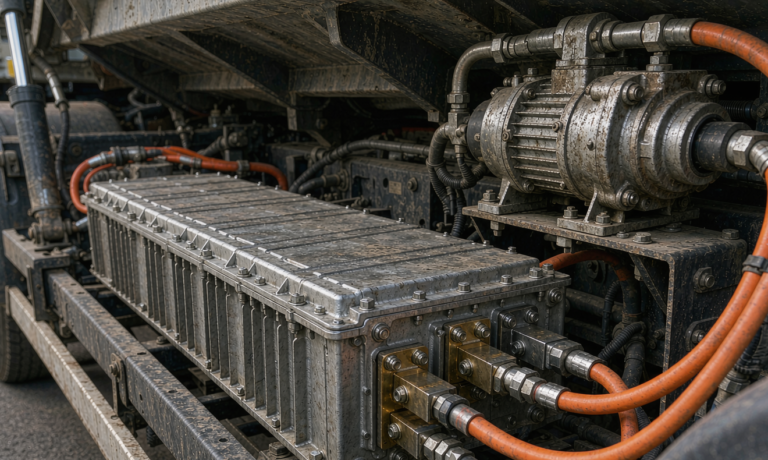
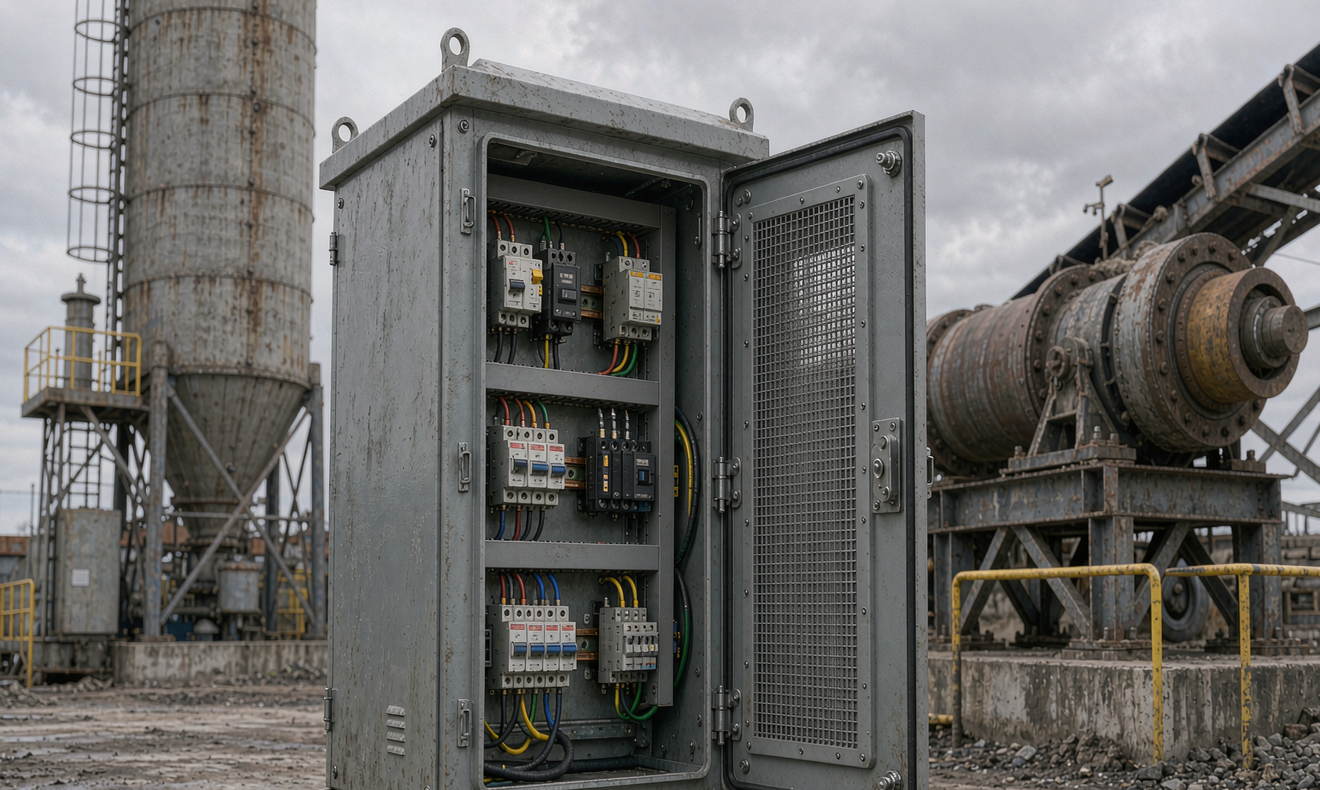
Stationary units in this environment go through UN38.3 for transport and IEC 62133-2 for the cell and pack assembly. Where the battery cabinet becomes part of a building energy installation, the thermal runaway propagation test under UL 9540A is the reference owners and insurers ask for, and I recommend providing it even when codes do not strictly require it. Dust is the real enemy here, not fire. Concrete plants are grinding cement dust into everything, so the enclosure needs a gasketed door, filtered forced ventilation, and a sealed conduit entry rather than open cable trays.
Two details separate a system that survives a plant from one that becomes a maintenance item. First, put the cell temperature sensors on the busbar end and on the highest cell in each string, not just at the pack midpoint; plant air movement is erratic. Second, spec the battery management board with a real isolation relay for the grid tie contactor, because a plant controller will not protect a battery pack from a reversed phase during a generator changeover. I have seen that failure twice, and both times it took out a contactor and a control transformer rather than the cells.
Commissioning, Maintenance and Payback
Commissioning is where most of the value is won or lost. I log the pack for the first full production day with the plant running normally, then compare against the pre retrofit baseline from the old generator. Check that the state of charge window stays inside 20 to 90 percent through a shift, confirm the inverter responds inside one cycle when the mixer drive starts, and watch the cell delta temperature. A healthy pack in a dusty plant should show under five degrees Celsius between the hottest and coolest measured cell during a peak burst.
Maintenance after that is under an hour a month: filter check, torque recheck on the power terminals after the first 200 operating hours, and a state of health reading. Payback is straightforward when the diesel generator is the thing being replaced. Fuel, a filter change every 250 hours, and the operator time to move a generator between plant positions usually put the payback at three to five years in a plant that runs more than 1200 hours a season. If your generator already runs off grid line power and the battery is only buying you peak shaving, the payback stretches toward seven or eight years, and I will tell an owner that plainly rather than sell them a pack they cannot justify.
Frequently Asked Questions
Can a battery solution run a concrete batch plant through a full blackout?
It can, if the pack is sized for the plant peak rather than the weekly average, and if the controls are wired to shed non critical loads such as washout pumps and dust collectors within one second. Sizing for the peak alone without load shedding gives a much larger and more expensive pack.
Which chemistry fits a stationary batch plant best?
Lithium iron phosphate. It holds a flat voltage curve through most of its state of charge, which keeps load cell and weighing electronics stable, and it delivers 6000 plus cycles at a depth of discharge that a two shift plant reaches without trouble.
How long does a battery pack last in a cement dust environment?
Battery life depends far more on enclosure integrity and thermal control than on cell chemistry. With a gasketed IP54 enclosure, filtered ventilation and cell delta temperature kept under five degrees Celsius during peaks, expect eight to ten years before replacement.
Do I still need a diesel generator with a battery installed?
Often yes for a mobile or seasonal plant, but as a cold start and maintenance unit rather than the prime mover. In fixed plants where the mains feed is stable, the generator can usually come out of daily service and stays available as a backup only.
Can lithium batteries be used on the wheel loader and conveyor equipment?
Yes, with a shock isolated, potted module design and a mechanically reinforced housing. The pack has to survive vibration and impact far beyond what a stationary cabinet is asked to take, which is why those units are built as custom battery solution work rather than catalog packs.
What documentation should I ask the supplier for before ordering?
Ask for the UN38.3 test summary, the IEC 62133-2 report, cell manufacturer datasheets with cycle life data at your intended depth of discharge, UL 9540A results if it is a stationary installation, and a signed wiring diagram with the isolation relay details. If any of those are missing, treat the quote as incomplete.
Further Reading
References