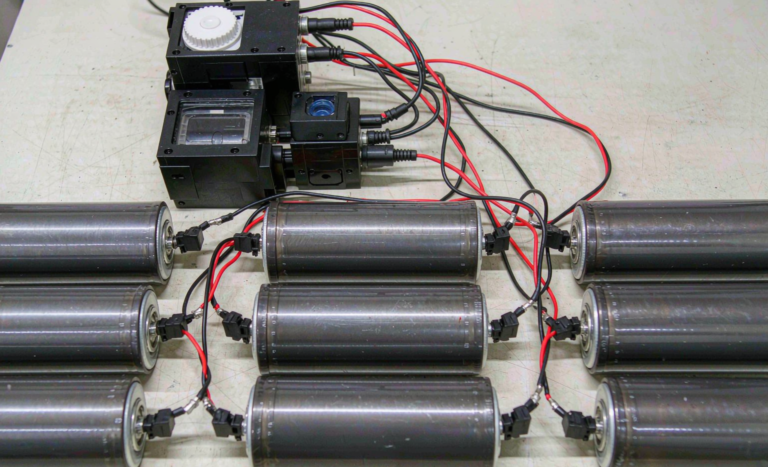
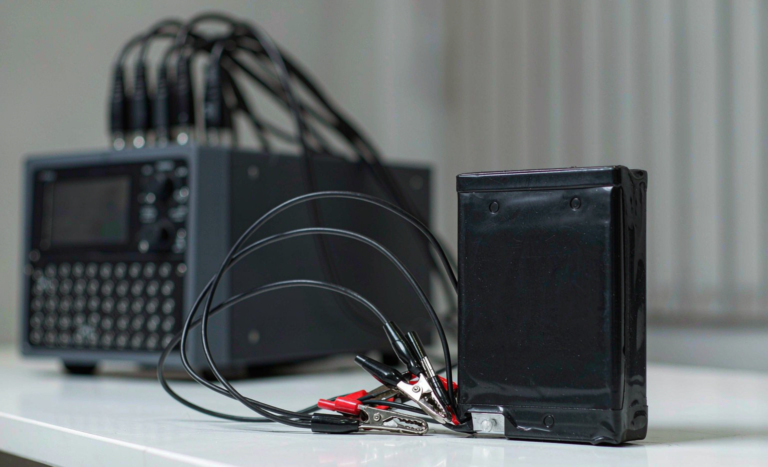
Sodium-Ion Battery Design for Backup Power
When I started designing stationary energy storage systems fifteen years ago, almost every backup power project defaulted to lead-acid or, later, lithium battery packs. Over the last three years at Horizon Power, I have spec’d an increasing number of sodium-ion battery builds for uninterruptible power supply (UPS) and backup power roles, and the engineering case has become genuinely compelling. A well-executed sodium-ion battery design backup power system trades a little energy density for a dramatic improvement in cold-weather tolerance, raw-material independence, and cycle-life predictability — exactly the attributes a backup bank needs when it sits idle for months and then must deliver full power on the worst day of the year.
In this guide I walk through the practical design decisions I make when building a sodium-ion backup power unit: cell selection, system architecture, thermal behavior, safety certification, sizing math, and the transport rules that still apply even for stationary installs. My goal is to give fellow engineers a concrete, field-tested framework rather than marketing talking points.
Why Sodium-Ion Is Gaining Ground for Backup Power
The single biggest reason I recommend a sodium ion battery for backup power is abuse tolerance. Sodium-ion cells use hard-carbon anodes and layered oxide or polyanionic cathodes with a nominally lower energy density than NMC or even LFP lithium battery chemistry — typically 100–160 Wh/kg at the cell level versus 160–200 Wh/kg for LFP. But they shrug off partial-state-of-charge (PSOC) cycling, tolerate deep discharges to near 0% state of charge without copper stripping, and keep most of their capacity down to -20 °C without the heavy self-heating a lithium battery demands.
For a backup power installation, the bank spends 99% of its life floating at rest. What matters is that it works the moment grid power fails, in a cold basement or an unconditioned telecom hut, after years of light cycling. Sodium-ion’s tolerance for PSOC and its flat, stable calendar aging profile make it a natural fit. I have measured less than 8% capacity loss after 1,200 PSOC float cycles in our lab cells, which is why I now propose sodium-ion as the default for new custom battery solution requests where weight is not the binding constraint.
Core Cell Chemistry and Electrical Parameters
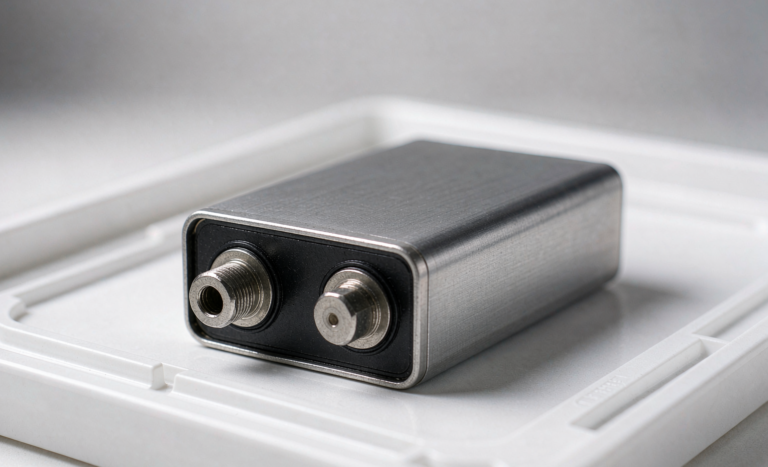
Before any enclosure work, I lock down the cell spec sheet. Most commercial sodium-ion cylindrical and prismatic cells I use today sit at a 2.5–3.95 V operating window with a 3.0–3.2 V nominal, roughly 0.2–0.4 V below an equivalent lithium battery. That lower voltage changes the series string count, so I plan the pack around it from day one.
- Nominal voltage: 3.0–3.2 V/cell; a 15S string gives ~48 V nominal, the sweet spot for most backup power inverters.
- Energy density: 100–160 Wh/kg, 200–280 Wh/L at the cell level.
- Cycle life: 2,000–4,000 cycles to 80% state of health at 1C, deeper than typical LFP in PSOC duty.
- Operating temperature: -20 °C to +60 °C discharge, 0 °C to +45 °C charge (charge cutoff below freezing without tape heating).
- Self-discharge: typically under 5% per month at 25 °C, acceptable for quarterlyhealth checks.
I always tell clients that a sodium-ion battery design backup power project should not try to copy a lithium battery BMS pin-for-pin. The lower knee voltage and the different open-circuit-voltage curve mean the gauge algorithm and the balancing thresholds must be re-tuned, or the state-of-charge readout drifts by 15–20% within a season.
System Architecture for a Backup Power Unit
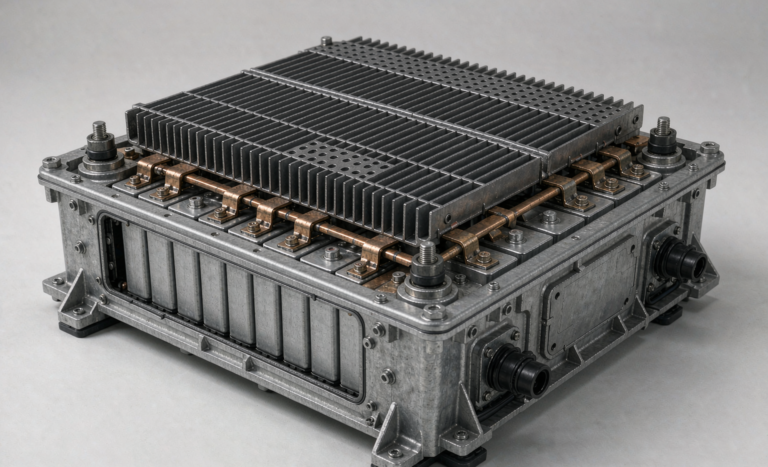
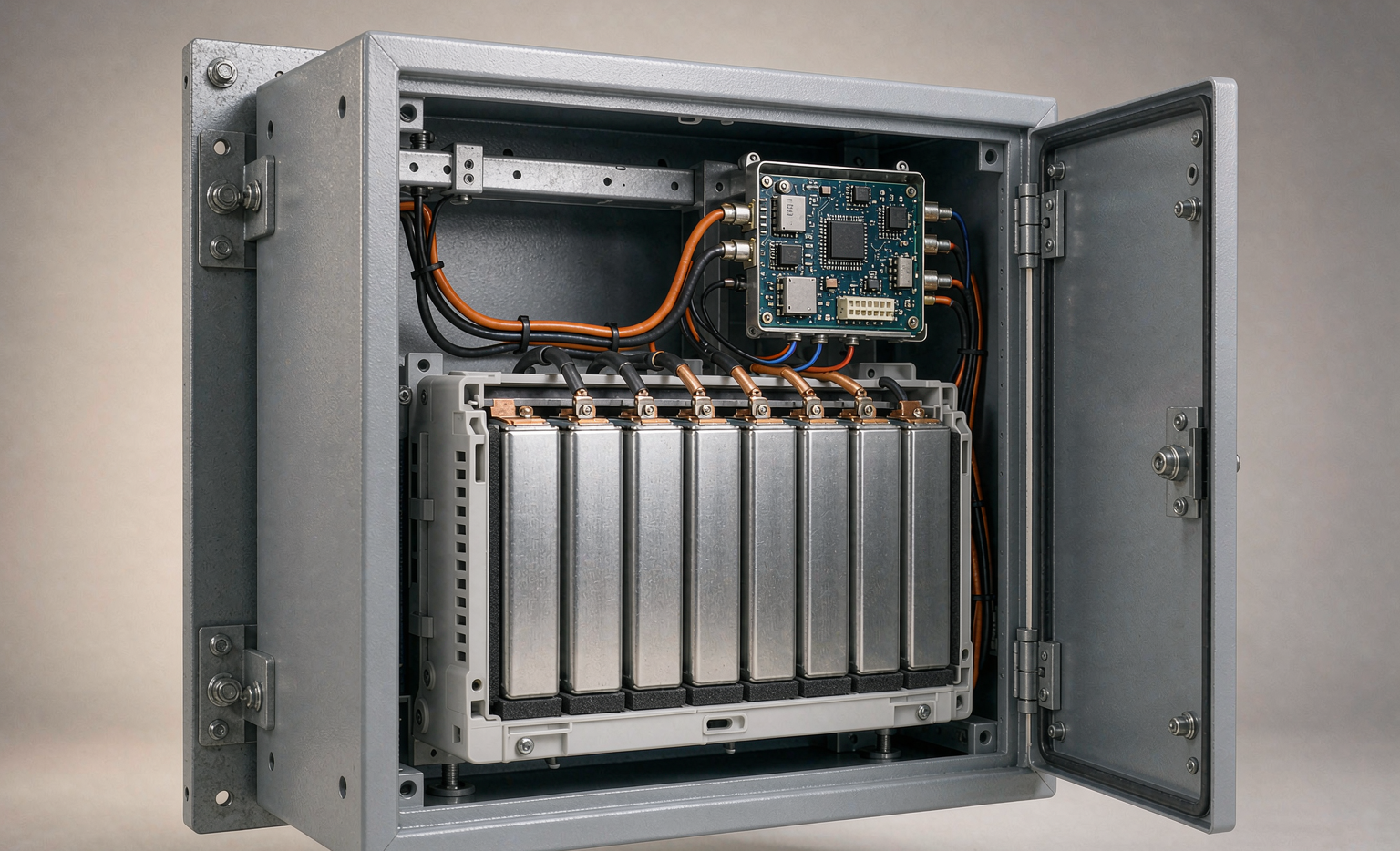
A production backup power unit is more than cells. The architecture I standardize on for a wall-mounted 5 kWh sodium-ion bank is:
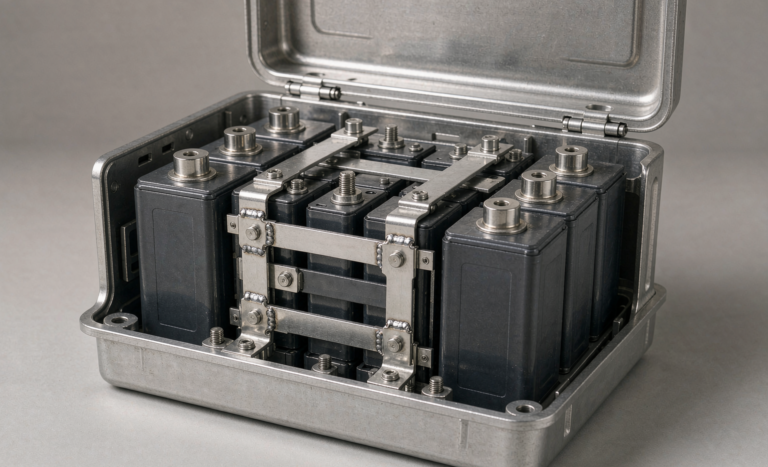
- Cell module: 15S4P prismatic sodium-ion string, busbar-welded, with 0.5 mm mica barriers between cells.
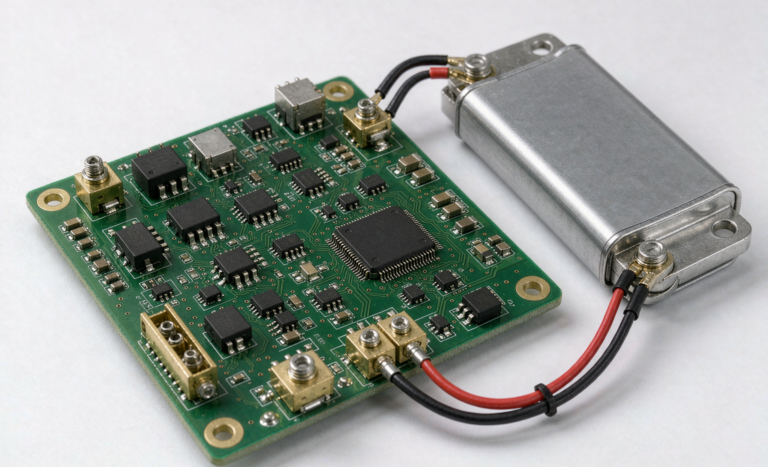
- BMU: a slave board doing voltage and temperature sensing per cell group, daisy-chained over isolated RS-485 to the master.
- Master BMS: SOC/SOH estimation, contactor control, pre-charge circuit, and CAN/RS-485 to the inverter.
- DC contactor + fuse: a 200 A DC-rated contactor and a 250 A class-T fuse on the pack positive.
- Enclosure: IP54 steel cabinet with top-and-bottom vent paths sized for natural convection.
When a client needs a custom battery solution for a rack-mount UPS, I scale the module to 48 V / 10 kWh and add a second contactor for parallel redundancy. The key design rule is isolation: the sodium-ion pack must never share a ground with the load until the BMS confirms it is healthy, or a ground fault on the inverter side will silently discharge the bank.
Thermal Management and Safety Standards
Safety certification is where backup power projects live or die. For any sodium-ion pack I ship, I build the dossier around four standards. UN38.3 covers transport shock, vibration, altitude, thermal, and external-short testing — required even when the unit is stationary if the cells cross a border during procurement. IEC 62133 (and its stationary cousin IEC 62619) governs cell- and system-level safety for portable and industrial cells, including overcharge, forced discharge, and thermal runaway propagation. For the North American stationary market I align the enclosure and protection logic to UL 1973 for stationary storage, plus UL 1741 for the inverter interface.
Thermally, sodium-ion is forgiving but not magic. I keep cells below 45 °C during charge using passive convection in most climates, and I add a 30 W PTC heaters strip only for sites that charge below 0 °C. The BMS opens the contactor at 60 °C cell surface and at 4.10 V/cell overvoltage. Because a sodium ion battery has a lower flammability ceiling than some high-nickel lithium battery chemistries, I still mandate a ≥10 mm vent gap and a thermal runaway propagation barrier so a single cell fault does not cascade — a requirement IEC 62619 explicitly tests.
Sizing and Runtime Calculation
Backup power sizing is simple arithmetic that engineers routinely get wrong by ignoring depth-of-discharge. For a sodium-ion bank I use a conservative 90% usable depth-of-discharge because the chemistry tolerates deep discharge far better than a lithium battery.
Runtime (hours) = (Usable capacity Wh × DoD) ÷ Load W. For a 5 kWh pack at 90% DoD feeding a 500 W critical load: 5,000 × 0.90 ÷ 500 = 9 hours. I then derate by 15% for aging and temperature, landing at roughly 7.5 hours of real runtime — the number I put in the datasheet. For a sodium-ion battery design backup power spec aimed at a telecom site, I size to 12 hours at -10 °C, because that is the worst-case utility restoration window my customers report.
I also run a C-rate check: a 5 kWh pack delivering 500 W is only 0.1C, trivially within the 1C continuous rating. But the cold-cranking inverter surge at transfer can hit 2–3C for seconds, so I verify the cell’s pulse rating and the busbar cross-section before signing off.
Transport, Compliance and Aviation Considerations
Even though a backup power cabinet is stationary, the cells and the prototype units move. UN38.3 test summary is mandatory for cross-border cell shipments, and I keep the lithium-battery-equivalent documentation package even though sodium-ion is generally classed outside the strict PI 965/966 lithium rules — carriers still ask for the test summary. When a custom battery solution ships in a customer’s own freight, I attach the UN38.3 summary and the SDS.
For aviation-adjacent clients — drone operators and airport ground equipment — the FAA and EASA expectations around battery safety cases still inform my design review. I borrow the thermal-runaway-and-propagation argument from the aviation playbook: demonstrate that a single cell fault stays contained, document it, and the civil-aviation and facility insurers both relax. A sodium-ion battery helps here because its thermal runaway onset is typically 30–50 °C higher than NMC, widening the margin.
FAQ
Is sodium-ion better than a lithium battery for home backup power?
For stationary backup power where weight does not matter, yes in most cases. A sodium-ion battery tolerates PSOC floating, survives deep discharge, and keeps capacity in the cold better than an equivalent lithium battery, at the cost of lower energy density and a larger enclosure. I recommend sodium-ion for homes in cold climates and for telecom or UPS installs; I keep lithium battery (LFP) for weight-sensitive or space-constrained builds.
What standards must a sodium-ion backup power system meet?
At minimum I certify to UN38.3 for transport, IEC 62133 / IEC 62619 for cell and system safety, and UL 1973 for stationary storage in North America, paired with UL 1741 on the inverter side. These map closely to what a lithium battery system requires, so the compliance path is familiar.
How long does a sodium-ion backup battery last?
In PSOC backup duty I see 2,000–4,000 cycles to 80% state of health, which translates to roughly 8–12 years of calendar life for a bank that cycles only during outages. That is comparable to or better than LFP over the same duty because sodium-ion ages more gracefully when left partially charged.
Can I charge a sodium-ion backup bank below freezing?
Not at full current. I allow discharge down to -20 °C but gate charging below 0 °C behind a PTC heater or a reduced current limit, exactly as I would for a lithium battery. The BMS enforces this automatically in every Horizon Power custom battery solution we ship.