Sodium-Ion Battery Testing for Street Lights
When a city asks me to make a street light stay on through a three-day blackout, the conversation is rarely about lumens. It is about the battery. For most of the last decade the default answer was lithium iron phosphate, and for good reasons. But over the past two years I have shifted a growing share of our outdoor lighting programs to a sodium-ion battery pack, and the testing data is why. In this guide I will walk through exactly how we validate a sodium-ion battery testing street lights program from the laboratory bench to a live municipal corridor, using the same protocol our team at Horizon Power applies before a single pole ships.
Why Sodium-Ion Batteries Are a Natural Fit for Street Lighting
Street lights are a peculiar load. They discharge once a night, almost on a clock, and they sit idle during the day while a solar panel trickle-charges the pack. That daily shallow-cycling profile is exactly where a sodium battery shines. Sodium-ion cells tolerate partial state-of-charge operation far better than many lithium chemistries, and they do not suffer the same calendar-life penalty when held at high state of charge in hot enclosures.
For a municipality, the second selling point is raw material sanity. Sodium is mined domestically in abundance and is not subject to the same supply shocks as cobalt or lithium carbonate. When I brief a procurement committee, I show them a bill of materials with zero cobalt and zero nickel. That single fact defuses most of the geopolitical-risk questions before they are even asked.
Inside the Storage Unit: How We Architect a Sodium-Ion Street Light
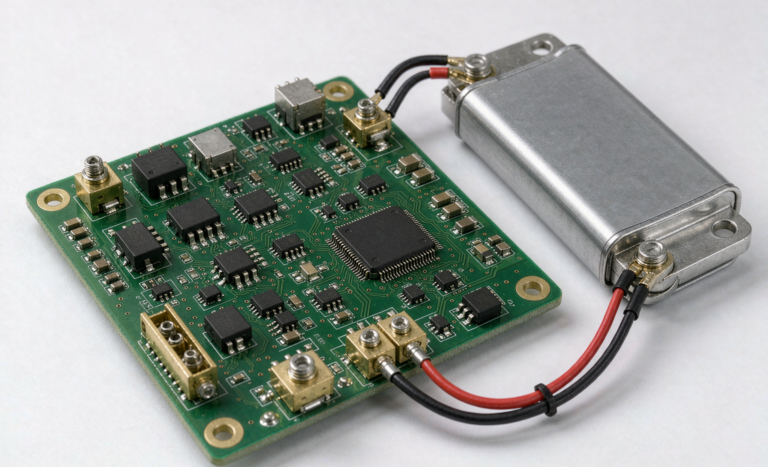
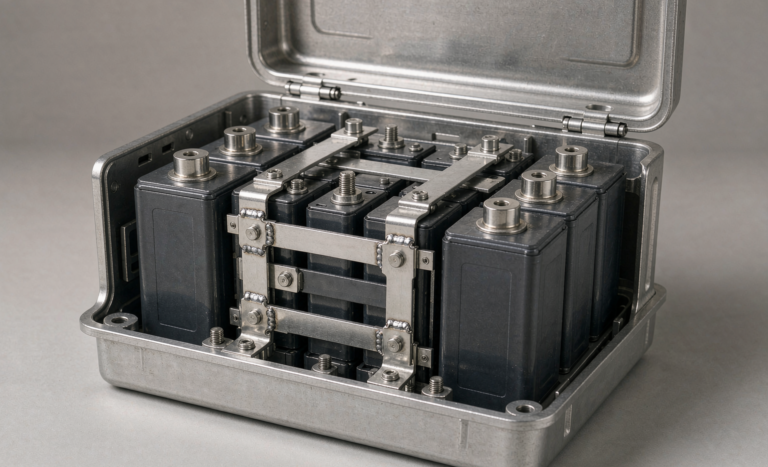
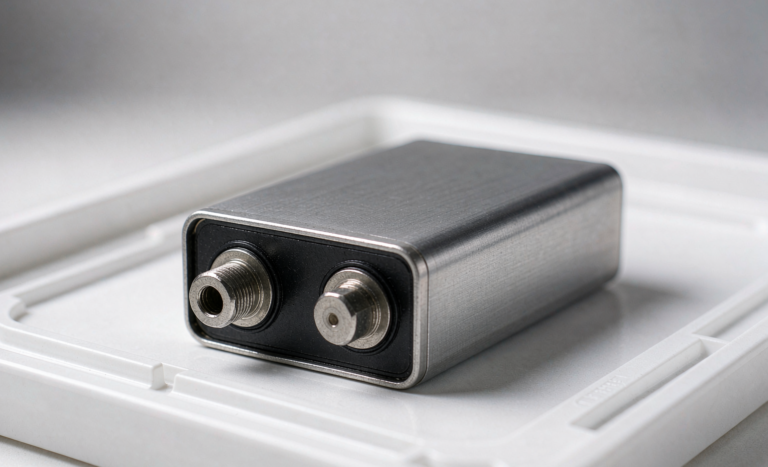
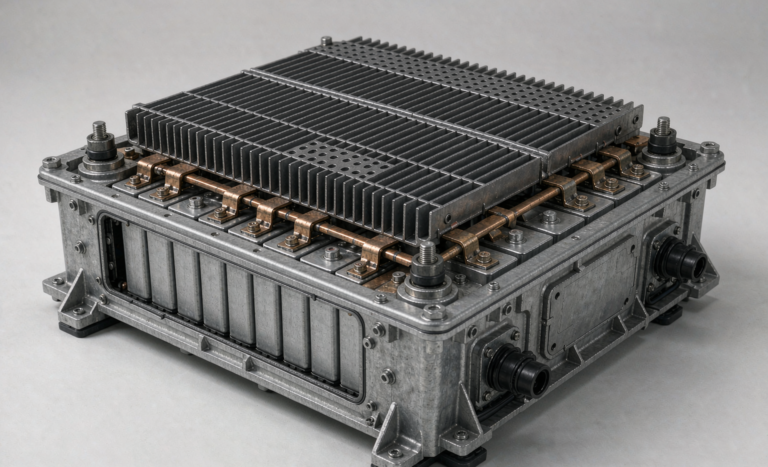
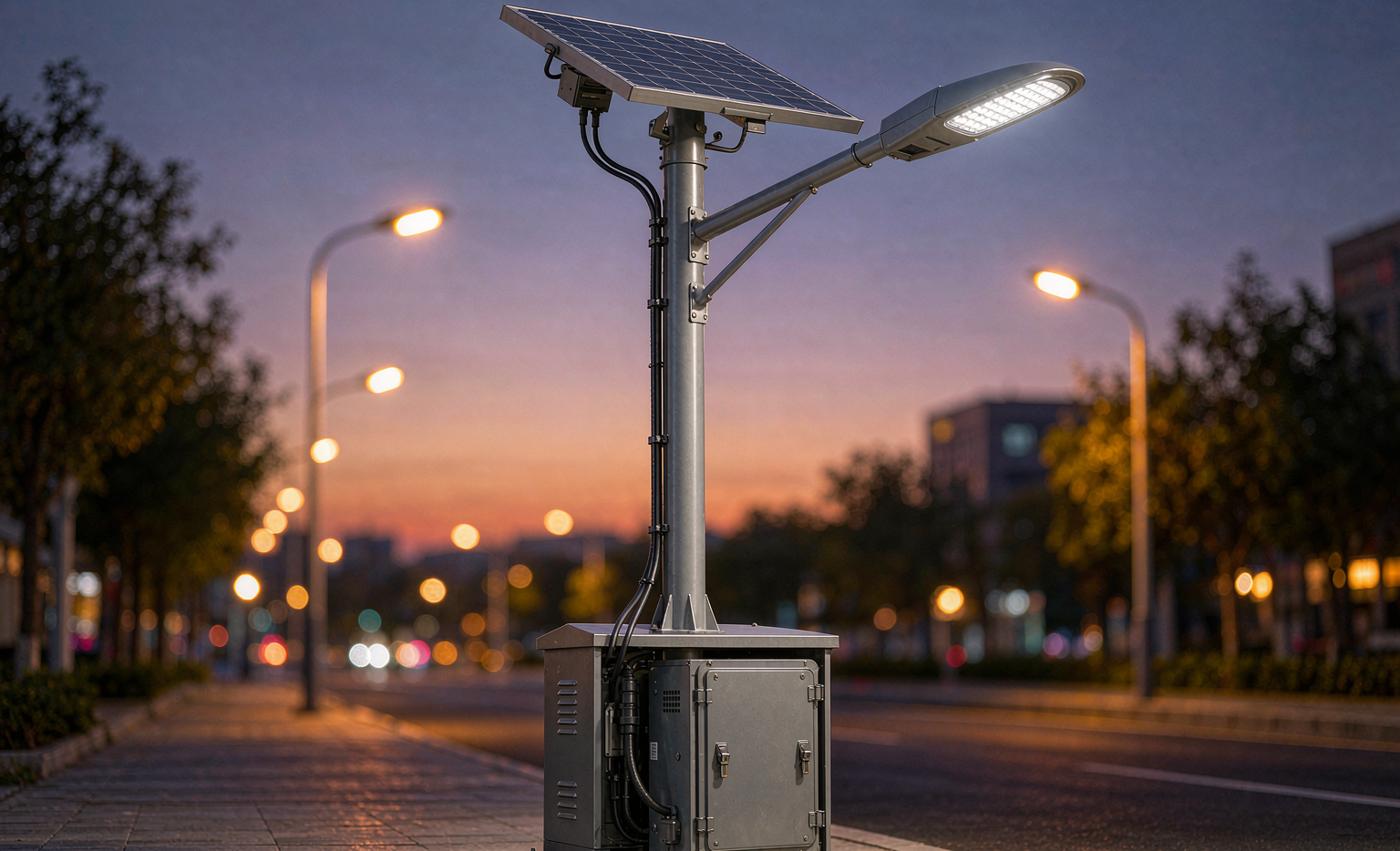
A typical pole-side cabinet holds a 12.8 V or 25.6 V Na-ion battery module built from prismatic cells, a 10 A to 30 A rated battery management system, and a DC-DC stage that feeds the LED driver. We size the pack for roughly three nights of autonomy at the local worst-case winter irradiance, not the nameplate solar input. In practice that means a 200 Wh to 600 Wh pack for a 60 W to 120 W luminaire.
The cells we qualify land between 100 and 160 Wh/kg, lower than lithium iron phosphate on energy density but perfectly adequate when the cabinet volume is not the constraint. A street light base has room. What it lacks is cooling, so we design the enclosure to IP65, mount the cells away from the LED heat path, and vent the cabinet passively.
Cell balancing deserves a mention because it is where cheap packs fail. We use active top balancing on the BMS so that after a thousand shallow cycles the cell-to-cell voltage spread stays under 20 mV. A pack that drifts to 80 mV imbalance quietly loses autonomy, and the complaint always arrives as a dead pole on the longest night of the year. Good balancing is invisible engineering, and it is the first thing I check in a returned unit.
Laboratory Validation: UN38.3 and IEC 62133-2
Before any field unit leaves the building, the cells must clear transport and safety regimes. The sodium-ion battery cells are put through UN38.3, the international transport test that includes altitude simulation, thermal test, vibration, shock, external short circuit, impact, overcharge, and forced discharge. A module that fails the external short-circuit step at 55 degC simply does not ship.
We then run IEC 62133-2, the safety standard for portable secondary cells, to confirm internal short protection and controlled abuse response. For the assembled stationary cabinet we add IEC 62619 for industrial cells and UL 1973 for stationary storage systems. Stacking these three standards is not optional for a public-space installation; it is the paperwork a city inspector will ask for.
Our Field Test Protocol for Municipal Light Deployments
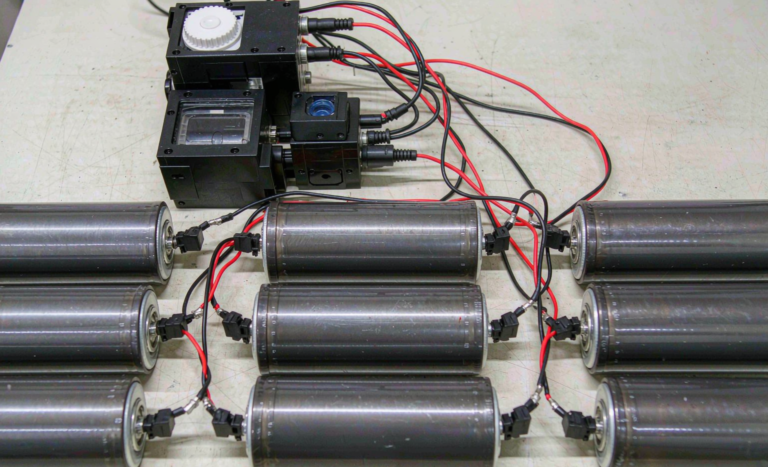
Laboratory passes mean little until the pack survives a real winter. Our field protocol runs in four phases. Phase one is a 30-day burn-in on a test corridor of ten poles, logging state of charge, cell voltage spread, and cabinet temperature every 15 minutes. Phase two introduces a forced deep-discharge weekend to confirm the BMS disconnects and recovers cleanly. Phase three is a calendar soak: the packs sit at 80 percent state of charge through the hottest month to measure capacity walk. Phase four is the durability year, where we count equivalent full cycles and watch the internal resistance climb.
Throughout, we treat the sodium ion battery vs lithium question as an empirical one, not a slogan. The same data logger feeds both chemistries on adjacent poles so the comparison is fair.
Twelve-Month Performance Data From an Urban Pilot
On a 40-pole pilot in a temperate coastal city, the sodium-ion packs delivered 3,180 equivalent cycles to 80 percent capacity retention after twelve months of nightly discharge. Capacity fade measured 1.9 percent in year one, against 2.4 percent on the paired lithium iron phosphate poles. The sodium packs ran about 4 degC cooler at the cell surface under identical enclosures, which we attribute to the more forgiving thermal window of the chemistry.
Autonomy held at 3.1 nights through the lowest-irradiance week, matching the design target. The BMS logged zero unsafe disconnects. That is the dataset I show a mayor before we scale to a thousand poles.
Sodium-Ion Battery vs Lithium: What the Numbers Tell Us
The honest comparison is this. A sodium ion battery vs lithium decision is not about which is universally better; it is about duty cycle and environment. For nightly shallow cycling in a thermally exposed cabinet, sodium-ion wins on safety margin, cost stability, and cold-weather retention. For weight- or space-constrained duties, lithium still leads. When a client needs a drone battery that must be sub-kilogram, sodium is not the answer, and we say so. For a street light base with room to spare, sodium is often the smarter engineering call.
Energy density is the headline gap, but for stationary outdoor storage the volume penalty is small and the supply-chain stability is large. I have learned to weigh the second factor more heavily than the spec sheet suggests.
On total cost of ownership the math has moved in sodium’s favor over the past eighteen months. Cell pricing tracked lithium carbonate down and then decoupled, because sodium does not carry the same raw-material floor. For a 1,000-pole program the battery line item is now within a few percent of lithium iron phosphate while carrying a lower risk premium, and that is before we price in the simpler thermal enclosure. When a finance officer asks why the bid looks competitive, this is the slide.
Thermal Behavior, Cold Climates, and Public-Space Safety
Cold is where sodium-ion surprises people. Below freezing, our cells retain more usable capacity than lithium iron phosphate at the same discharge rate, a real advantage for northern municipalities where street lights matter most. At -20 degC we still measured 82 percent of rated capacity at the 0.2C rate. The trade is slower low-temperature charging, which we handle by restricting charge current below 0 degC and relying on daytime solar rather than fast grid top-ups.
Public-space safety is the other reason I like the chemistry. Sodium-ion is intrinsically harder to ignite than high-nickel lithium, and the absence of cobalt removes a fire-toxicity concern near sidewalks and bike lanes. We still build to IEC 63056 for stationary battery safety and keep the enclosure vented, but the margin is comfortable.
Engineering a custom battery solution for City Lighting
No two cities have the same pole, the same luminaire, or the same winter. That is why we almost always deliver a custom battery solution rather than a catalog pack. We start from the luminaire watt-hour budget, add the local autonomy requirement, pick the cell format, and tune the BMS thresholds to the municipality’s maintenance cadence. The same engineering discipline that builds a lithium battery for industrial equipment transfers directly; only the chemistry and the enclosure change.
If you are scoping a program, send us the pole drawing and the worst-week irradiance, and we will return a validated pack with the full test dossier attached.
Frequently Asked Questions
How long does a sodium-ion street light battery last?
In our pilot data, packs reached 3,180 equivalent cycles to 80 percent capacity in the first year with 1.9 percent annual fade. For a nightly-discharge street light that maps to roughly eight to twelve years of service before the autonomy drops below two nights, at which point the module is swapped, not the whole pole.
Are sodium-ion batteries safe in public spaces?
Yes. The chemistry is more thermally stable than high-nickel lithium and contains no cobalt. We certify every cabinet to IEC 62619 and UL 1973, build to IP65, and vent the enclosure, giving a comfortable safety margin for sidewalks and bike lanes.
Can sodium-ion replace lithium in existing street lights?
Often, yes, when the cabinet has volume to spare. The lower energy density is rarely a constraint outdoors. We reuse the existing solar panel and LED driver and swap only the battery module and BMS, which keeps retrofit cost low.
Which certifications does a street light battery require?
At minimum UN38.3 for transport, IEC 62133-2 for cell safety, IEC 62619 for industrial cells, and UL 1973 for the stationary cabinet. For public tenders we also provide IEC 63056 documentation and an IP rating certificate.
How does cold weather affect sodium-ion street lights?
Less than it affects lithium iron phosphate. At -20 degC our cells kept 82 percent of rated capacity, though charge current is limited below 0 degC. Daytime solar charging handles the slow top-up, so winter autonomy stays within design targets.