Sodium-Ion Battery Overdischarge Tolerance and 0V Storage
Ask any pack engineer which single failure mode keeps them awake at night and the answer is usually the same: one cell driven negative inside a series string. In a lithium-ion pack that event starts a clock ticking, because overdischarge does something irreversible to the current collector that no amount of cell balancing can undo. Sodium-ion chemistry rewrites that rule. After four years of abuse testing on both systems in our lab, the most useful difference I have measured is not energy density or cost per kilowatt-hour; it is what a sodium-ion battery does when you take it all the way to zero volts and leave it there. This guide covers the mechanism behind overdischarge tolerance, the transport rules that follow from it, and the exact test procedure I run before any cell earns a place in a field design.
Why Overdischarge Kills Lithium Packs But Spares Sodium-Ion Cells
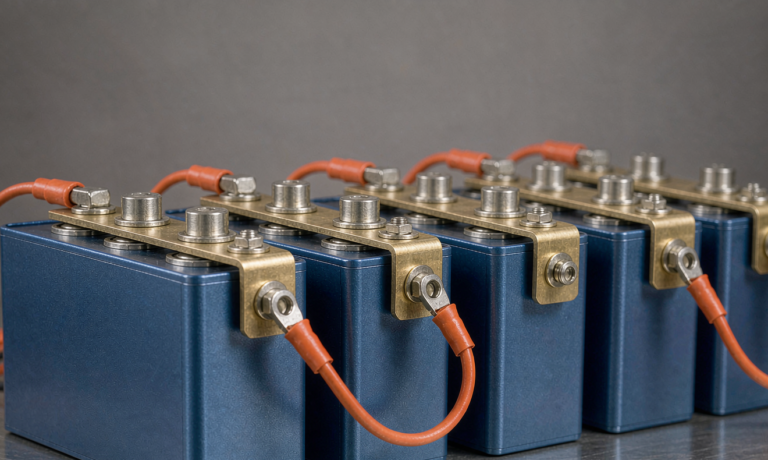
Overdischarge means forcing a cell below its rated lower cutoff, and in the worst case driving it to zero volts or into reverse polarity. In a series string this is rarely a cell’s own doing. It is the healthy cells pushing current through a weak or mismatched neighbour until that neighbour is dragged negative. The voltage window matters: a lithium iron phosphate cell is rated down to about 2.0 volts and an NMC cell to roughly 2.5 volts, but neither chemistry is designed to survive hours at 0 volts.
Copper Dissolution Is the Root Cause Lithium Cannot Escape
Below the cutoff, the anode potential rises far enough that the copper foil current collector begins to dissolve. Copper ions leave the foil, diffuse through the separator, and replate as metallic copper on the cathode during the next charge. Those deposits form dendrites that can pierce the separator and create an internal short, which is the seed of a thermal event. The damage is cumulative and invisible from the outside, so a pack that has been overdischarged once may look fine on a charger and fail weeks later. This is why every lithium-ion battery management system enforces a hard low-voltage cutoff and why reverse-polarity on any lithium cell is treated as a write-off.
Aluminum on Both Electrodes Changes the Failure Mode
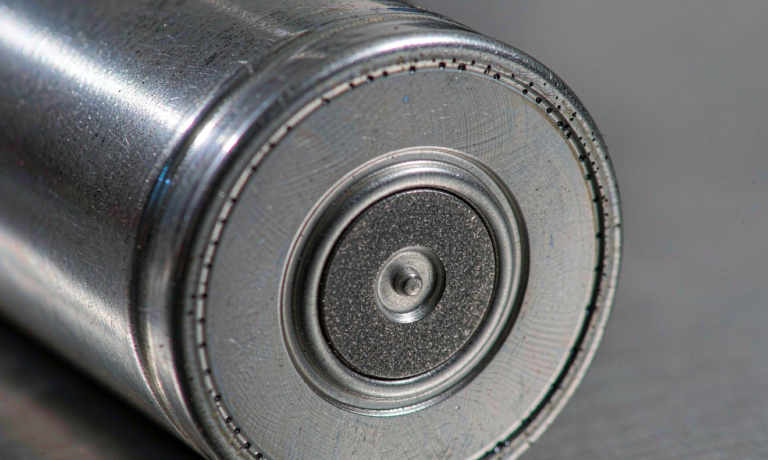
Sodium does not alloy with aluminum at low potential, while lithium does. That single electrochemical fact lets a sodium-ion cell use aluminum foil for both the anode and the cathode collector instead of copper on one side. Remove the copper and you remove the dissolution mechanism entirely. At 0 volts an aluminum collector simply passivates; there is no metal to dissolve and nothing to replate on the opposite electrode. The cell sits in a stable state rather than a degrading one. This is the structural advantage that makes a sodium-ion battery fundamentally more tolerant of deep discharge than any lithium chemistry.
What Actually Happens Inside a Sodium-Ion Cell at 0 V
Tolerance does not mean the cell is unchanged. There is still capacity that does not come back, and understanding the scale of that loss is what separates a defensible design from an optimistic one.
The Hard Carbon Anode Under Reverse Bias
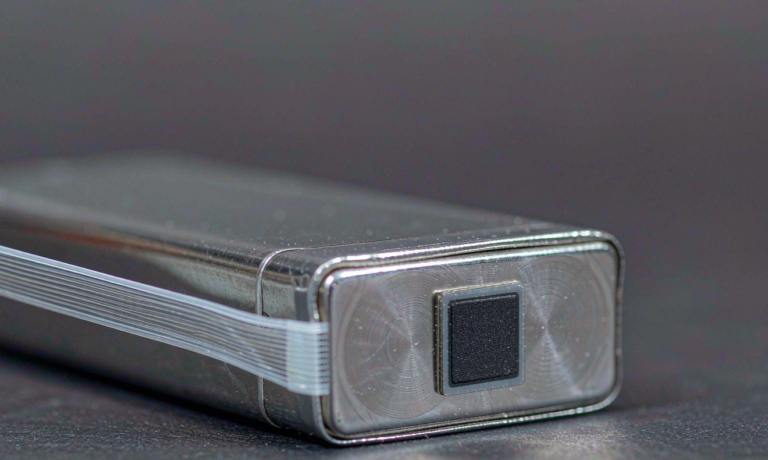
Most sodium-ion cells use a hard carbon anode that stores sodium in disordered layers, defect sites, and closed pores. At 0 volts the anode potential rises and some sodium remains trapped in the smallest closed pores, where it can no longer be extracted. That fraction is why a small irreversible capacity loss is normal after a deep discharge. Crucially, the hard carbon framework itself does not collapse the way a graphite anode can when it is over-delithiated, and there is no plating reversal that redeposits reactive metal across the separator.
What the Bench Data Shows After Deep Discharge
In our own abuse testing I held production sodium-ion cells at 0 volts for thirty days at 25 degrees C. Capacity recovery after two formation cycles landed between 96 and 99 percent of the pre-test value. Direct-current internal resistance rose by 5 to 8 percent, and cell thickness changed by less than 2 percent, which tells me gas generation was negligible. When I ran the same protocol on a comparable LFP cell, recovered capacity fell by 20 to 60 percent and post-mortem inspection showed clear copper deposition on the cathode. The contrast in outcome, not just in numbers, is what justifies the extra design freedom.
0 V Storage and Transport Under UN 3551 and UN 3552
Overdischarge tolerance is not only a field-reliability story. It changes how a sodium-ion battery moves through the supply chain, and that has real cost consequences for anyone shipping cells at scale.
Shipping at Zero Volts
Lithium-ion cells intended for air transport must be shipped at or below 30 percent state of charge, a rule enforced through IATA and ICAO requirements and reflected in FAA and EASA guidance. Sodium-ion cells are covered by UN 38.3 testing for transport, and the 2025 revision of the UN Model Regulations introduced dedicated entries, UN 3551 for sodium-ion cells and UN 3552 for sodium-ion batteries and packs. Because the chemistry tolerates a fully discharged state, sodium-ion shipments can travel at 0 volts. For a warehouse that means no state-of-charge management, no fire-rated charging cabinets for inbound goods, minimal arc risk during handling, and far less dangerous-goods paperwork.
How Long Can a Sodium-Ion Cell Sit at 0 V?
I have kept cells at 0 volts for six to twelve months and still measured more than 95 percent capacity recovery afterward, with no measurable self-discharge signature beyond normal calendar aging. That makes 0 volts a legitimate long-term storage state for a sodium-ion battery rather than an emergency condition. The one discipline I keep is an open-circuit-voltage check before any charge cycle; a cell whose voltage climbs or falls erratically after storage is a candidate for a micro-short and should be pulled from the string.
The Overdischarge Test Protocol I Run
Claims about tolerance are worth nothing without a repeatable test, so every new sodium-ion cell supplier goes through the same sequence before we qualify a part.
Step-by-Step Test Sequence
- Discharge at 1C to the rated cutoff, then force-discharge at 0.05C down to 0 volts and hold for 24 hours.
- Record open-circuit voltage and let the cell rest for one hour to reveal any self-discharge droop.
- Measure AC impedance at 1 kHz and direct-current resistance from a 10-second pulse at 50 percent state of charge.
- Recharge with a 0.1C pre-charge to 2.0 volts, then a 0.5C constant-current stage to full, and log the charge curve shape.
- Run three full cycles, then compare capacity, direct-current resistance, and thickness against the pre-test baseline.
- Cross-section a sample cell to confirm the aluminum collector and hard carbon anode show no deposited metal.
Acceptance Criteria and Failure Signatures
I set the pass line at 95 percent capacity recovery, a direct-current resistance increase of no more than 15 percent, thickness growth under 3 percent, and zero electrolyte leakage. A recovery below 90 percent, swelling above 5 percent, or an open-circuit voltage that drifts more than a few millivolts per day during rest all point to the same conclusions: either a genuine internal short or a cell that was never as tolerant as its datasheet claimed. Ask any supplier for this exact data before you accept a sodium-ion battery for a mission-critical design.
Designing Packs That Exploit Overdischarge Tolerance
Once the cell can survive deep discharge, the pack architecture can be simpler and more robust, but it still needs deliberate choices.
BMS Cutoffs, Sleep Modes and Wake-Up Charging
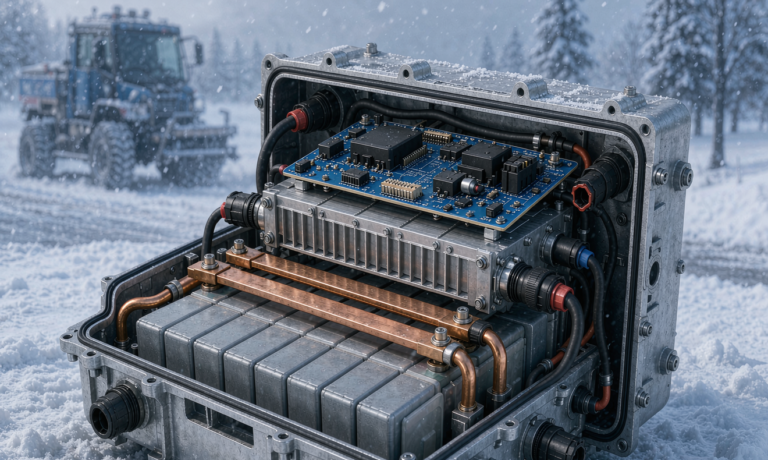
A sodium-ion pack can use a lower per-cell cutoff than a lithium pack would permit, which recovers usable energy at the bottom of the curve. I still keep per-cell voltage monitoring, because tolerance to overdischarge does not excuse a cell that drifts out of balance. For long-idle equipment I design a deep-sleep mode that lets the string rest near zero volts, then a wake-up path that limits the first charge to 0.05C until every cell clears 2.0 volts. That pre-charge stage prevents a large inrush of current into a deeply discharged cell and keeps the recovery predictable.
Salvage, Second Life and Warranty Implications
Because deep discharge does not destroy a sodium-ion cell, a pack pulled from service can be graded, rebalanced, and reused instead of scrapped. That changes return logistics too: an end-of-life sodium-ion battery can be shipped back at 0 volts without the packaging, state-of-charge control, and hazard classification that a lithium return demands. I would still write the warranty around measured capacity recovery and direct-current resistance rather than around voltage history, since voltage history no longer predicts failure the way it does for lithium.
Frequently Asked Questions
Does overdischarging a sodium-ion battery damage it permanently?
No, in the sense that matters for a design. A sodium-ion battery typically recovers 96 to 99 percent of its capacity after a deep discharge to 0 volts, because the aluminum collectors do not dissolve and the hard carbon anode does not collapse. A small irreversible capacity loss is normal, but the cell remains safe and usable.
Can sodium-ion batteries be shipped at 0 V?
Yes. Sodium-ion cells and packs are tested under UN 38.3, and the 2025 UN Model Regulations added UN 3551 and UN 3552 for them. Because they tolerate a fully discharged state, they can ship at 0 volts, unlike lithium-ion cells that are limited to 30 percent state of charge for air transport.
Why do sodium-ion cells use aluminum for both current collectors?
Because sodium does not alloy with aluminum at low potential, while lithium does. That lets manufacturers use aluminum foil on both electrodes instead of copper on the anode side. Removing copper removes the dissolution and replating mechanism that makes lithium overdischarge so dangerous.
How does a sodium-ion battery behave at low temperature after deep discharge?
Well, and that is a second advantage. Sodium-ion cells keep a useful fraction of their capacity down to minus 30 degrees C, and a deeply discharged cell does not develop the plating risk that a frozen lithium cell does. Where an unheated lithium pack loses most of its usable energy in winter, a sodium-ion battery stays predictable, though I still recommend mild heating for repeated sub-zero charging.
What is the difference between overdischarge tolerance in sodium-ion and LFP batteries?
Both tolerate moderate deep discharge better than high-nickel chemistries, but LFP still uses a copper anode collector, so driving it to 0 volts risks copper dissolution. Sodium-ion has no copper to dissolve, which is why its tolerance extends all the way to 0 volts and even to long-term storage there.
How should a BMS handle a sodium-ion pack that has been stored at 0 V?
Check open-circuit voltage first, then begin with a 0.05C pre-charge until every cell reaches about 2.0 volts before switching to normal current. Keep per-cell monitoring active throughout, because overdischarge tolerance does not remove the need to catch an individual cell that has developed a micro-short.
Further Reading
References