Home Energy Storage for Multi-Generation Households
When three generations share one roof, the home stops being a simple electricity consumer and becomes a small, always-on critical facility. In my work as a senior lithium battery engineer at Horizon Power, I have spec’d home energy storage for households where a grandmother’s oxygen concentrator, a working parent’s evening EV charge, and two school-age kids’ devices all compete for the same breaker panel. The load profile is not the smooth curve you see in a single-occupant home. It is spiky, emotionally non-negotiable, and unforgiving of a poorly sized battery. This guide walks through how I size, chemistry-select, and safety-engineer a home energy storage system for a multi-generation household, using real numbers rather than marketing claims.
Load Audit Before You Size Anything
Before touching a battery, map the loads into two buckets. Critical loads must run no matter what: medical devices such as CPAP (30 to 60 W), oxygen concentrators (250 to 400 W), refrigerated medication (50 to 100 W), and stair lifts (250 to 500 W). In a multi-generation home this critical band often draws 0.5 to 1.5 kW continuously, day and night. Deferrable loads can wait for solar or off-peak windows: laundry (washer 0.5 to 1 kW, dryer 2 to 5 kW), dishwasher (1 to 1.8 kW), and EV charging (3.3 to 11 kW). A typical multi-generation household consumes 25 to 45 kWh per day, roughly double a single-occupant home, because cooking happens three times a day and someone is usually home. Add the small but constant draws that pile up in big households: a space heater for an elderly resident (1 to 1.5 kW), a home office (0.2 to 0.5 kW), and kids’ gaming or study PCs (0.3 to 0.8 kW each). I also note the inrush of motor loads, because a refrigerator compressor can pull 6 to 8x its running watts for a few seconds, which the inverter must survive without tripping. I log at least two weeks of consumption at 15-minute resolution before recommending a single kilowatt-hour of home energy storage.
Sizing the Battery for Medical and Critical Loads
Sizing starts with the critical subpanel, not the whole house. If the medical band draws 1.2 kW for 10 hours overnight, that is 12 kWh of usable energy before inverter and temperature losses, which I round to a 15 kWh usable block. Whole-home backup adds the evening cooking and HVAC peak: induction cooktops pull 1.5 to 3.5 kW per burner, electric ovens 2 to 5 kW, and a heat pump 2 to 5 kW. For a household that wants to ride through a full outage, I spec 25 to 35 kWh of usable capacity with a 10 kW continuous inverter, allowing 2x surge for motor starts such as the well pump or refrigerator compressor. Depth of discharge matters: I design to 90% DoD but de-rate to 80% at end of life, so the nameplate is typically 30 to 45 kWh. Inverter round-trip efficiency sits near 0.92, and I add a 5% temperature de-rate for garages that swing hot in summer. A custom battery solution here beats an off-the-shelf box because the critical and deferrable loads are balanced to different duty cycles rather than lumped into one number.
Chemistry and Cycle Life for a 10 to 15 Year Commitment
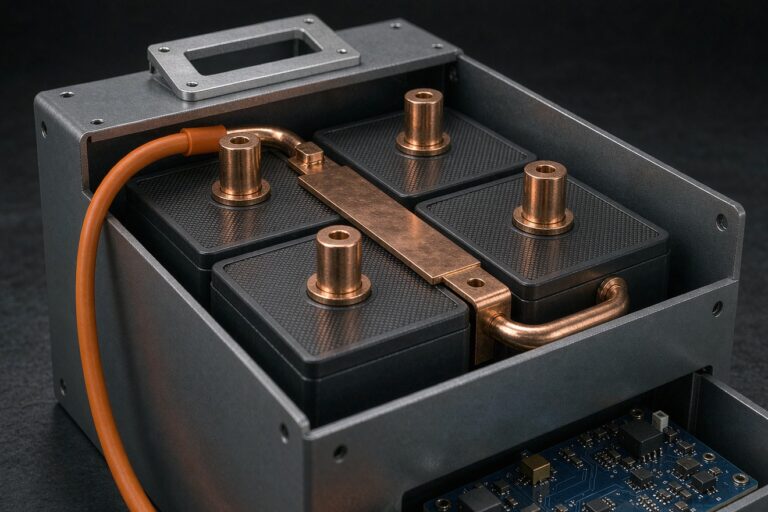
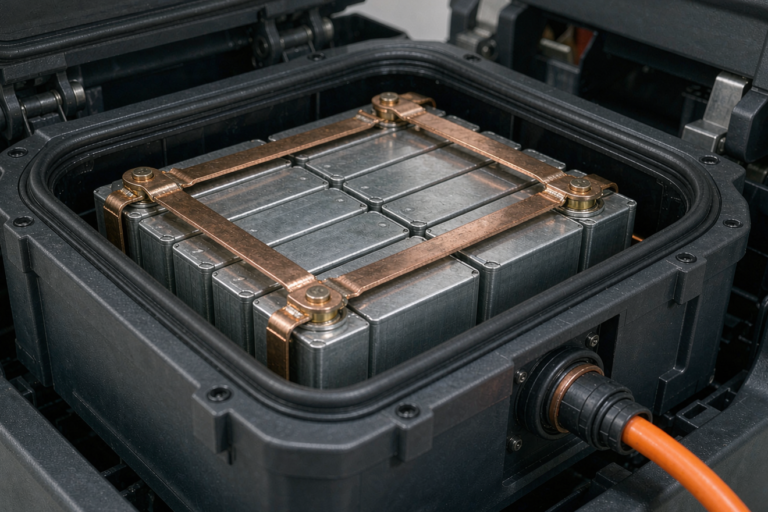
For residential longevity I recommend lithium iron phosphate, or LFP. It delivers 150 to 180 Wh/kg and 4000 to 6000 full cycles at 25 degrees Celsius before reaching 80% capacity, the usual end-of-life threshold. Heat is the enemy: at 35 degrees Celsius cycle life drops to about 3500, and above 45 degrees Celsius it falls under 2000 cycles. A lithium battery in an unconditioned garage in a hot climate will die years before one in a climate-stable utility room. Sodium-ion is worth considering in cold regions because it retains 85 to 92% capacity at minus 20 degrees Celsius and can charge at low temperature without the lithium plating risk that limits LFP. I avoid high-nickel chemistries in occupied homes entirely; their thermal-runaway onset of 110 to 140 degrees Celsius is far too close to realistic fault temperatures. Whichever chemistry you choose, the cell-level standard is IEC 62619 for industrial stationary use, supported by UN38.3 for safe transport and IEC 62133 for any portable modules moved between buildings.
Priority Load Shedding and the Critical Subpanel
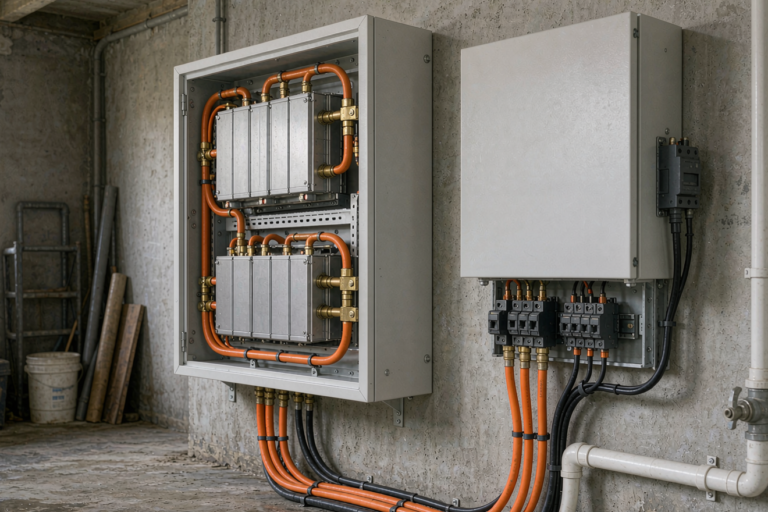
The single most useful feature for a multi-generation home is an automatic transfer switch feeding a critical loads subpanel. When the grid drops, the inverter isolates and powers only the medical, refrigeration, lighting, and communications circuits, shedding the dryer, EV charger, and pool pump first. I program the battery management system to enforce this priority in software: critical loads get 100% uptime, deferrable loads get whatever remains. The BMS tracks state of health by coulomb counting plus AC impedance, and opens the contactor in under 5 milliseconds on a fault. For grid-tied systems the inverter must comply with IEEE 1547-2018 and carry UL 1741 SB listing, which governs how it disconnects during grid disturbances. A static transfer switch rated at 8 to 20 milliseconds keeps medical loads seamless during the handoff, so a concentrator never blinks. Proper neutral bonding and grounding per NEC Article 706 keep the isolated subpanel safe when it is no longer referenced to the utility neutral.
Safety, Access and Placement With Kids and Seniors
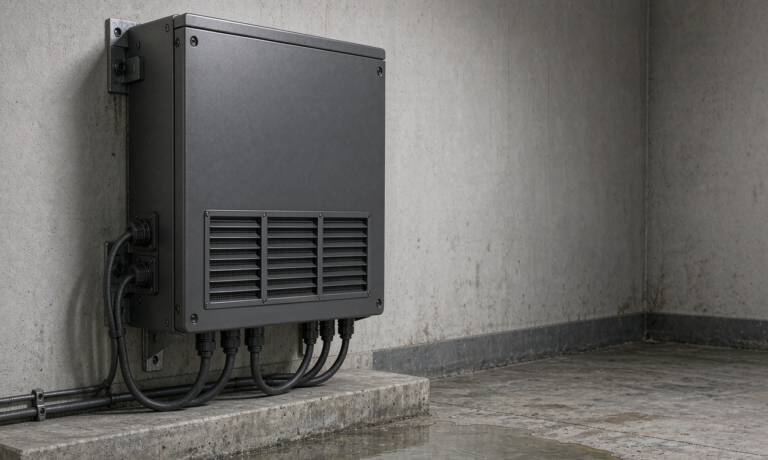
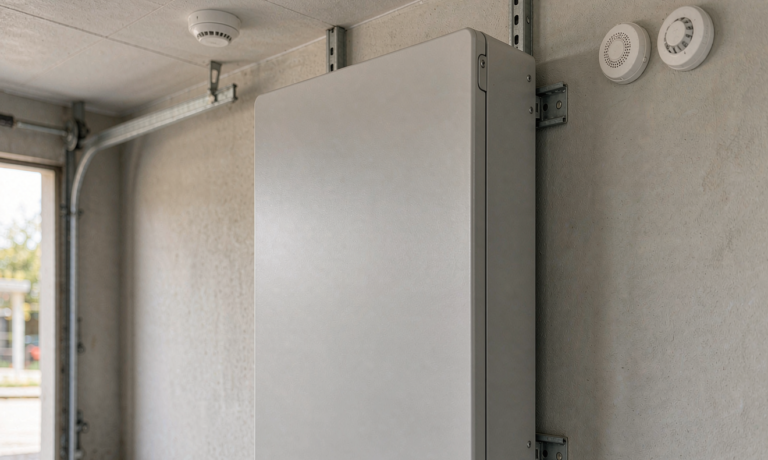
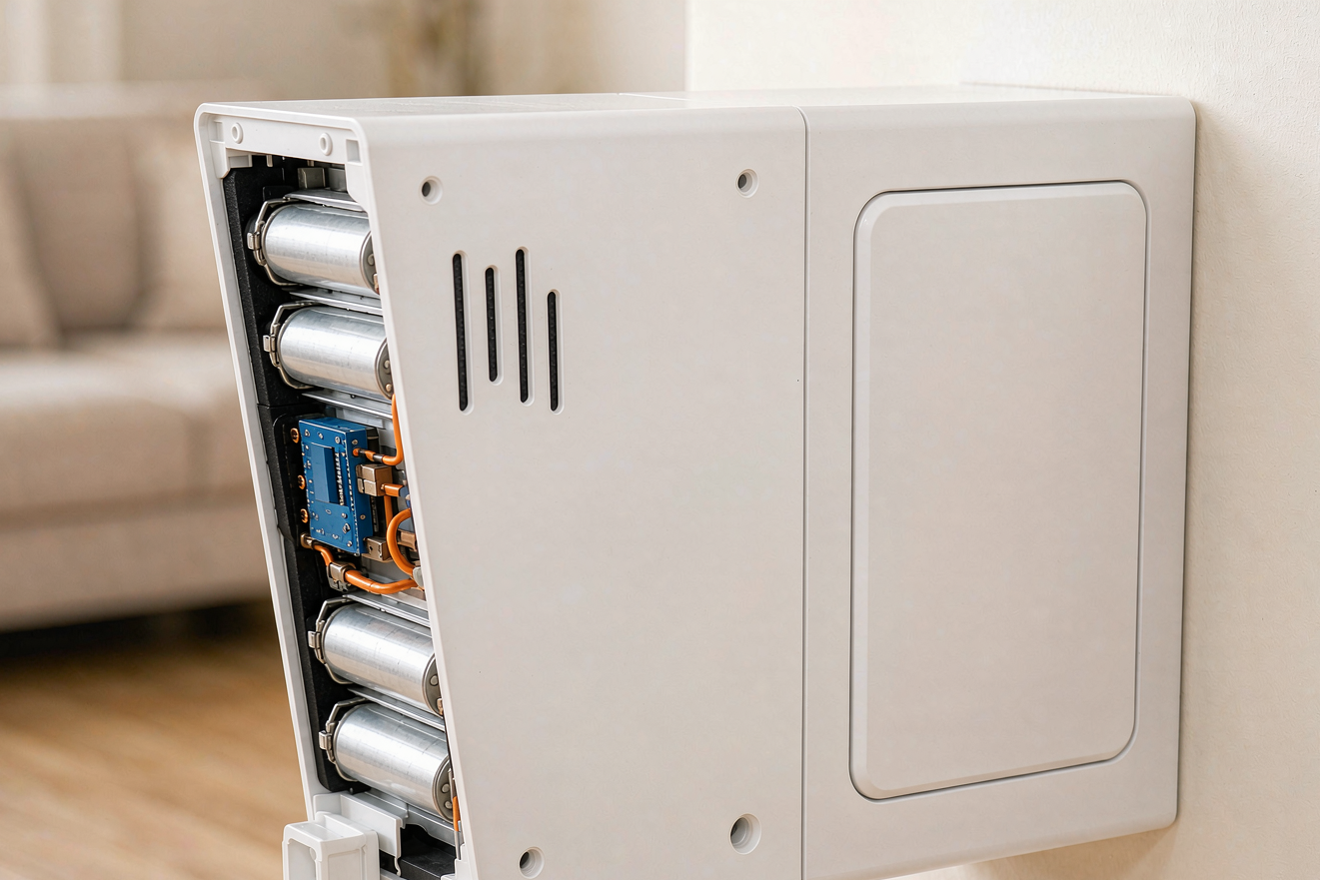
A home with toddlers and an elderly resident cannot treat the battery like a garage curiosity. I specify a locked, ventilated enclosure rated at least IP65, mounted out of reach of children and away from the senior’s bedroom wall to avoid inverter-fan noise of 30 to 38 dB at one meter. The unit needs 900 mm of service clearance in front and 450 mm of elevation off the floor in flood-prone areas. Electrical code requires arc-fault and ground-fault protection on the branch circuits, and I add a smoke detector and thermal cutoff in the battery compartment. The chemistry choice supports this: LFP’s thermal runaway onset is around 250 degrees Celsius, far above the 110 to 140 degrees Celsius of high-nickel cells, which is why I keep nickel-rich chemistries out of occupied homes. A custom battery solution lets me tune the enclosure to the home’s actual layout rather than forcing a generic cabinet into a hallway or a child’s play zone.
Phased Expansion and Whole-Home Backup
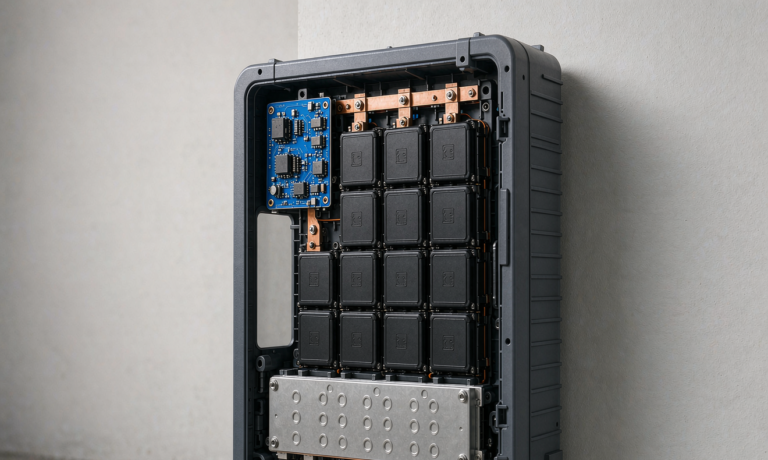
Most families do not need the full 35 kWh on day one. I often start with a 10 to 15 kWh critical block on a hybrid inverter of 8 to 12 kW, then add 5 kWh modules as needs grow, for example when a grandparent moves in or an EV arrives. Modular stacking keeps the initial cost sane and lets the battery management system re-learn capacity as modules join. The inverter must support closed-loop communication with the new modules so state of charge stays accurate across the pack instead of drifting after the first expansion. Plan conduit and a slightly oversized inverter from the start; retrofitting a larger inverter later means re-pulling the AC feed and re-opening walls. Remote monitoring matters in a multi-generation home, and a single app view of state of charge plus fault alerts lets the adult who manages the house act before a minor issue becomes an outage. A well-designed home energy storage system grows with the family instead of being ripped out and replaced, which protects both the budget and the marriage.
How much home energy storage does a multi-generation household need?
Most need 15 kWh for critical medical and refrigeration loads alone, and 25 to 35 kWh if they want whole-home backup through a full outage. Log two weeks of real consumption at 15-minute resolution before sizing, because the cooking and EV peaks dominate the result.
Should medical devices run on the battery or the grid?
Always put life-safety medical loads on the critical subpanel backed by the battery. The grid is not guaranteed during an outage, and a concentrator or stair lift cannot wait for utility restoration. Treat these circuits as non-negotiable in the load audit.
Is a lithium battery safe around children and elderly residents?
Yes, when enclosed in a locked, ventilated, IP65 cabinet with arc-fault and ground-fault protection. Choose LFP chemistry for its high thermal-runaway threshold near 250 degrees Celsius, and keep the unit out of children’s reach and away from sleeping areas to avoid fan noise.
Can the system grow as the family’s needs change?
Yes. Start with a 10 to 15 kWh block on a hybrid inverter and add modules later. Use an inverter that supports closed-loop communication so the battery management system tracks capacity accurately as the pack expands, and oversize the conduit from day one.
What standards apply to home energy storage installation?
Key standards are UL 9540 and UL 9540A for the system and fire testing, NFPA 855 for installation spacing, IEC 62619 for the cells, and IEEE 1547-2018 with UL 1741 SB for grid connection. Local code such as NEC Article 706 and the authority-having-jurisdiction amendments also apply.
How long does a home energy storage system last?
An LFP lithium battery rated for 4000 to 6000 cycles at 25 degrees Celsius typically lasts 10 to 15 years in daily use. Keep it in a climate-stable space, because heat above 35 degrees Celsius can cut that life by a third or more, and above 45 degrees Celsius by half.
Further Reading
References