Lithium Battery for Floor Scrubbers and Cleaning Robots
Walk into any distribution center at 6 a.m. and the floor scrubbers are already running. What most fleet managers do not realize is that the battery, not the brush deck, decides whether a cleaning operation stays on schedule. I have spent the last decade as a senior lithium battery engineer specifying packs for ride-on scrubbers and autonomous cleaning robots, and the gap between a lead-acid tray and a purpose-built lithium battery is measured in downtime, not just weight. In this guide I walk through how we size, build, and protect lithium batteries for floor care equipment, and why opportunity charging has changed the economics of commercial cleaning.
Why Lead-Acid Falls Short on Daily Cleaning Duty
The cleaning duty cycle is the worst case for a flooded or AGM lead-acid battery. A scrubber runs hard for two or three hours, drains to roughly 30 percent state of charge, gets a short top-up during a break, then runs again. That pattern is exactly the partial-state-of-charge cycling that sulfates lead-acid plates and kills capacity within a single season. I have pulled trays out of airport terminals after nine months that already delivered 40 percent of nameplate runtime.
Lead-acid also demands full equalization charges and a vented, acid-resistant charging room. In a food plant or a hospital that space is a compliance headache. A lithium battery, by contrast, tolerates thousands of shallow cycles and asks for no equalization. The practical result is that a single lithium pack often outlasts three lead-acid trays, and the machine spends its life cleaning instead of sitting on a charger. For any operation running two or more shifts, the lithium battery is not a premium option, it is the only one that closes the books.
Cell Chemistry and Pack Architecture for Scrubber Loads
Most floor care packs are built on lithium iron phosphate, or LFP. The reason is simple: LFP runs at a nominal 3.2 volts per cell, stays stable under abuse, and still holds more than 90 percent capacity after 2000 cycles at one-hour discharge. Nickel manganese cobalt cells are lighter, but the thermal and venting risk is the wrong trade for a machine that lives near water and cleaning agents. When a customer asks for maximum runtime in a small robotic chassis, we sometimes move to high-power LFP cells rather than NMC, because the chemistry margin matters more than the last few percent of energy density.
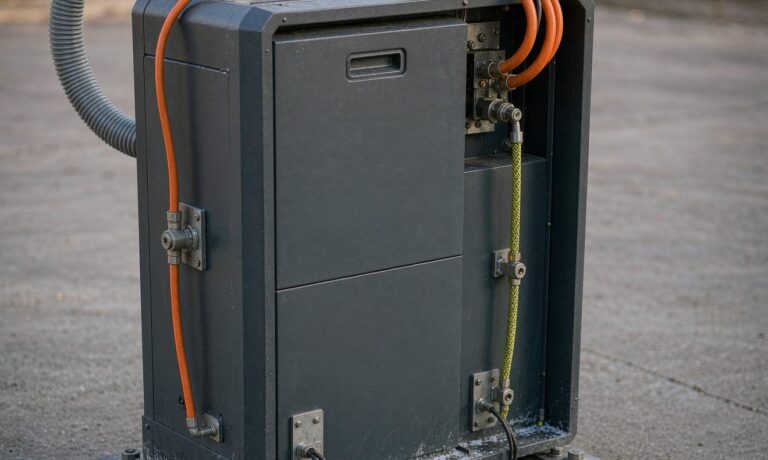
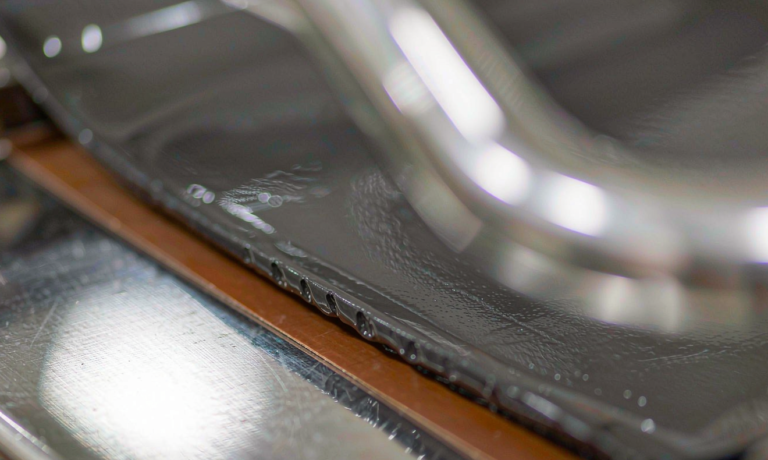
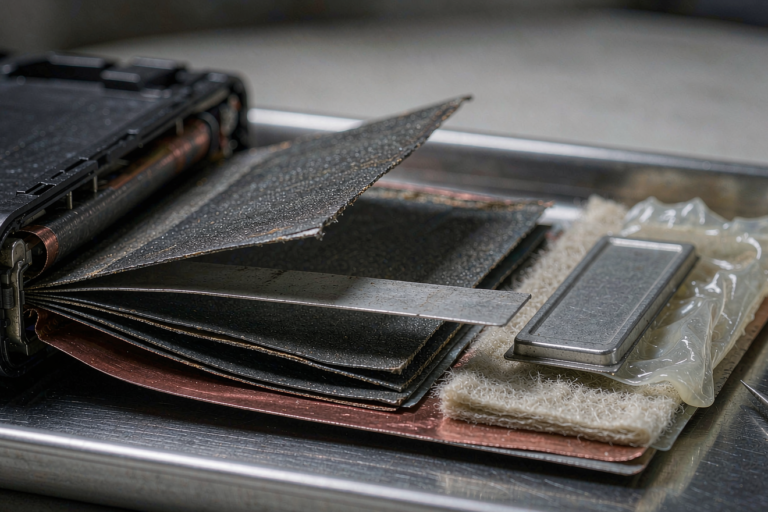
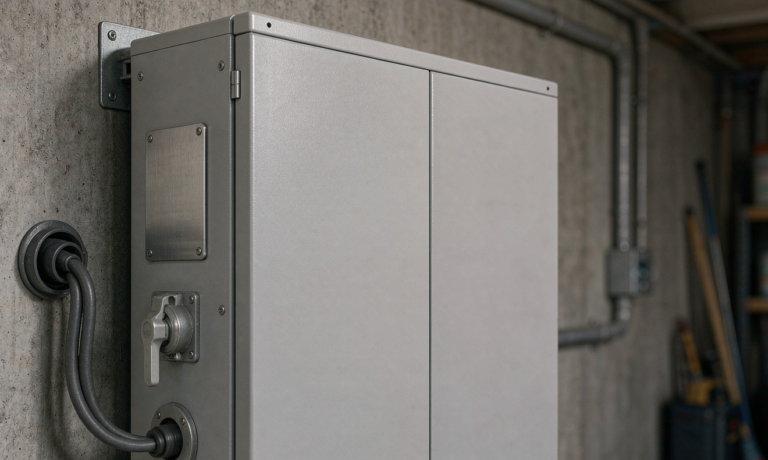
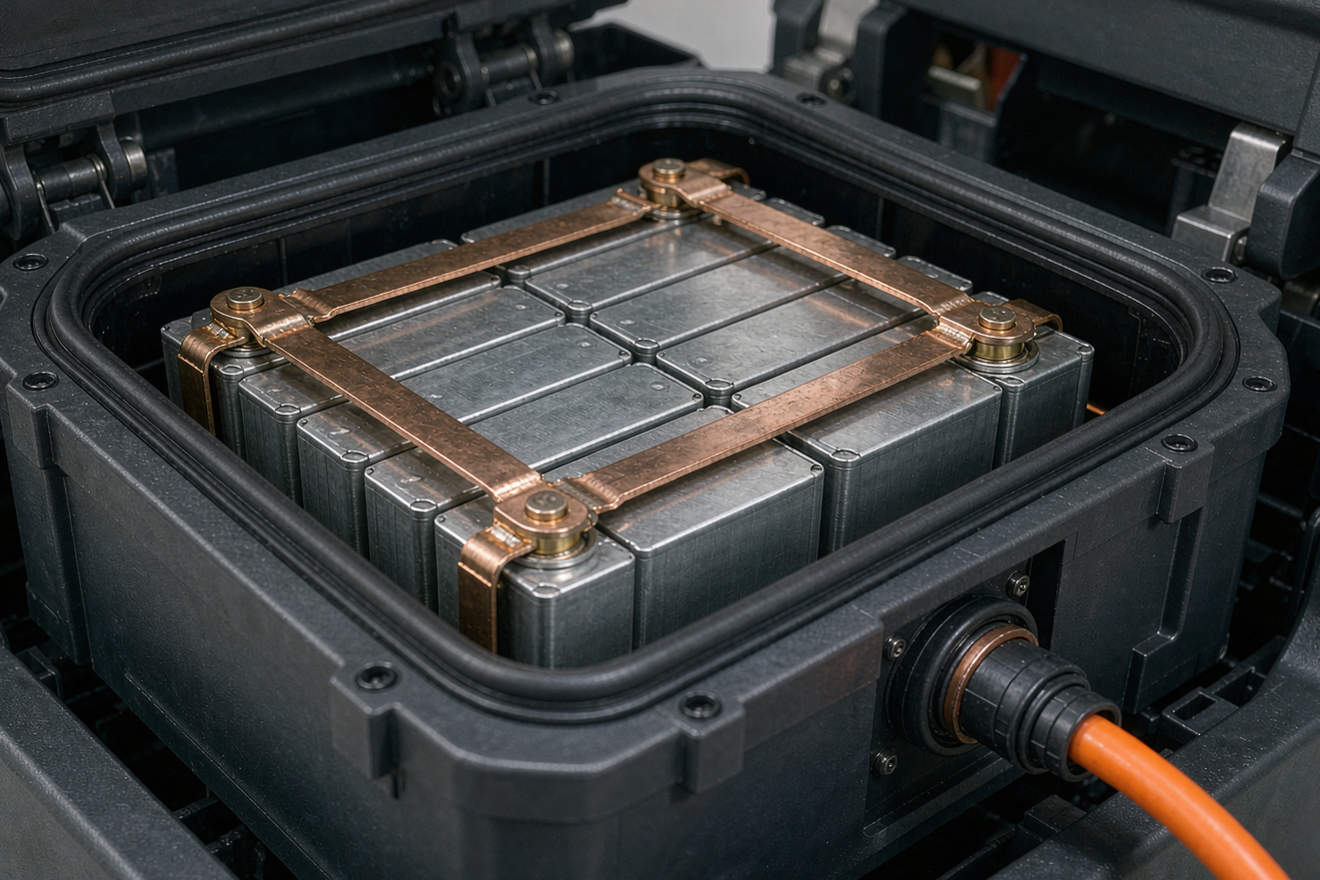
A ride-on scrubber typically needs a 24 volt or 36 volt pack, while a walk-behind sits at 24 volt and an autonomous robot often runs 24 volt or 48 volt. We build the pack from prismatic cells in a welded busbar arrangement, with a sealed module and a serviceable BMS compartment. The deck motor, vacuum, and solution pump can pull a combined 30 to 60 amps, so the busbars and fuses are sized for sustained current plus the inrush of a stalled brush, not just the average load.
LFP versus NMC for floor care
LFP wins on calendar life, safety margin, and price per cycle. NMC wins only on mass and volume when the robot envelope is severely limited. I recommend LFP for every ride-on and walk-behind, and LFP or a high-power lithium variant for robots unless the chassis literally cannot fit the cells. The cleaning robot rarely needs the energy NMC provides, but it always needs the safety margin LFP gives.
Opportunity Charging and Depot Layout
Opportunity charging is the single biggest change lithium brought to floor care. Instead of one long overnight charge, the pack takes a partial charge during operator breaks, between flights in an airport, or while the robot docks to upload a map. A well-specified lithium battery accepts 0.5C to 1C charging without damage, so a 30 minute dock can return two or three hours of runtime. I design the depot around this: a wall of simple CC-CV chargers on individual circuits, each rated to the pack, with no equalization timer to forget.
The mistake I see most often is a shared charger feeding packs of different voltages. That wrecks the BMS contactor logic and trips on mismatch. Keep one charger family per voltage class and let the BMS govern termination. If the fleet mixes 24 volt and 48 volt robots, run two clearly labeled charging zones. A lithium battery for floor scrubbers should be boring to charge: plug in, walk away, unplug when the light is green.
Ingress Protection, Vibration, and Chemical Exposure
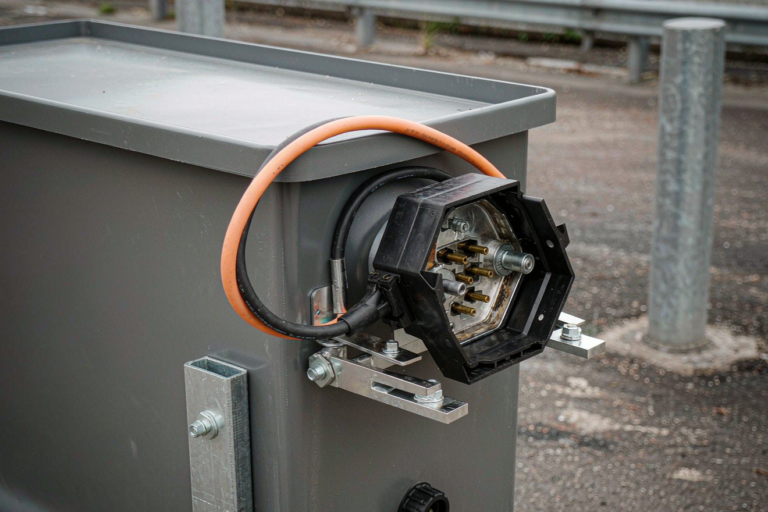
A scrubber battery lives in a wet, dirty, vibrating envelope. The pack must be sealed to at least IP67 if it sits low on the chassis where rinse water collects, and the connector must be a sealed automotive type, not a bare terminal block. I have seen terminals corrode in weeks when a cleaning agent seeped into an unsealed tray. The module enclosure uses a gasket and a drained breather so condensation does not pool on the cells.
Vibration is handled with a restrained cell pack and elastomer mounts, because a hard-mounted prismatic cell will fracture its weld after months of brush-deck shock. Chemical exposure is the quiet killer: quaternary ammonium cleaners and floor strippers attack uncoated aluminum and some labels. We specify a coated enclosure and keep the BMS away from any spray path. A lithium battery that cannot survive a mop-down is not finished engineering.
Battery Management, Thermal Control, and Compliance
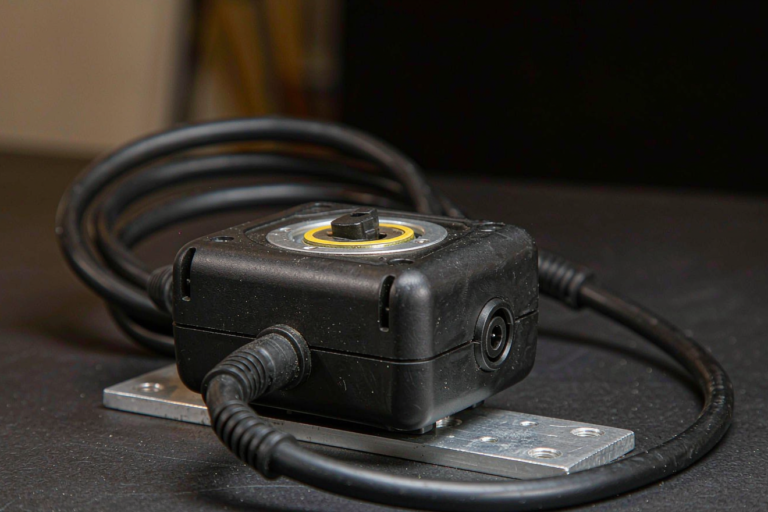
The BMS is where floor care packs live or die. It must do cell balancing, over-current cutoff on a stalled brush, under-voltage lockout before the robot strands itself mid-aisle, and a temperature cutoff that stops charge near freezing. Cold charging is the one rule operators break: a lithium cell charged below 0 degrees Celsius can plate lithium and fail. We add a heater or a hard charge inhibit below 5 degrees Celsius and tell the customer in writing.
Safety paperwork matters for facilities audits. A pack we ship carries UN 38.3 for transport, and for portable equipment we build to IEC 62133-2. Because these are industrial stationary-ish packs, we also reference IEC 62619 for the larger stationary cells and UL 1973 for the North American market, plus the EMC coexistence testing so the robot radio and the BMS do not fight. I will not ship a cleaning robot battery without a declared short-circuit rating and a vent path that the enclosure actually provides.
Standards you should ask for
Ask the supplier for the UN 38.3 test summary, the IEC 62133-2 or IEC 62619 cell report, and the UL 1973 mark if you sell into the United States. Ask for the IP rating in writing and the cold-charge cutoff temperature. A custom battery solution should arrive with a datasheet that states cycle life at the real discharge rate, not a brochure number at 0.2C.
Sizing a Pack for Ride-On and Robotic Scrubbers
Sizing starts with the duty: brush width, vacuum airflow, and solution pump current set the average draw. A 28 inch ride-on scrubber averages 25 to 35 amps at 24 volt, so a two hour run needs about 1.5 kilowatt hours of usable energy after depth-of-discharge margin. We size to 80 percent depth of discharge on LFP, which means a roughly 1.9 kilowatt hour pack, rounded to a standard 24 volt 80 ampere hour module. The robot is tighter: a 24 volt autonomous unit pulling 8 to 12 amps needs 0.5 to 0.8 kilowatt hours for a 3 hour shift, but it must keep reserve to drive back to the dock, so we never size the usable band below 25 percent.
My rule of thumb is to size for the worst shift plus one opportunity charge, then add 15 percent for battery aging. A lithium battery for floor scrubbers that is sized on the best-case single run will strand the machine within a year as the cells age. Build the pack for the third year, not the first week, and the fleet cost per cleaned square meter drops every season.
How long does a lithium battery last in a floor scrubber?
A properly built LFP pack delivers 1500 to 2500 full-equivalent cycles, which in daily opportunity-charging duty is roughly four to seven years of commercial service. Lead-acid rarely passes two years in the same duty because partial-state-of-charge cycling sulfates the plates. The lithium pack ages slowly and predictably, so you can plan replacement instead of suffering sudden failures.
Can I retrofit a lithium battery into an existing lead-acid scrubber?
In most cases yes, if the voltage class matches and the charger is replaced or reprogrammed for lithium termination. The old lead-acid charger runs an equalization profile that will overcharge a lithium pack, so do not keep it. Check the battery bay dimensions, the terminal polarity, and the BMS contactor current rating, then build a drop-in module. We do this regularly for 24 volt and 36 volt ride-on machines.
What IP rating does a cleaning robot battery need?
At minimum IP67 if the pack sits low on the chassis where rinse water collects, and the connector must be a sealed automotive type. Robots that map and dock in wet areas should keep the BMS behind the same seal. A bare terminal block or an IP54 enclosure will corrode within a season in a working scrubber.
How fast can a floor scrubber battery recharge?
A lithium pack accepts 0.5C to 1C charging without damage, so a 30 minute opportunity charge at 1C returns roughly half the capacity and two or three hours of runtime. A full charge from empty takes about one to two hours depending on pack size and charger rating. This is why opportunity charging during breaks beats one long overnight charge for multi-shift fleets.
Are lithium batteries safe around water and cleaning chemicals?
Yes, when the pack is sealed and the chemistry is LFP. The enclosure is gasketed against rinse water, the cells are stable under abuse, and the BMS cuts charge below freezing to prevent lithium plating. The real risk is an unsealed terminal block corroding from cleaning agents, which is why we spec a coated enclosure and keep the BMS out of any spray path.
How do I size a lithium battery for an autonomous cleaning robot?
Start from the average draw of the brush, vacuum, and pump at the real voltage, multiply by the shift length, divide by allowable depth of discharge, and add reserve for the drive-home trip plus 15 percent for aging. A 24 volt robot pulling 10 amps for three hours needs about 0.7 kilowatt hours usable, so we build a 24 volt 35 ampere hour pack and keep the usable band above 25 percent so it never strands itself mid-aisle.
Further Reading
References