Lithium Battery for Mobility Scooters and Powered Wheelchairs
When I started designing lithium battery packs for powered mobility aids in 2014, most scooters still ran on sealed lead-acid blocks that weighed more than the user’s weekly shopping. Over the last decade at Horizon Power I have shipped hundreds of thousands of cells into mobility scooters and powered wheelchairs, and the engineering trade-offs are very different from an e-bike or a drone. A mobility user depends on that pack for independence, often with no backup, so the cell grade, the battery management system, and the certification path all have to be conservative by design. This article walks through how we specify a lithium battery for mobility scooters that survives daily curb climbs, cold garages, and years of partial charging without ever stranding the person riding it.
Why a Mobility Scooter Needs a Purpose-Built Lithium Pack
A mobility scooter is not a toy. The pack sits close to the rider, charges overnight in a bedroom, and is wheeled through airports and shopping centers where a thermal event is simply unacceptable. A generic lithium battery pack moved over from another product will usually fail on three fronts: the enclosure is not rated for repeated curb impacts, the battery management system does not log the slow capacity fade that matters to a disabled user, and the connector is wrong for the chair’s charger. We treat every lithium battery for mobility scooters as a safety-critical component, not a generic consumer cell holder. The mechanical envelope, the charge profile, and the warning strategy are all specified around one user outcome: the chair must still move when the rider needs it to.
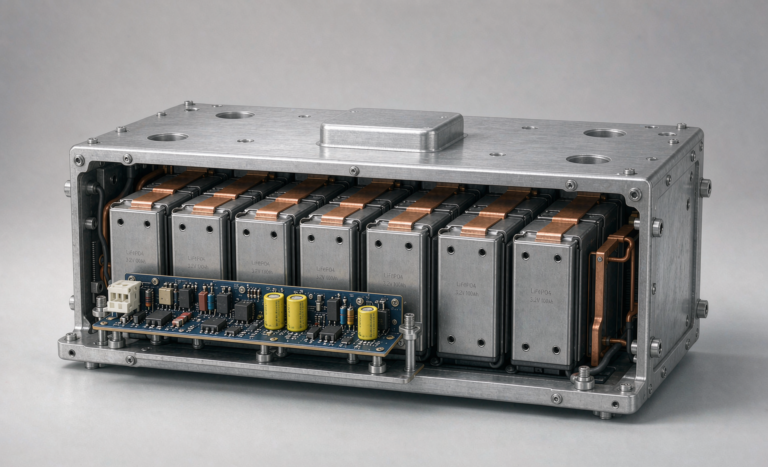
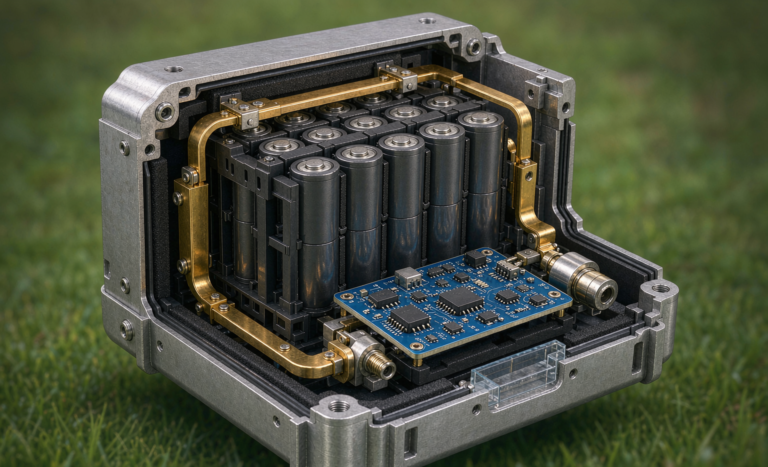
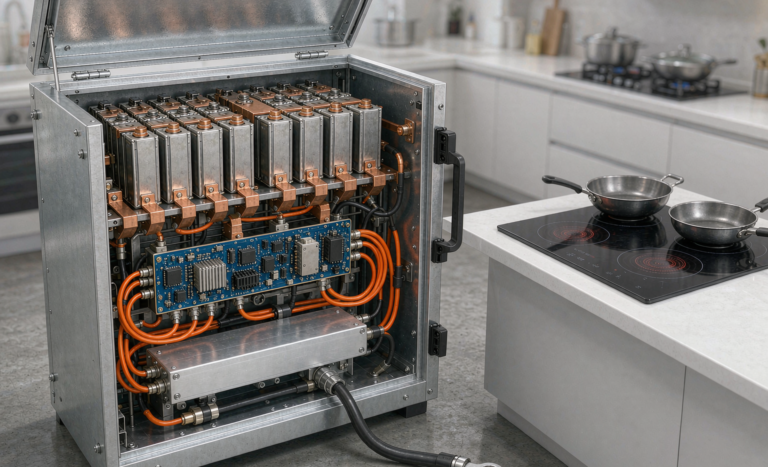
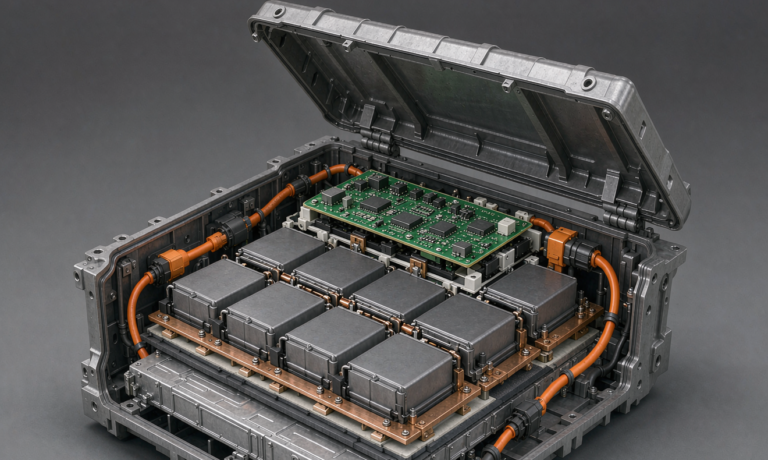
In practice that means a sealed aluminum enclosure with internal foam, a state-of-health readout the rider can understand, and a charge port that only mates one way. A mobility user charges every night and rides a few kilometers a day, so shallow cycling and long life matter far more than squeezing out an extra 10 percent of range.
LFP vs NMC: Choosing the Cell Chemistry
For powered wheelchairs the chemistry choice is almost always between lithium iron phosphate, called LFP, and nickel manganese cobalt, called NMC. LFP runs at a nominal 3.2 V per cell and a pack voltage around 24 V or 25.6 V, while NMC sits at 3.6 to 3.7 V nominal. In our field data LFP delivers 2,000 to 3,500 full-equivalent cycles before it reaches 80 percent state of health, versus 800 to 1,200 for NMC in the same duty. The lower energy density of LFP, about 120 to 160 Wh/kg versus 180 to 250 for NMC, is a fair price to pay for the wider thermal margin and the longer service life.
A custom battery solution for a heavy bariatric chair therefore almost always starts with prismatic LFP, because the pack can be built at 24 V or 36 V without exotic cooling and the cells tolerate the occasional full discharge better than NMC. NMC still earns a place in folding travel scooters where every 500 grams counts and the user accepts a shorter pack life for portability, but the chemistry must be a deliberate choice driven by weight, climate, and daily distance rather than a default copied from another product line.
Range Math: Watt-Hours, Amp-Hours and the C-Rate That Matters
Range is governed by usable watt-hours, not by amp-hours alone. A 24 V pack rated at 20 Ah holds 480 Wh nominally, but we only release about 90 percent of that to protect the cells, giving roughly 430 Wh usable. A typical mid-size scooter draws 250 to 400 W on flat ground and 900 to 1,400 W climbing a 1 in 8 ramp with a 140 kg user on board. At a 300 W average load that 430 Wh pack yields about 1.4 hours of runtime, or roughly 12 to 18 km depending on terrain and tire pressure.
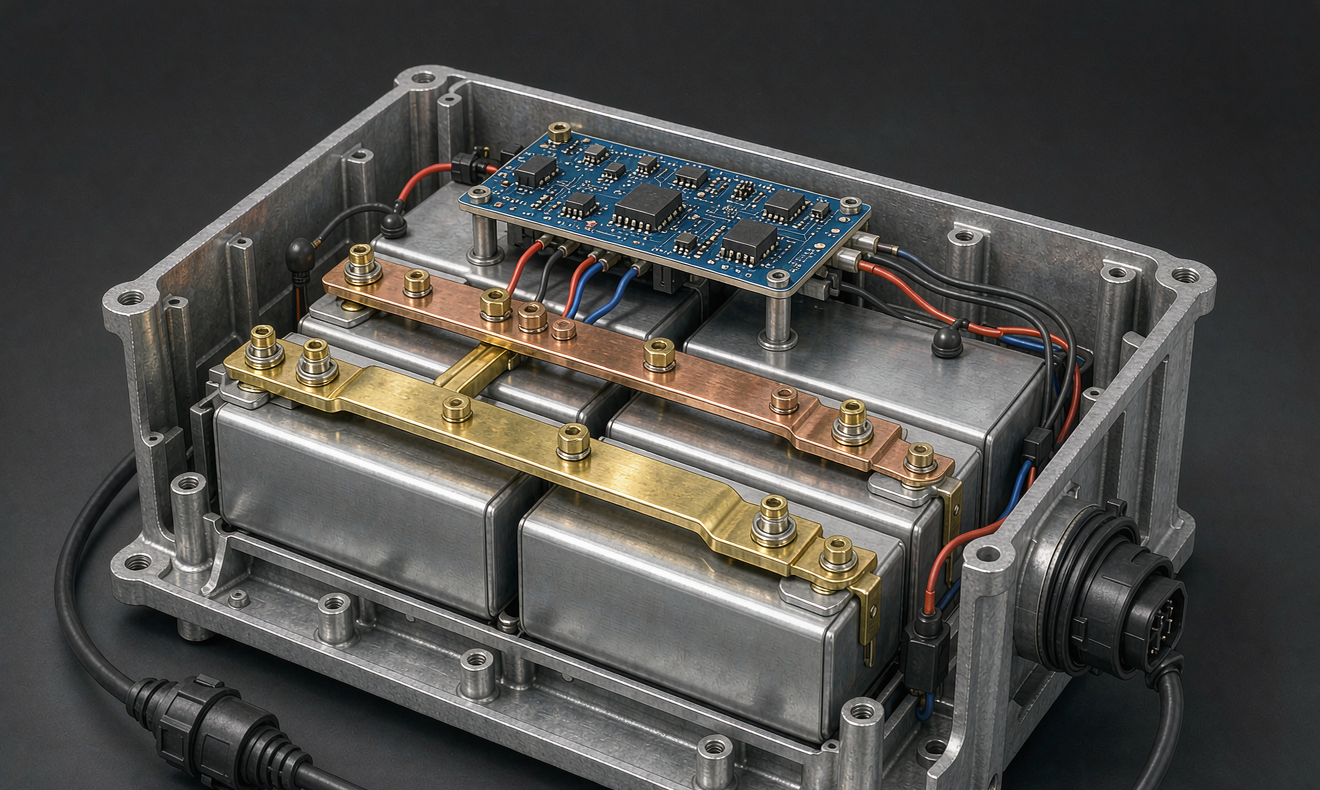
The continuous discharge C-rate sits around 1C to 1.5C, well inside the safe window for LFP, which is why a lithium battery pack in this class rarely needs active cooling. Peak demand on a steep curb hop can touch 3C for a few seconds, and we size the pure-copper busbars and the cell pulse rating to that spike rather than to the cruise load. When a fleet operator asks how far a chair will go, I always answer in watt-hours first, because two packs with the same amp-hour rating but different voltages will not deliver the same ride.
Battery Management System and the Failure Modes We Design Against
The battery management system is where a mobility pack earns its certification. We monitor every series group with a balancing current of 50 to 100 mA, a cell-voltage accuracy of plus or minus 5 mV, and a temperature trip at 60 degrees Celsius on charge and 70 degrees Celsius on discharge. The two failure modes that actually harm users are silent over-discharge, which strands someone a kilometer from home, and connector heating at the chair side from a loose plug.
Our lithium-ion battery management firmware logs state of health to the percent and warns the user at 80 percent capacity, long before the chair becomes unreliable. Each pack also passes UN38.3 and IEC 62133-2 as a baseline before it leaves the factory. We add a separate watchdog that opens the contactor if the host controller goes silent, so a software fault in the chair cannot leave the pack in a dangerous state. For a product carried onto an aircraft or parked next to a bed, that redundant protection is not a nice-to-have, it is the core of the design.
Charging, Connectors and Real-World Duty Cycles
Most scooters charge from a 24 V or 29.4 V off-board charger at 2 A to 5 A, which is a 0.2C to 0.5C charge rate that is gentle on LFP and keeps cell heating low. We specify XT60 or Anderson SB50 connectors with pure-copper busbars inside the pack because the chair-side plug sees thousands of mate cycles over its life. A user who charges nightly and rides 5 km a day will see about 1,500 shallow cycles before the pack crosses 80 percent state of health, which is four to six years of real service.
A custom battery solution for a fleet of rental scooters adds a contactless state-of-health readout, either over a simple wired bus or a near-field tag, so the operator swaps packs before they strand a rider. We also tune the charger to finish at a lower tail current, because a pack that sits at 100 percent for eight hours every night ages faster than one that completes a healthy constant-voltage taper and then rests. The charging habit a user forms is part of the battery’s lifetime, so we design the pack to forgive bad habits as much as the hardware allows.
Certification and Compliance for Medical-Class Mobility
Mobility scooters and powered wheelchairs are regulated as medical devices in many markets, so the battery carries more than a consumer electronics label. We build to IEC 62133-2 for portable cells, IEC 62619 for industrial motive cells, and UL 2271 for batteries in light electric vehicles, with UL 2849 covering the broader system. In the European Union the chair falls under MDR 2017/745 and the pack must meet the relevant clauses of ISO 7176 for electrically powered wheelchairs.
Air travel is governed by IATA Dangerous Goods and UN38.3, and a pack under 300 Wh is generally accepted as carry-on once the airline is notified. None of this is optional for a brand that sells into clinics, distributors, and national health services. When a procurement engineer compares quotes, the certification file is the difference between a pack that clears customs and a container that sits at the port, so we treat compliance as a first-class design input rather than a late-stage checkbox.
How We Spec a Pack From a Single User Profile
The fastest way to a correct design is to start from four numbers: rider mass plus payload, the steepest slope in daily use, the round-trip distance per charge, and the ambient temperature range. From those we fix the pack voltage, the usable watt-hours, the continuous and peak C-rate, and the low-temperature charge limit. A lithium battery for mobility scooters built this way costs a little more than a repurposed pack, but it removes the two failures that matter most to a user who cannot walk home.
We then validate the design with a 500-cycle aging test at the target load before the first production batch, because the spreadsheet math and the real cell behavior only agree after you watch the capacity curve bend. That step decides whether a chair still works in year four, and it is the one most low-cost suppliers skip.
How long does a lithium battery for mobility scooters last?
A well-built LFP pack in daily use typically delivers 2,000 to 3,500 full-equivalent cycles, which works out to four to six years for a user who charges nightly and rides a few kilometers a day. Real life depends on depth of discharge and temperature: shallow charges in a warm garage age far better than deep discharges in a freezing shed.
What is the safest lithium chemistry for a powered wheelchair?
Lithium iron phosphate, LFP, is the safest mainstream choice because it is thermally stable, tolerant of occasional over-discharge, and long-lived. NMC offers higher energy density for folding travel chairs but needs tighter thermal management and gives shorter service life in the same duty cycle.
How many kilometers can a mobility scooter travel per charge?
A 24 V 20 Ah LFP pack with about 430 Wh usable typically covers 12 to 18 km on mixed terrain with a 140 kg user. Flat ground and correct tire pressure extend that range, while steep ramps and headwinds cut it sharply, so we always quote range at a defined load rather than a best-case number.
Can I take a mobility scooter battery on a plane?
Spare and installed packs under 300 Wh are generally accepted under IATA Dangerous Goods rules once the airline is notified, and the pack must pass UN38.3. We label every travel pack with its watt-hour rating and the UN38.3 test summary so the rider clears security without a dispute at the gate.
Why does my scooter battery lose range in winter?
Below about 0 degrees Celsius the electrolyte slows and usable capacity drops, and most packs refuse to charge to protect the cells. We set the low-temperature charge cutoff at 0 to 5 degrees Celsius and advise indoor charging, because a pack charged cold is the one that ages fastest.
Should I leave the battery on the charger overnight?
For an LFP pack with a proper lithium-ion battery management system, overnight charging is safe because the charger stops at full and the cells rest. The habit that hurts life is storing the pack fully charged and hot for days, so a cool, topped-off pack in a bedroom is fine for most users.
Further Reading
References