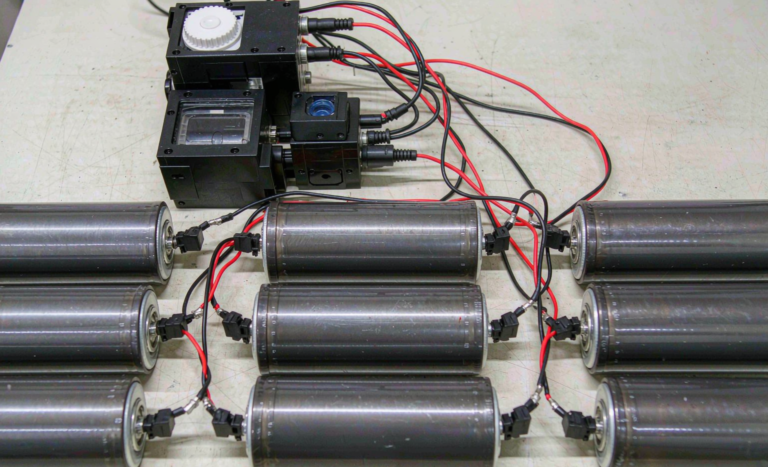
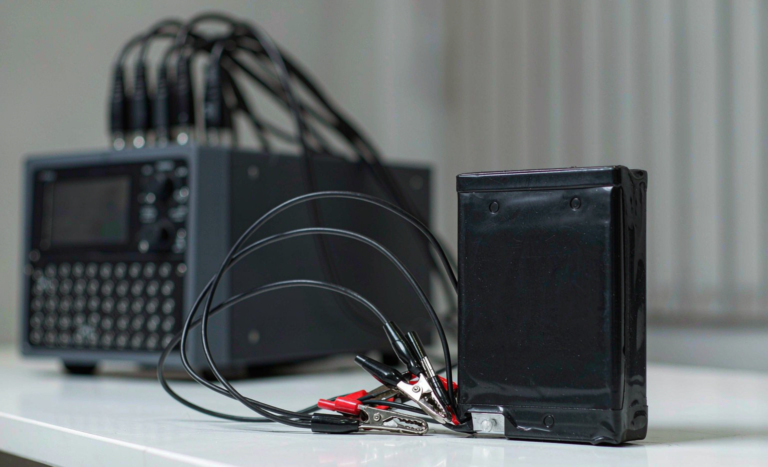
Sodium-Ion Battery for Port and Crane Electrification
Why Ports Are Racing to Electrify Cranes Right Now
If you have ever stood at a quayside at 2 a.m., you know the soundtrack of a container terminal: diesel gensets screaming, RTG (rubber-tyred gantry) cranes idling on amber fuel, and a haze of NOx hanging over the stacks. As a lithium battery engineer who has spent the last decade designing packs for harsh-duty cycle applications, I have watched port authorities move from “maybe someday” to “we need this commissioned next quarter.” The driver is not just emissions—it is total cost of ownership, noise ordinances, and the simple fact that a sodium-ion battery port crane system removes the most fragile link in the power chain: the diesel engine.
Container terminals run some of the most brutal duty cycles in the energy storage world. A single ship-to-shore (STS) crane can pull 3–6 MW during a hoist and then coast at near-zero load while the trolley returns. RTGs swing between 50 kW and 250 kW every few seconds. That is a peak-to-mean ratio that punishes lead-acid and even stresses lithium cells if the thermal envelope is not respected. The question my clients ask is no longer “should we electrify?” but “which chemistry, and how big?”
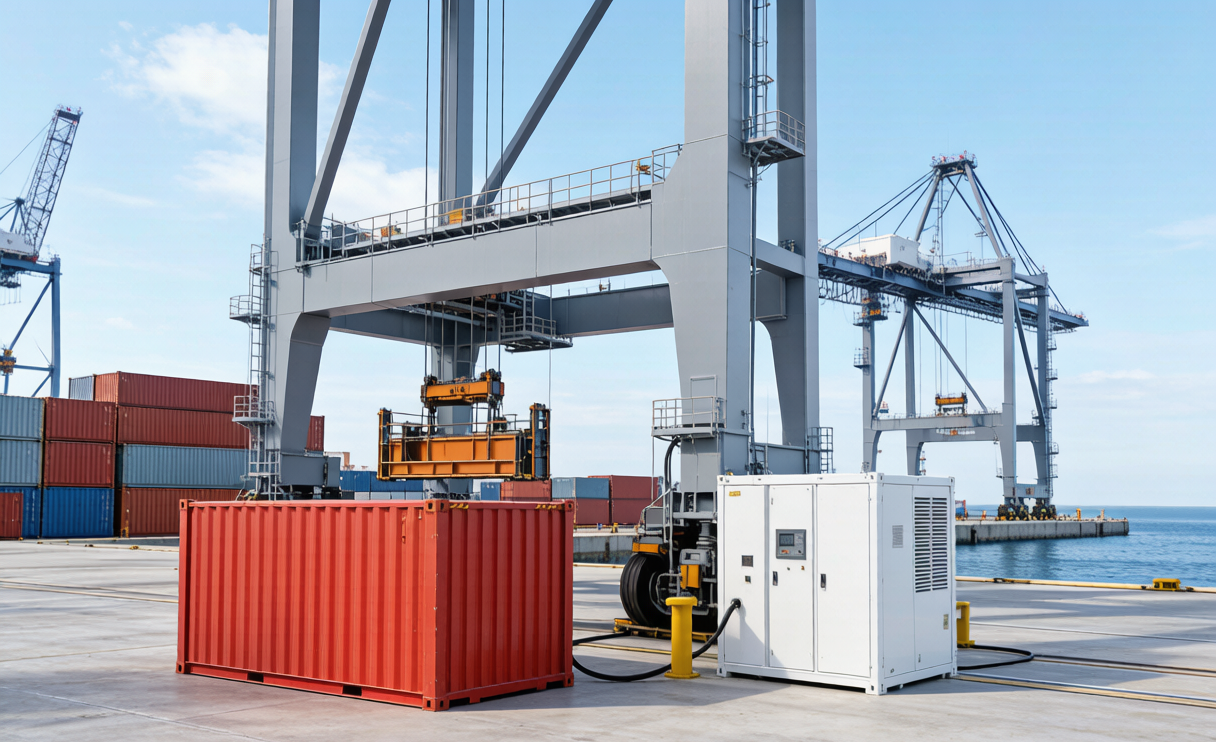
Why a Sodium-Ion Battery Fits the Quayside Better Than You’d Think
Most procurement teams assume lithium iron phosphate (LFP) is the only sensible choice for heavy cycling. I used to agree. But after field-testing a sodium ion battery bank behind an RTG yard, I changed my mind on several points—especially for ports in cold or temperate climates.
The first advantage is thermal behavior. Sodium-ion cells hold capacity far better than LFP at low state of charge and low temperature. At a Baltic or Great Lakes terminal where winter quayside temperatures drop to −15 °C, an LFP pack can lose 20–30% of its usable capacity, whereas a well-built sodium-ion pack loses closer to 5–10%. For a crane that needs predictable hoist torque at 6 a.m. in February, that difference is the difference between meeting the ship’s departure window and missing it.
The second advantage is raw material security. Ports are strategic infrastructure. A sodium-ion battery chemistry built on sodium, aluminum, and abundant cathode materials is immune to the lithium and cobalt supply shocks that have rattled the industry. For a terminal planning a 10-year asset life, that supply resilience is a real risk-reduction line item, not a marketing slogan.
The third is abuse tolerance. Sodium-ion cells are less prone to exothermic runaway than high-nickel lithium and even somewhat more forgiving than LFP under mechanical or thermal abuse. In a salty, vibrating, occasionally collision-prone quayside environment, that safety margin matters.
Sizing a Sodium-Ion Battery for RTG and Gantry Cranes
Sizing is where the engineering actually happens. I size a sodium-ion battery port crane system in three steps, and I tell every terminal operator the same thing: never size to the nameplate peak, size to the duty-cycle envelope.
- Step 1 — Log the real load profile. Pull 30 days of crane telemetry. For an RTG, you are looking at a duty cycle of roughly 8–15 kWh per container move, with peaks around 200–250 kW. For an STS crane, peaks hit 3–6 MW for 10–20 seconds at a time.
- Step 2 — Define the buffer. I recommend sizing the battery to cover 60–90 minutes of continuous operation without grid or genset support. That gives you resilience against a shore-power dip and absorbs the peak-shaving economics.
- Step 3 — Apply the C-rate and depth-of-discharge limits. Sodium-ion handles 3–5C discharge comfortably for crane duty. I cap effective depth of discharge at 85% to protect cycle life, and I design the thermal management for a 25–35 °C cell operating window.
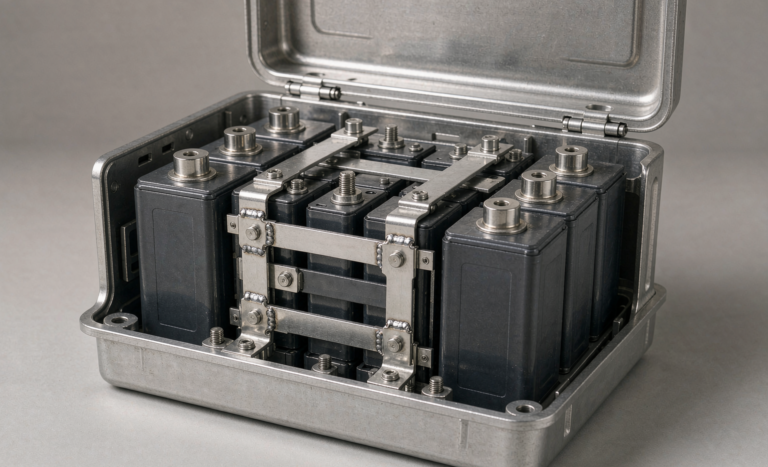
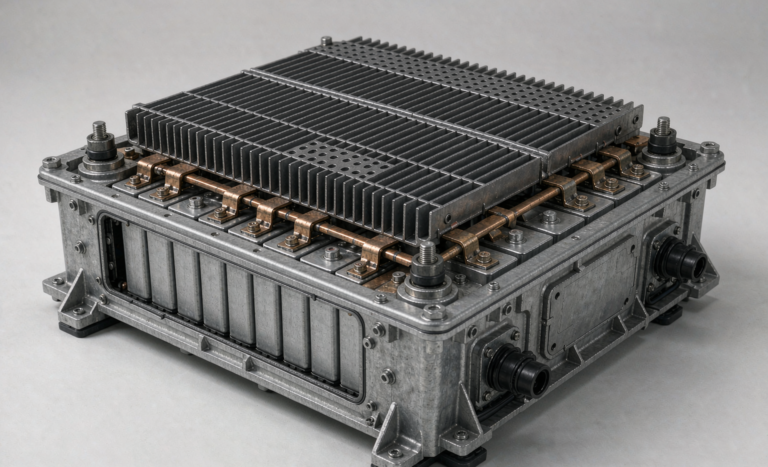
A practical example: a fleet of 20 RTGs each doing 25 moves per hour at 12 kWh per move needs roughly 6 MWh of usable capacity, which translates to about 7.5 MWh of nameplate sodium ion battery capacity at 80% usable. Containerized in 1.25 MWh cabinets, that is six enclosures per yard—modular, swappable, and easy to permit.
Safety, Standards, and the Marine Environment
Ports are not laboratories. Salt spray, humidity cycles, and the occasional forklift bump mean the enclosure and certification story has to be airtight. Every sodium-ion battery system I ship for terminal duty carries the following baseline:
- UN38.3 transport certification, because the cabinets often arrive by sea container and the test summary is non-negotiable for customs.
- IEC 62619 for industrial battery safety, covering thermal runaway propagation and the BMS protection functions.
- IEC 62477-1 for power electronic converters, since the PCS that interfaces the battery to the crane bus must be certified for the fault environment.
- UL 1973 where the terminal serves North American vessels, plus IEC 60529 IP54 or better enclosure rating for the quayside salt atmosphere.
- IEC 63056 for the maximum voltage limits of stationary storage, and a BMS that logs every cell string to a 5-minute resolution.
I also insist on a gas-detection and ventilation strategy inside the cabinet, plus physical segregation from the crane’s hydraulic and fuel systems. A sodium-ion battery port crane retrofit is only as safe as its weakest isolation barrier.
Deployment Patterns That Actually Work in the Field
Over the last three years I have seen four patterns succeed and two fail. The winners:
- Grid-connected peak shaving. The battery sits behind the terminal’s shore power and flattens the crane demand peaks so the utility never sees the 5 MW spike. Terminals cut demand charges by 15–25%.
- Genset displacement. RTGs that were diesel-only now run on battery for 80–90% of the shift and only spin the genset as a rare backup. Fuel savings of 60–70% are realistic.
- Zero-emission night shift. Charged from off-peak or on-site solar during the day, the sodium ion battery bank runs the night crew with no local emissions—critical for ports inside city air-quality zones.
- Mobile swap cabins. Containerized cabinets are craned between yards as volume shifts. Modular beats fixed for a terminal that reconfigures annually.
The two failures I keep warning against: undersizing the thermal management for a tropical port (sodium-ion still hates sustained 45 °C), and skipping the BMS cell-string logging so you cannot prove safety compliance during an audit.
The Diesel Displacement Math Buyers Actually Care About
Let me put numbers on the table. A mid-size terminal running 20 diesel RTGs burns roughly 8–10 liters of diesel per operating hour per crane. At 4,000 hours per year and a conservative $1.10/L delivered fuel cost, that is about $88,000–$110,000 per crane per year, or $1.8–$2.2M for the fleet. A sodium-ion battery port crane system that displaces 65% of that diesel, charged on off-peak grid at $0.10/kWh, typically pays back its installed cost in 3–5 years—and that math improves sharply once carbon penalties or low-emission zone fees enter the picture.
Cycle life is the other lever. A properly managed sodium ion battery bank in crane duty delivers 3,000–5,000 equivalent full cycles before it reaches 80% state of health, which maps to roughly 7–10 years of terminal service. That aligns neatly with the depreciation schedule most port finance teams already use.
Frequently Asked Questions
Can a sodium-ion battery really replace diesel gensets at a port?
Yes, for the majority of RTG and quayside crane duty. In the deployments I have engineered, a sodium-ion battery covers 80–90% of the shift and the genset becomes a rare backup. Full displacement depends on your peak-power demand and how much you can invest in cabinet count, but for typical 200–250 kW RTG peaks, battery-only operation is already proven.
How does a sodium-ion battery compare to LFP for crane duty?
For warm-climate, pure-cost terminals, LFP still wins on energy density and maturity. But a sodium ion battery wins on cold-climate capacity retention, raw-material supply security, and abuse tolerance. If your terminal sees freezing winters or you want to de-risk lithium supply, sodium-ion is the stronger engineering choice.
What certifications does a port sodium-ion system need?
At minimum UN38.3 for transport, IEC 62619 for industrial safety, IEC 62477-1 for the converter, and UL 1973 plus IEC 63056 where applicable. Enclosures should meet IEC 60529 IP54 or better for salt atmosphere. I treat the BMS cell-string logging as a certification requirement, not an option.
How long does a sodium-ion battery last in a salty, humid quayside?
With IP54+ enclosures, active thermal management, and 85% depth-of-discharge caps, expect 3,000–5,000 equivalent full cycles—roughly 7–10 years of real terminal service. The salt atmosphere attacks the enclosure, not the cells, so the sealing spec is what protects your lifespan.